Bidspirit auction | Colton, G. Woolworth – [FRONTSPIECE].
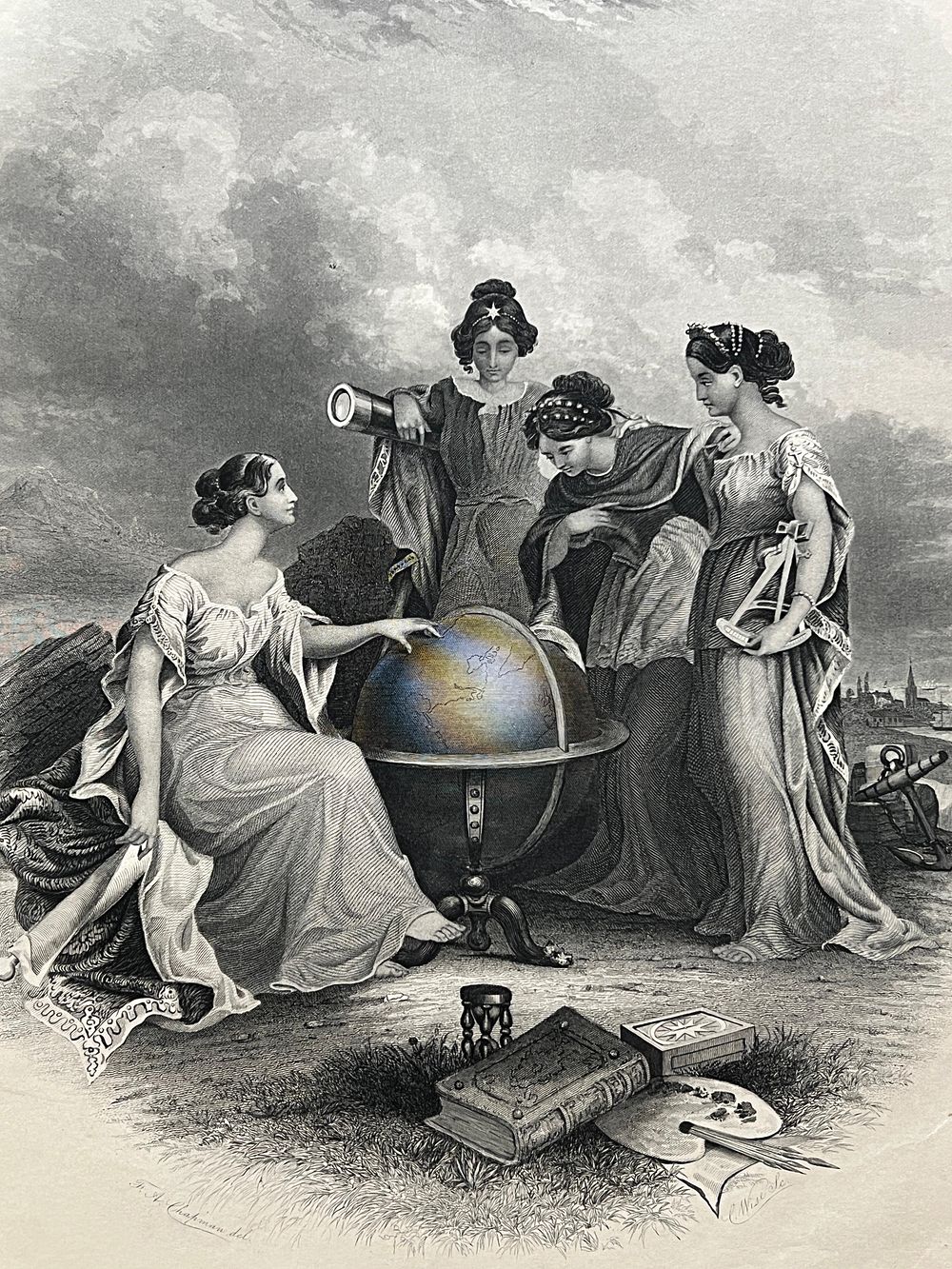
Colton, G. Woolworth – [FRONTSPIECE]. [From] Colton's General Atlas. New York. G.W. s C.B. Colton s Co. 1866. Steel Gravure. Aprox. 30,0 cm x 22,0 cm. Single. - Elegant allegorical frontispiece that adorned Colton's General Atlas in its 1866 edition, executed in steel engraving as was the practice in prestigious atlases of the period. This allegorical composition, typical of nineteenth-century cartographic publications, represents Geography and the Sciences through classicizing feminine figures arranged around a terrestrial globe, accompanied by the symbolic attributes of their disciplines: telescopes, compasses, books, unfolded maps and other scientific instruments. The frontispiece fulfilled a simultaneously decorative and symbolic function in nineteenth-century atlases. It served to dignify the publication, conferring upon it an erudite and monumental character, and to establish the elevated tone of the work that followed. The choice of an allegorical composition of classical inspiration, with feminine figures representing intellectual virtues, inscribes itself in a long iconographic tradition that dates back to the baroque atlases of the seventeenth and eighteenth centuries. Steel engraving, a technique that gradually replaced copperplate engraving throughout the nineteenth century due to the greater durability of metal plates, permitted more extensive print runs while maintaining print quality. The hatching work, which models the volumes and creates the effects of light and shadow, testifies to the technical mastery of the engravers who worked for the house of Colton. The composition, harmoniously balanced, reveals influences of neoclassicism that still dominated American artistic taste in the mid-nineteenth century. This type of frontispiece was often removed from atlases to be framed and displayed separately, given its aesthetic quality. The present sheet, detached from the original atlas, remains in conditions that permit both its appreciation as an autonomous piece and its eventual reintegration into a copy of Colton's General Atlas lacking the frontispiece. The engraving presents itself loose, printed on superior quality paper characteristic of steel plate print runs. The paper exhibits slight uniform browning typical of age, with some scattered foxing spots, more pronounced on the margins. The impression remains sharp and well contrasted. The margins are complete, without significant losses. There are two opposing tears in the center fold, approximately 2 cm on each side. This does not affect the stability of the print and is barely noticeable when displayed open. Ex-libris of Bernardo Brissos. Decorative piece of quality, representative of the tradition of allegorical frontispieces that adorned the great nineteenth-century atlases.