Bidspirit auction | Dapper, Olfert & Jacob —
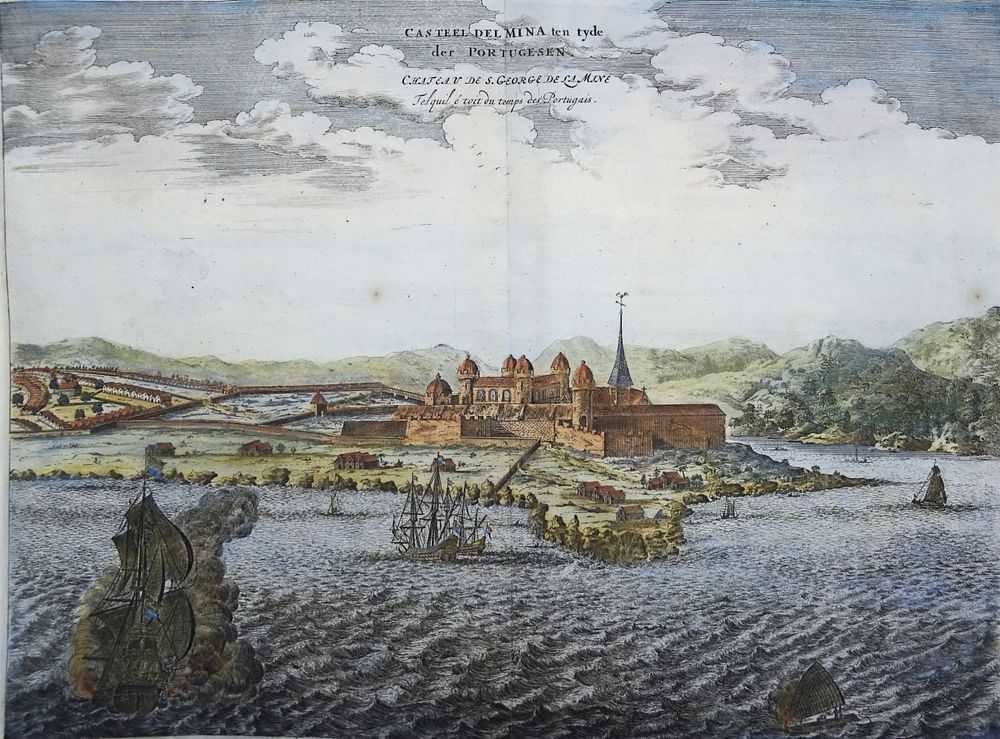
Dapper, Olfert & Jacob — CASTEEL DEL MINA TEN TYDE DER PORTUGESEN [The Castle of Mina in the portuguese times]. 1686. 35,5 x 41cm [Board] 26cm x 36 cm [Sheet]. - An unusual antique copper engraved view of Elmina, formerly known as Mina, in present-day Ghana (Africa), about 150 km from Accra, by Olfert Dapper (1636-1689). It shows the fortress as it was in time of the Portuguese. For centuries, this was the absolute center of the Dutch West India Company (WIC) slave trade. Ancestors of people living today in North America, the Caribbean, countries like Suriname, and Brazil would have passed through here before being loaded onto slave ships. Elmina Castle was founded by the Portuguese in 1482 as the Castle of São Jorge da Mina (St. George of the Mine), also known as Mina or Feitoria da Mina, in present-day Elmina, Ghana (formerly the Gold Coast). It was the first trading post built on the Gulf of Guinea and is the oldest European building in existence below the Sahara. First established as a trading settlement, the castle later became one of the most important stops on the Atlantic slave trade route. In the seventeenth century, most trade in West Africa focused on the sale of slaves. São Jorge da Mina played a significant role in the Atlantic slave trade. The castle served as a depot where slaves were purchased in the manner of local African chiefs and kings. The slaves, often captured in the African interior by slave-catchers from coastal tribes, were sold to Portuguese traders in exchange for goods such as textiles and horses. The slaves were held captive in the castle before being transported through the castle's infamous ”Door of No Return” and resold in newly colonized Brazil and other Portuguese colonies. In 1637, the fort was taken over by the Dutch, who made it the capital of the Dutch Gold Coast. Published in the first French edition of Dapper's ”Naukeurige Beschrijvinge Der Afrikaensche Gewesten van Egypten, Barbaryen, Lybien, &c.”, Amsterdam, by Jacob van Meurs, 1686. Excellent condition, very wide margins, good quality paper, clear print.