Bidspirit auction | Halachah Berurah. First Edition. Wilhermsdorf
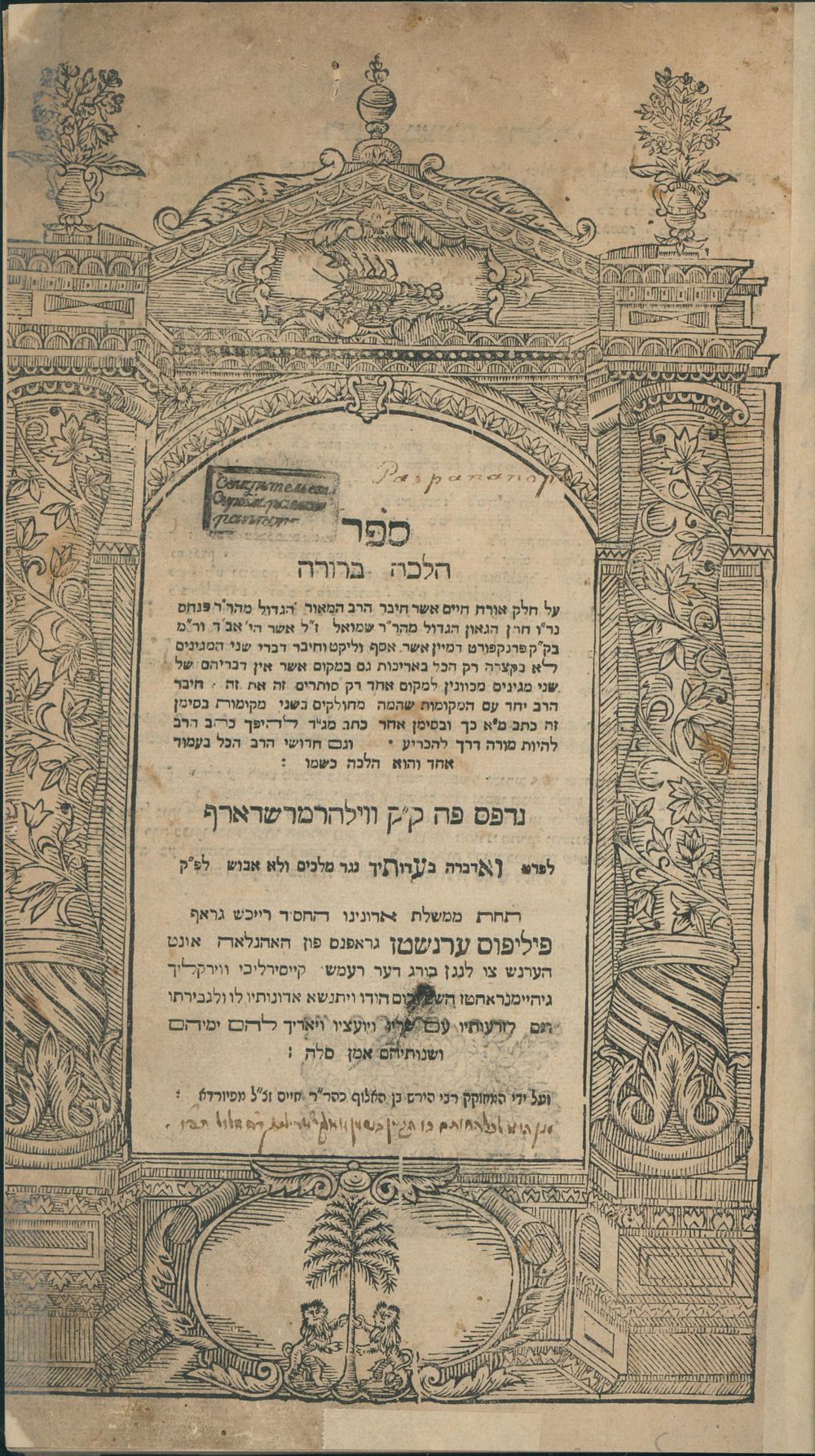
Halachah Berurah. First Edition. Wilhermsdorf 1717. With Approbations by the Leading Rabbinic Authorities of the Generation, Including the Semichat Chachamin Following His Flight from Frankfurt after the Great Fire. - Sefer Halachah Berurah, a commentary on Shulchan Aruch, Orach Chaim (with the text), by Rabbi Pinchas Auerbach. The work presents a comprehensive synthesis of the rulings of the Turei Zahav (Taz) and Magen Avraham, offering detailed analysis together with practical guidance for resolving their disputes. First Edition. Wilhermsdorf, 1717. Printed by Hirsch ben Chaim of Fürth. An important early halachic work accompanied by an exceptional series of approbations from many of the foremost Ashkenazic rabbinic authorities of the early eighteenth century, including: Rabbi Yosef Shmuel of Kraków, son of Rabbi Tzvi Hirsch, father-in-law of the author and Av Beth Din of Frankfurt am Main. Rabbi Avraham Broda, Chief Rabbi of Prague and later Av Beth Din of Frankfurt am Main. Rabbi Gabriel Ashkenazi (son of Rabbi Yehudah Leib), of Kraków, Av Beth Din of Nikolsburg. Rabbi Naphtali Cohen, Av Beth Din of Ostroh and author of Semichath Chachamim. In his approbation, dated 11 Sivan 1714, he poignantly describes himself as ”a brand saved from the fire” (ud mutzal me-esh), an allusion to his dramatic escape from Frankfurt am Main after the devastating fire that broke out in his home, an event that forced him to flee the city and brought a sudden end to his rabbinate there. Rabbi Baruch Kahane Rapaport, Av Beth Din of Fürth. Rabbi Eliyahu Shapira, Av Beth Din of Tykocin and Rabbinical Judge of Prague. Rabbi Menachem Mendel Ashkenazi, Av Beth Din of Bamberg. Rabbi Yaakov Reischer, Av Beth Din of Worms and author of Shevut Yaakov. Rabbi Aryeh Yehudah Leib, son of Rabbi Shmuel Tzvi Hirsch, Av Beth Din of Kraków. Rabbi Mordechai Ziskind Rothenburg, Av Beth Din of Lublin. Particularly noteworthy is the approbation of Rabbi Naphtali Cohen, issued shortly after the catastrophe in Frankfurt. By referring to himself as ”a brand saved from the fire, ” he records, in a contemporary document, one of the most dramatic episodes in early eighteenth-century Ashkenazic Jewish history, when the conflagration associated with his household compelled his flight from Frankfurt and profoundly altered the course of his rabbinic career. [1], 186, [2] leaves. 31 cm.