Bidspirit auction | The controversy of “Stam Yeynam”
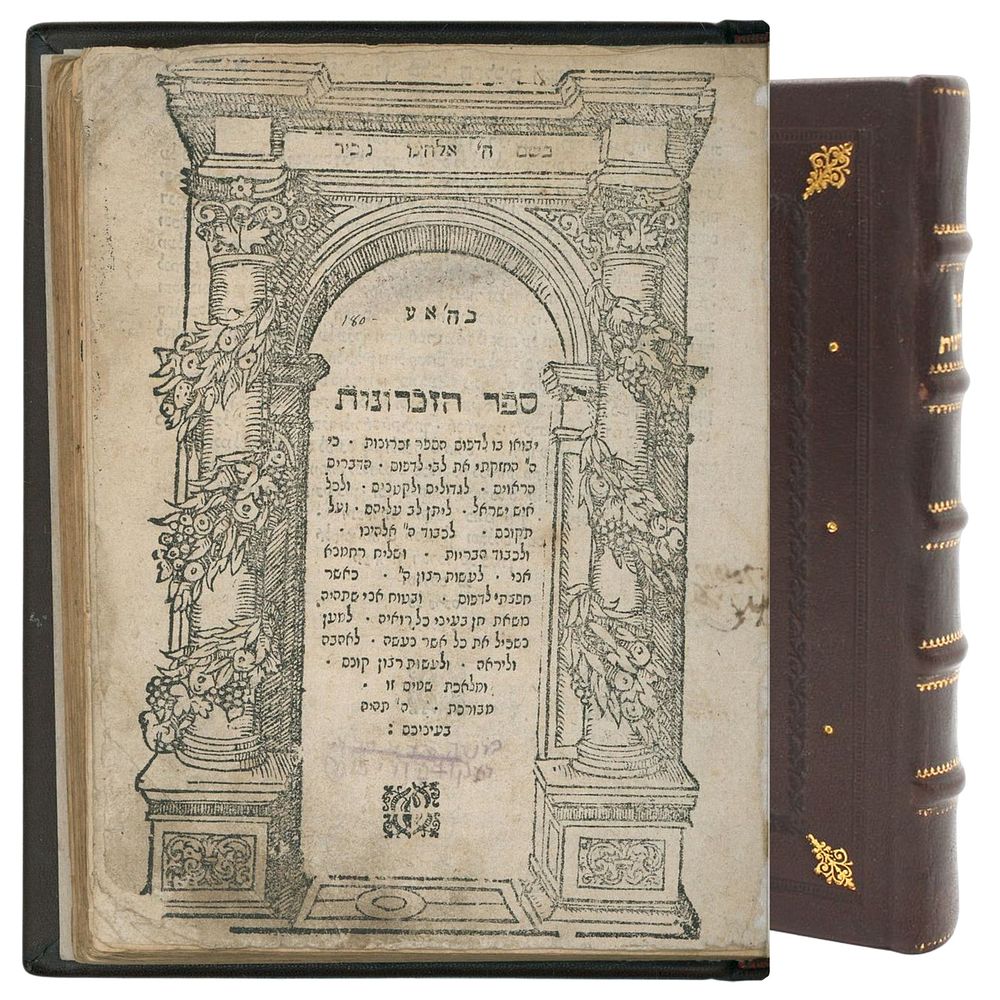
The controversy of “Stam Yeynam” in Italy. Sefer HaZikaronot [by Rabbi Shmuel Abohav], First Edition, Prague, ca. 1648. Antique Glosses. - Sepher HaZichronoth “matters appropriate for both great and small, for the honor of God and the honor of people.” [by Rabbi Shmuel Abohav]. Ten chapters of “remembrances” aimed at reinforcing observance of commandments that had become lax in public practice. First Edition. [Prague, ca. 1648]. A foundational work by Rabbi Shmuel Abohav, printed anonymously without the author’s name, place of publication, or date. In early 17th-century Italy, there was a weakening among the general populace in the observance of important halachic prohibitions. This sefer is divided into ten sections and addresses these issues, offering an important historical glimpse into the community’s spiritual resilience and the challenges it faced. In this work, the author entered into the controversy regarding “Stam Yeynam” in Italy, following a widespread custom there to be lenient in this prohibition, dedicating a significant portion of the work to stressing its severity. Prof. Haym Soloveitchik has discussed at length that both Italian and Moravian Jewry were lax in this respect, and how halakhists dealt with such a challenge to traditional observance. See H. Soloveitchik, Principles and Pressures: Jewish Trade in Gentile Wine in the Middle Ages (Tel Aviv, 2003) p. 118, n. 76. The author chose to publish his work anonymously and therefore printed it in Prague, despite the wide availability of high-quality printing presses in Italy. The Chida (Shem HaGedolim, entry on seforim) writes: “The author is not mentioned in the sefer. We know that it was composed by the pious Rabbi Shmuel Abohav, one of the distinguished rabbis of Venice, and due to his great humility he did not include his name.” Signature and several antique glosses in a Sephardic manuscript. The Gaon Rabbi Shmuel Abohav (c. 1610–1694) was among the leading Torah scholars and halachic authorities of his generation. He served as rabbi of Verona and authored the responsa work Devar Shmuel. He was also one of the most prominent opponents of Shabbatai Tzvi and devoted significant efforts to combating Sabbatean influence in Italy. [4], 86 leaves. 18.2 cm.