Bidspirit auction | Collection of Antique Seforim 1692–1833.
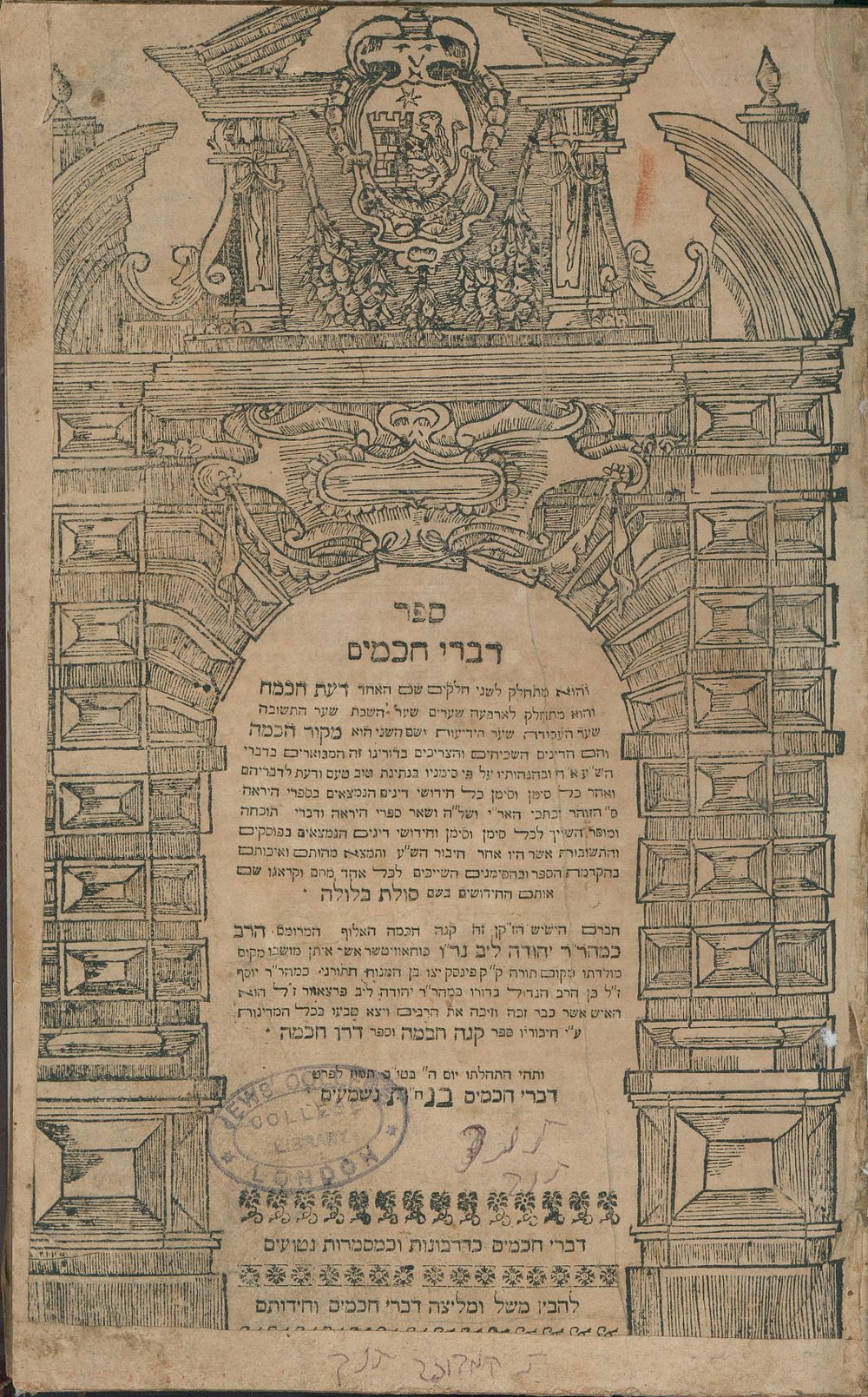
Collection of Antique Seforim 1692–1833. Copy of the Torat Chesed of Lublin. - 1. Divrei Chachamim – A Rare Work Combining Halachah and Kabbalah. First Edition. Hamburg, 1692–1693. Sefer Divrei Chachamim-Mekor Chochmah is a work of wisdom, ethics, and practical halachah relating to Orach Chaim, incorporating customs and practices based on Kabbalah, by Rabbi Yehudah Leib Puchowitzer of Minsk. The work is divided into four sections:Sha'ar HaShabbat (The Gate of Shabbat), Sha'ar HaTeshuvah (The Gate of Repentance), Sha'ar HaAvodah (The Gate of Divine Service, Sha'ar HaYediot (The Gate of Knowledge), containing ethical teachings based on the author's original Torah insights. The place of publication is identified according to S. Wiener, Kehillat Moshe, p. 260, no. 2122. Divrei Chachamim: 28.7cm, [2], 3-66,[2], 3-49, Leaves. Overall Fair Condition, some stains, some marginal repairs and tears affecting text, few frayed edges, lacking last few leaves, leather binding. 2. Sefer Chiddushei Halachot on Tractates Bava Metzia, Sanhedrin, Makkot, and Shevuot, by Rabbi Yoel ben Rabbi Moshe Gad, a descendant of the Taz and the Bach. Only eEdition. Altona, 1736. Published with the approbation of Rabbi Yechezkel Katzenellenbogen. A rare work! 3. Sefer He'Aruch mi-Shach, with the commentary Minchat Aharon, by Rabbi Aharon ben Rabbi Moshe, a grandson of the author. Vienna, 1809. With early ownership signatures of: Rabbi Shimon HaLevi Rosenzweig Rabbi Shlomo HaLevi Rosenzweig, dated 1816, Rafael Melamed, teacher in a Talmud Torah. Also bearing the ownership stamp of David Leib Gross, a sofer STaM in Pressburg. 4 . Sefer Beit Ephraim, Part I. Sudylkiv, 1833. With an early ownership inscription of the renowned Gaon Rabbi Shneur Zalman Fradkin of Liady, later Chief Rabbi of Lublin, author of Torat Chesed. Rabbi Shneur Zalman Fradkin (the ”Ladier”) (1830–1902), author of Torat Chesed, was born in Liady and was recognized from an early age as an exceptional Torah prodigy. He became one of the foremost disciples of the Tzemach Tzedek and remained closely connected with the Lubavitch Rebbes throughout his life. Beginning in 1868, he served as Chief Rabbi of Lublin. In 1892, he settled in Jerusalem, where he was acknowledged as one of the leading Torah authorities of the Holy Land alongside Rabbi Yehoshua Leib Diskin and Rabbi Shmuel Salant. Upon his passing in 1902, his tombstone bore the inscription: ”Rabban Shel Kol Yisrael” (”Teacher of All Israel”). Also with another impressive early ownership signature: Baruch… son-in-law of the Nagid, Rabbi Nathan…