Bidspirit auction | Indus Valley Civilization. Indus unicorn
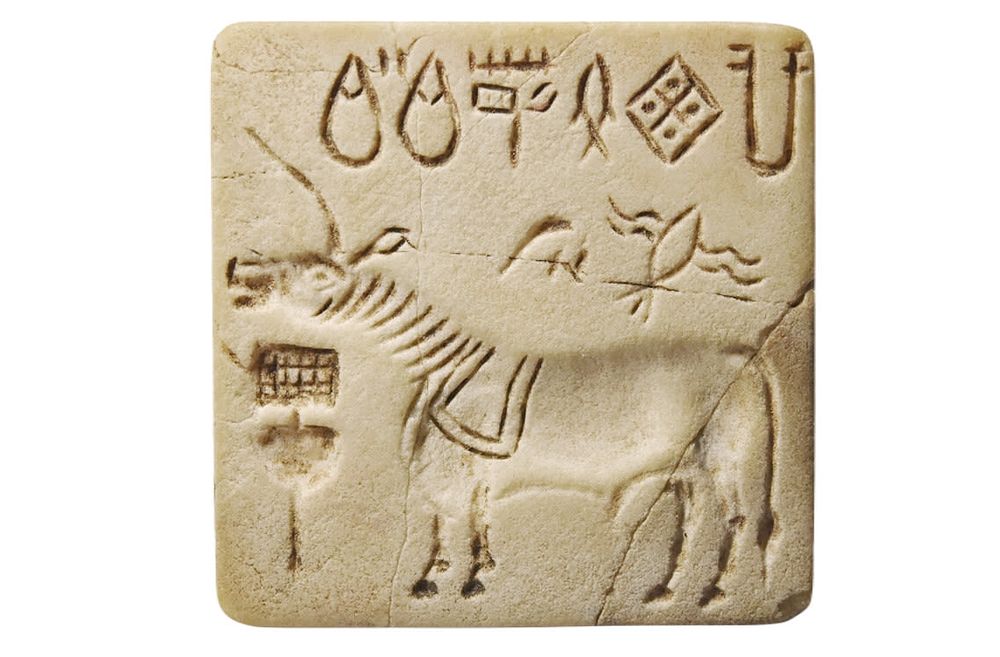
Indus Valley Civilization. Indus unicorn stone seal (often called Harappan seal). Late 3rd millennium BC. Weight 14.32 gram, Size 33 mm. - Descriptions of the type : A square Stone seal with pierced pair of lugs on the reverse. Unicorn bull standing right, Mysterious symbols inscribed above (So fare Indus script has remained undeciphered), and probably a ritual object in front of the bull. Condition : The seal was reattached. Citation from ”Ancient Cities of the Indus Civilization”, p. 189, Dr. Kenoyer, 1998 : ”Impressions of seals on clay tags and on circular tokens show how the rulers and traders actually used their seals and provide insight into commercial procedures and the control of trade. Circular tokens with the impressions from square stamp seals on one of both sides were never attached to bundles of goods. In historical times such tokens bearing an official seal were used as passes to control traffic – much like a hauling permit in the modern context – in much the same way the Indus tokens may have been issued to middlemen or transporters as certificates from a seal owner” The Indus Valley Civilization , also known as the Indus civilization, was a Bronze Age civilization in the northwestern regions of South Asia, lasting from 3300 BCE to 1300 BCE, and in its mature form from 2600 BCE to 1900 BCE. Together with ancient Egypt and Mesopotamia, it was one of three early civilizations of the Near East and South Asia, and of the three, the most widespread. Its sites spanned an area from northeast Afghanistan, through Pakistan, to western and northwestern India. The cities of Indus Valley Civilization were noted for their urban planning. The Indus was organized and integrated as a decentralized socio-political system that was unique during the 3rd millennium BC. The hallmark of its people were well-organized cities instead of temples and palaces. Small, immaculately constructed objects like seals and beads seem to have been the most highly valued cultural objects. Terra-cotta ceramics were fired at high temperatures to make stoneware bangles using technologies re-invented only centuries later in China. There is little evidence of warfare. The same weights and measures were used for over a thousand miles, an incredible feat in the Bronze Age. Indus traders set up flourishing colonies in the Gulf and Mesopotamia.