Bidspirit auction | Mkrtich Kamalyan (Armenian, 1915–1971)
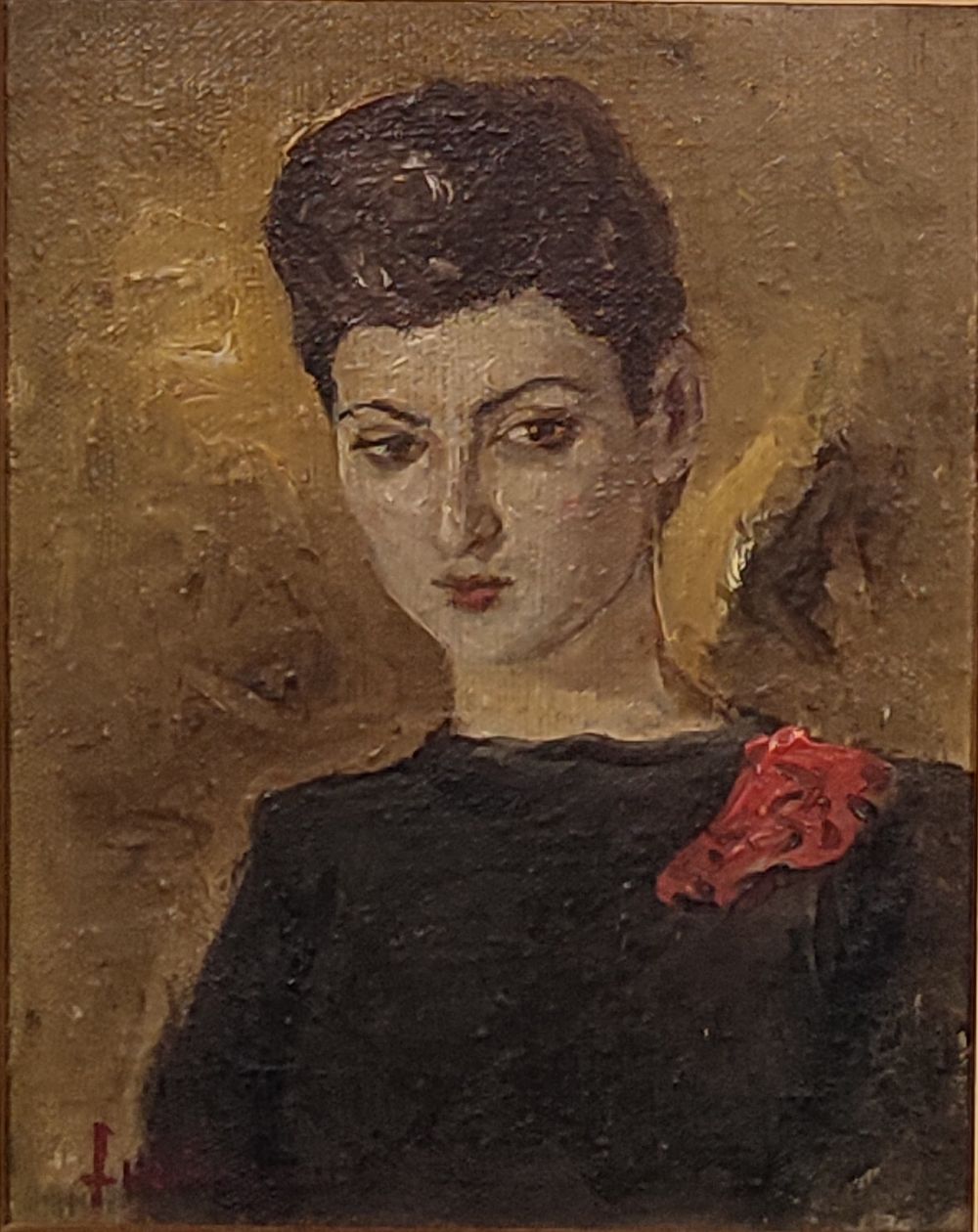
Mkrtich Kamalyan (Armenian, 1915–1971) - Mkrtich Kamalyan (Armenian, 1915–1971), ”Portrait of a Woman”, oil on canvas laid on wood, signed l.l., signed and dated 1938, 24 x 19 cm. Notes Mkrtich Hayrapetovich Kamalyan was a distinguished Armenian painter and portraitist whose work occupies an important place within the development of twentieth-century Armenian art. Best known for his expressive portraits and narrative compositions depicting prominent figures of Armenian culture, Kamalyan combined academic training with a deep humanistic sensitivity, creating works distinguished by psychological depth and refined painterly execution. Born in Kars in 1915, Kamalyan's early life was shaped by the upheavals that followed the Armenian Genocide, after which his family resettled in Eastern Armenia. In 1935, he enrolled at the newly established Tbilisi Academy of Arts, where he studied under the renowned artists Alexander Bazhbeuk-Melikyan and Ucha Japaridze. He graduated in 1941, receiving a rigorous academic foundation that would remain evident throughout his career. From 1946 onward, Kamalyan was a regular participant in major exhibitions across the Soviet Union while simultaneously teaching at the Yerevan Art College, where he influenced a generation of younger Armenian artists. In recognition of his artistic achievements, he was awarded the honorary title of Honored Artist of the Armenian SSR in 1965. Portraiture formed the core of Kamalyan’s artistic practice. His subjects ranged from cultural and intellectual figures to family members and ordinary individuals, all rendered with remarkable attention to character and emotional presence. Rather than merely recording likenesses, his portraits sought to reveal the inner life of the sitter, placing him among the leading Armenian portrait painters of his generation. Alongside portraiture, Kamalyan produced landscapes, still lifes, and thematic compositions that demonstrate the breadth of his artistic vision. His landscapes capture the diverse scenery of Armenia and the Caucasus with lyrical sensitivity, while his still lifes reveal a mastery of color, composition, and atmosphere. Several of his most significant works address historical and humanitarian themes, including reflections on war, the Armenian experience, and the tragedies of the twentieth century. Kamalyan’s travels abroad further enriched his artistic language. Following visits to Czechoslovakia, Cuba, and Mexico, he created notable series inspired by these journeys, broadening the geographical scope of his oeuvre while retaining his distinctive painterly voice. In addition to his easel paintings, Kamalyan contributed to important public art projects, including monumental mosaics and decorative panels in Yerevan and Moscow. These commissions reflect his versatility and his role in shaping the visual culture of the Armenian Soviet period. Today, Kamalyan is remembered as a master of portraiture whose work bridges academic realism and modern Armenian artistic expression. His paintings remain valued for their technical accomplishment, cultural significance, and enduring ability to convey the dignity and individuality of their subjects.