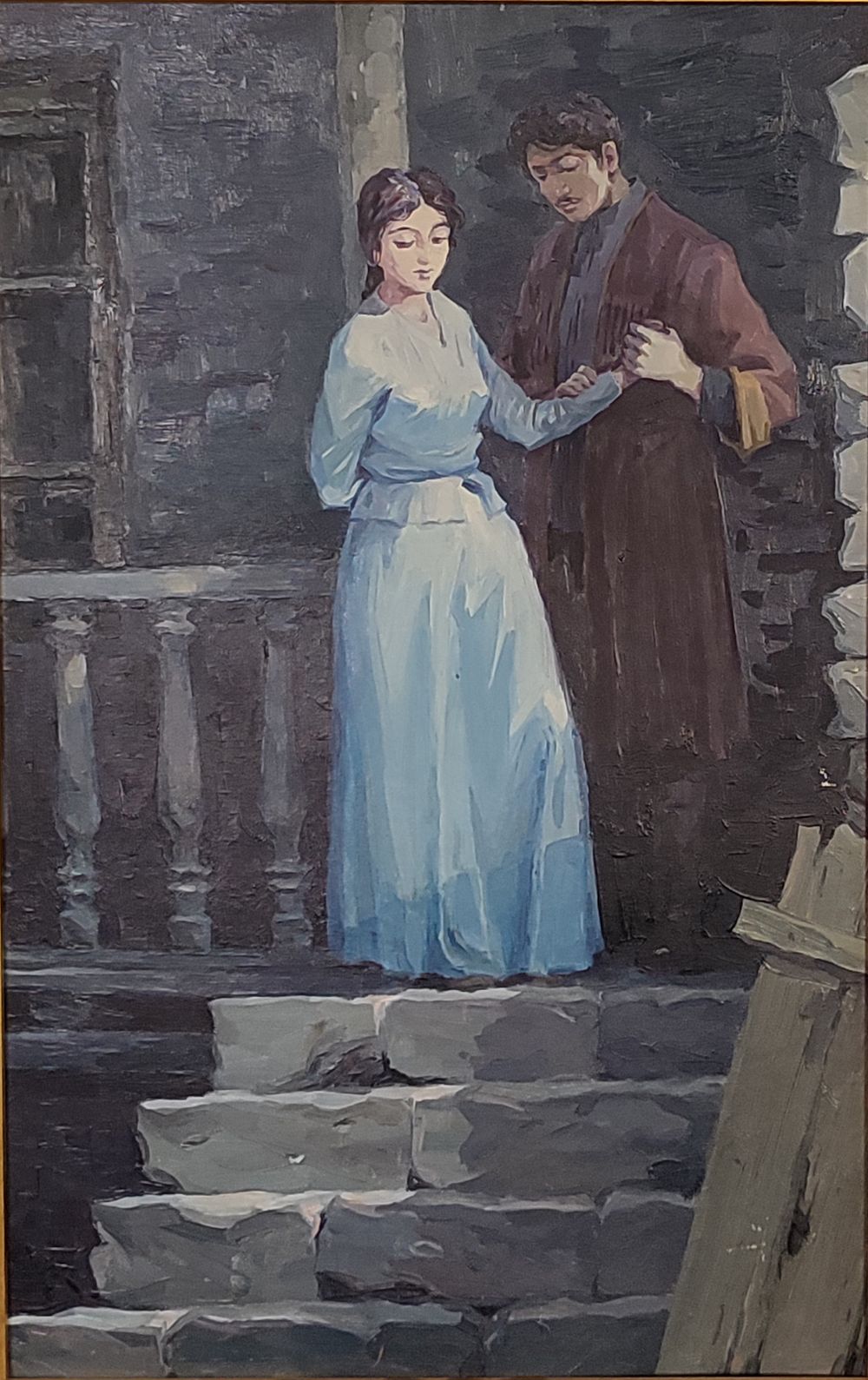
Bidspirit auction | Hakob Ananikyan (Armenian, 1919–1977)
Hakob Ananikyan (Armenian, 1919–1977) - Hakob Ananikyan (Armenian, 1919–1977), oil on cardboard, 45,5 x 29 cm. Notes Hakob Ananikyan occupies a unique place in twentieth-century Armenian art as a self-taught painter whose mature artistic voice emerged relatively late in life. After relocating from his native Leninakan (present-day Gyumri) to Yerevan in 1966, he devoted himself fully to painting, creating a highly personal body of work rooted in memory, local history, and the distinctive spirit of his hometown. Throughout his career, Ananikyan remained deeply attached to Gyumri, drawing inspiration from its architecture, traditions, folklore, and inhabitants. His paintings celebrate the everyday life of the city’s craftsmen, merchants, bakers, cobblers, builders, and colorful folk characters, preserving a world that was rapidly disappearing. Rather than pursuing historical documentation, the artist sought to capture the atmosphere, humor, and emotional resonance of a cherished past. Ananikyan’s works are immediately recognizable for their dense painterly surface, rich texture, and carefully structured compositions. Executed primarily in oil on canvas or board, his paintings are characterized by deep earth tones, warm reds and browns, silvery grays, and velvety blacks, enlivened by luminous accents of color. Despite their predominantly dark palette, his compositions convey warmth, intimacy, and nostalgia rather than drama or melancholy. The artist’s most celebrated subjects include iconic figures from Gyumri’s urban culture, portrayed with dignity, affection, and subtle humor. Works such as Poloz Mukuch and Baker Simon exemplify his ability to transform ordinary local characters into enduring cultural symbols. His depictions of women in traditional dress, family celebrations, and communal gatherings further reveal his fascination with Armenian customs and social life. A defining feature of Ananikyan’s art is his evocative portrayal of old Gyumri. Through restrained tonal harmonies and expressive textures, he recreates the city’s unique visual identity—its black tuff-stone architecture, carved facades, traditional costumes, and vibrant street life. Memory serves as the foundation of his artistic vision, lending his paintings a poetic quality that balances humor with longing. Independent of prevailing artistic trends, Ananikyan developed a highly individual style rooted in personal experience and cultural remembrance. Today, his works are valued not only for their artistic merit but also for their role in preserving the historical and emotional landscape of one of Armenia’s most distinctive cultural centers.