Bidspirit auction | Boris Kustodiev (Russian, 1878 -
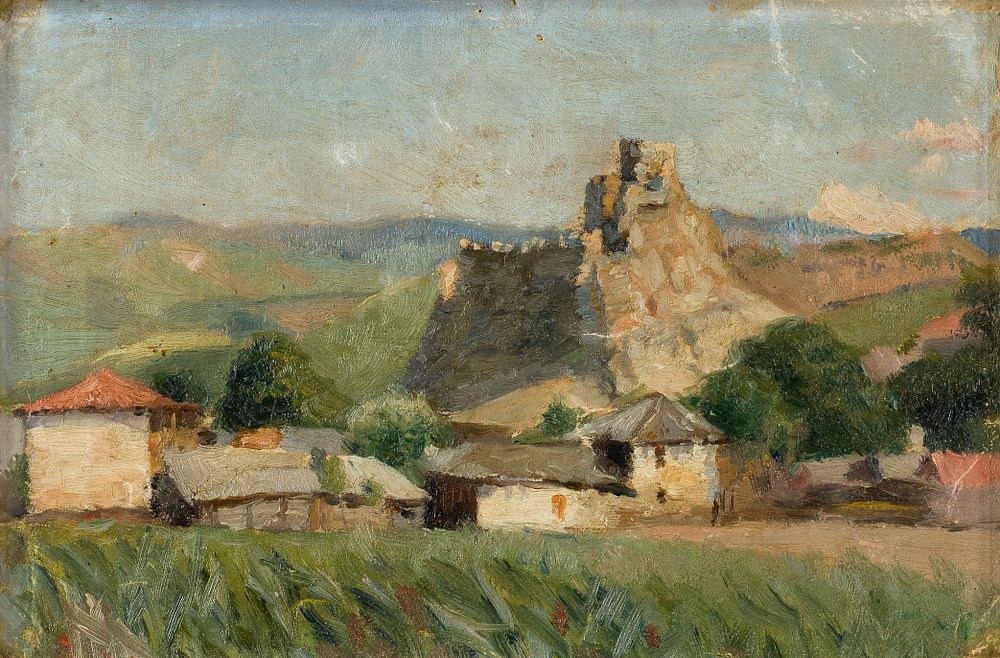
Boris Kustodiev (Russian, 1878 - 1927) - Boris Kustodiev (Russian, 1878 - 1927), ”Suram Fortress”, oil on canvas, 14 x 26 cm. The reverse inscribed in Russian, stating that the work was a gift from the artist’s sister in Yerevan in 1921. Notes Boris Kustodiev born in Astrakhan, was a leading figure of early 20th-century Russian art, renowned for his richly colored scenes of merchant life and festive provincial culture. He studied at the Imperial Academy of Arts in St. Petersburg under Ilya Repin, who recognized his exceptional talent early on. Closely associated with the Mir Iskusstva movement, Kustodiev worked across multiple disciplines, including painting, book illustration, and stage design. His travels in Europe informed his style, though his subject matter remained deeply rooted in Russian life. Despite severe illness that left him paralyzed in later years, he continued to produce some of his most celebrated works, including The Merchant’s Wife (1918). His works are held in major collections such as the State Russian Museum and other leading institutions. Suram Fortress (1901) was painted by Boris Kustodiev during his honeymoon journey to the Caucasus. The trip left a lasting impression on the artist, as reflected in his letters and diaries, later published in collections such as Letters. Articles. Notes. Interviews. Kustodiev was deeply struck by the picturesque ruins of Surami, which he described as “one of the most beautiful places” he had encountered in the region. He was particularly drawn to the contrast between the fortress’s austere stone architecture and the soft greenery of the surrounding valley. In his writings, the artist recalled the challenges of working in intense heat and rapidly changing weather conditions, while striving to capture the “sunlit, sultry air” of Georgia. He produced numerous sketches, focusing on the warm ochre tones of the stone set against a vivid blue sky. The romantic aura of the site was further enhanced by the well-known local legend of the Surami Fortress, which tells of a young man immured within its walls—an element that resonated with Kustodiev’s interest in the poetic and slightly dramatic character of Caucasian landscapes. This 1901 journey marked an important moment in the artist’s development, as he began to move beyond the strict academic tradition of his teacher, Ilya Repin, toward a more expressive and luminous painterly language, already evident in the dynamic brushwork of the present work. Provenance The reverse inscribed in Russian, stating that the work was a gift from the artist’s sister in Yerevan in 1921. Private collection.