Bidspirit auction | An Important and Historical Letter
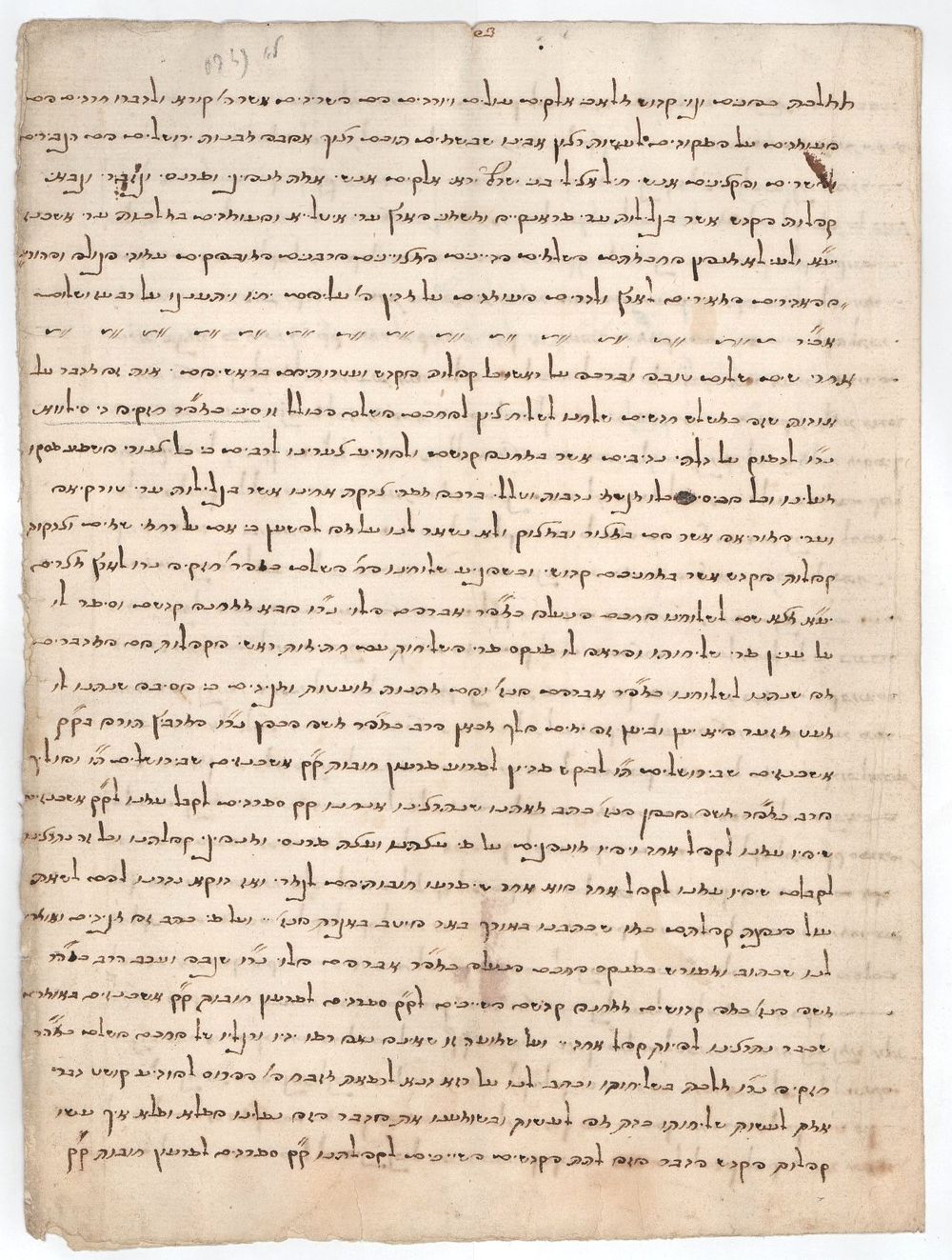
An Important and Historical Letter from the Rabbis of Jerusalem Regarding the Mission of the Author of ”Pri Chadash” – Sephardic and Ashkenazic Controversy in Jerusalem Two manuscript pages, a copy of a letter from the Rabbis of Jerusalem regarding the mission of Rabbi Chizkiyah Di-Silva, author of ”Pri Chadash, ” and concerning a dispute between the Sephardim and Ashkenazim in Jerusalem. [Italy, late 17th century]. Fluent Italian script. An early copy [close to the time of writing] of a letter from the Rabbis of Jerusalem: Rabbi Moshe Galanti, Maharam Chaviv, Rabbi Ovadia Aharon Chayun, Rabbi Chiya Avraham Di Buton, Rabbi Avraham Tzemach, Rabbi Yaakov Molcho, Rabbi Chiya Ben Dayan, and Rabbi David Yitzchak – regarding the mission of the Gaon Rabbi Chizkiyah Di-Silva, author of ”Pri Chadash, ” from Tishrei 5449 (1688). The letter is addressed to the heads of the community, trustees, and rabbis of ”the Holy Communities in the regions of the cities of the Franks, the wealthy cities of Italy, and those residing in the kingdom of Ashkenaz, may they be protected.” The Jerusalem rabbis relate in their letter that about three months earlier, they sent as an emissary ”the complete and perfect sage... our teacher Rabbi Chizkiyah Di-Silva, may he live long, to knock on the doors of generous donors...” When Rabbi Chizkiyah reached Egypt, he met the emissary of Jerusalem, Rabbi Avraham HaLevi, who informed him that in several communities he visited, he was unable to collect donations as in the past. When he inquired about the reason, he was told that another emissary, Rabbi Moshe HaKohen, ”the one who teaches Torah in the Ashkenazic community of Jerusalem, ” had already collected the charitable funds intended for Jerusalem to repay the Ashkenazic community's debts, after presenting an agreement made between the Ashkenazic and Sephardic communities in Jerusalem stating that the communities would unite concerning financial matters. The rabbis of Jerusalem express their astonishment in their letter at how funds intended for the Sephardim were given for the repayment of the Ashkenazim's debts: ”Upon hearing of this matter, we were utterly astonished at how the holy communities acted by giving the funds belonging to our community, the Sephardic community, for the repayment of the Ashkenazic community’s debts, for we never granted permission or authorization for this matter.” According to them, the entire agreement for unity between the communities was contingent upon the Ashkenazim first repaying their debts, and only then would there be a partnership. They declare that they do not forgo the funds already collected by Rabbi Moshe HaKohen, nor any future funds: ”For our community’s life, the Sephardic community, takes precedence, and we do not forgo the funds belonging to our community, ” and they empower Rabbi Chizkiyah Di-Silva to excommunicate and ban anyone who refuses to comply with their demands. The letter contains numerous historical details about the state of the two communities in Jerusalem – Sephardic and Ashkenazic, such as the Ashkenazic debts in Jerusalem – which eventually led to the destruction of the Ashkenazic community in 1720 – and the financial agreements made between the two communities, in which the Sephardic community agreed to handle all tax matters for the Ashkenazim: ”We have had an agreement with the Ashkenazic community for many years that they would pay us their share for all the aforementioned taxes – fifty grush per month, six hundred grush per year. According to this agreement, no tax collector would pass by their doors as if they were not living in the city. The troubles faced by the Ashkenazic community are from new and old debts made by previous generations due to their poor management, but in terms of taxes, they have no troubles because everything is laid upon us in exchange for the fifty grush they pay us monthly. And even this agreement is not paid on time...” The Gaon Rabbi Chizkiyah Di-Silva (1656–1695), was born in Livorno, Italy, and ascended to Jerusalem in 1676 at the age of twenty, entering the yeshiva of Rabbi Moshe Galanti (Harav Hamag'n). The Chida recounts that he heard from the author of ”Batei Kehuna, ” ”that on the first day he entered Rabbi Moshe Galanti's yeshiva with all his holy disciples, he debated with wisdom and demonstrated such great erudition on the topic.” Soon after, he was appointed head of the yeshiva. His notable students include Rabbi Yitzchak HaKohen, author of ”Batei Kehuna, ” Rabbi Shlomo Algazi (the second), and Rabbi Yeshaya Azulai, grandfather of the Chida. In 1688, he was sent by Rabbi Moshe Galanti on a communal mission to Europe [the same mission mentioned in this letter]. The Amsterdam community received him with great honor and generously supported him. Rabbi Moshe Hagiz mentions that he saw in the records of the Sephardic community in Amsterdam that they allocated a substantial sum of 600 'aryot' for his mission,