Bidspirit auction | Letter Regarding Pikuach Nefesh –
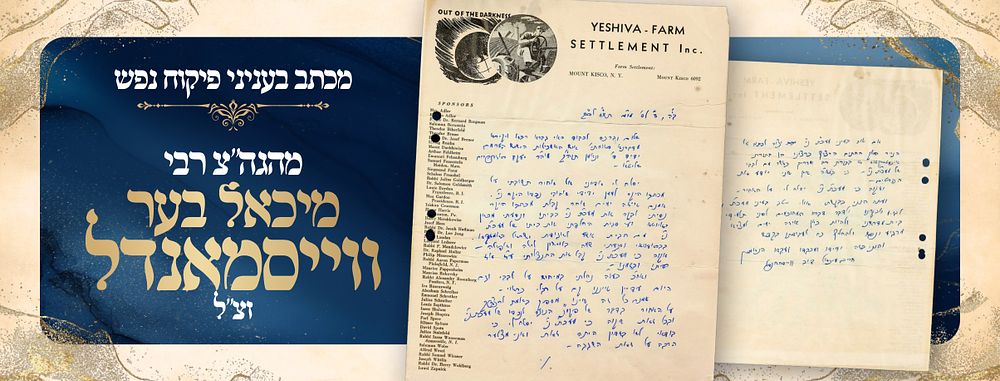
Letter Regarding Pikuach Nefesh – From the Gaon and Tzaddik Rabbi Michael Ber Weismandel ZT”L, Founder of Yeshivas Nitra and Author of Min HaMitzar – 1948 A letter concerning pikuach nefesh, addressed for the grandson of the well-known community leader Rabbi Yaakov Razenheim, from the holy Gaon Tzaddik Rabbi Michael Ber Weismandel ZT”L, author of Min HaMitzar – 1948. In his letter, the Gaon apologizes for not having come to visit, explaining that he had an error in his home address, and also apologizes for the delay in his response. He further mentions that he feels weak in his heart and is unable to rise properly on his feet. As noted in the letter, the Gaon attached a blank second letter, signed at the bottom, recommending that Rabbi Razenheim fill it out as needed. Presumably, the letter was required for his halachic opinion concerning the life-threatening situation affecting Rabbi Razenheim’s grandson. At the end of the letter, the Gaon adds warm, heartfelt words, and invites Rabbi Razenheim to the Yeshiva in Nitra to speak before the students and rest a bit. The Gaon and Tzaddik Rabbi Michael Ber Weismandel (1904–1958) was among the great activists for the the Yeshuah of Klal Yisroel during the years of World War II. He was the son-in-law of his rabbi, the Gaon Rabbi Shmuel Dovid Ungar ZT”L, and served as Av Bais Din and Rosh Yeshiva of Nitra. During the war, he worked tirelessly to save Hungarian Jewry, but the Zionists obstructed and sabotaged his efforts. Rabbi Weismandel suffered from heart disease due to these terrible events, and passed away shortly after the war. He later came to the United States, where he re-established Yeshivas Nitra. His well-known works include Min HaMitzar. Selections of his words were printed in Srufei HaKivshanim Ma’ashimim, describing the crimes of the Zionists during the war years. The close relationship between Gaon Rabbi Michael Ber and Rabbi Razenheim is well known, beginning during World War II, when Rabbi Razenheim forwarded his letter to the U.S. government, requesting the destruction of the railway lines leading to Auschwitz. The letter is written on both sides of the page. There are small punched filing holes in the margins. The ink is slightly light.