Bidspirit auction | Gerard Sekoto (1913-1993)
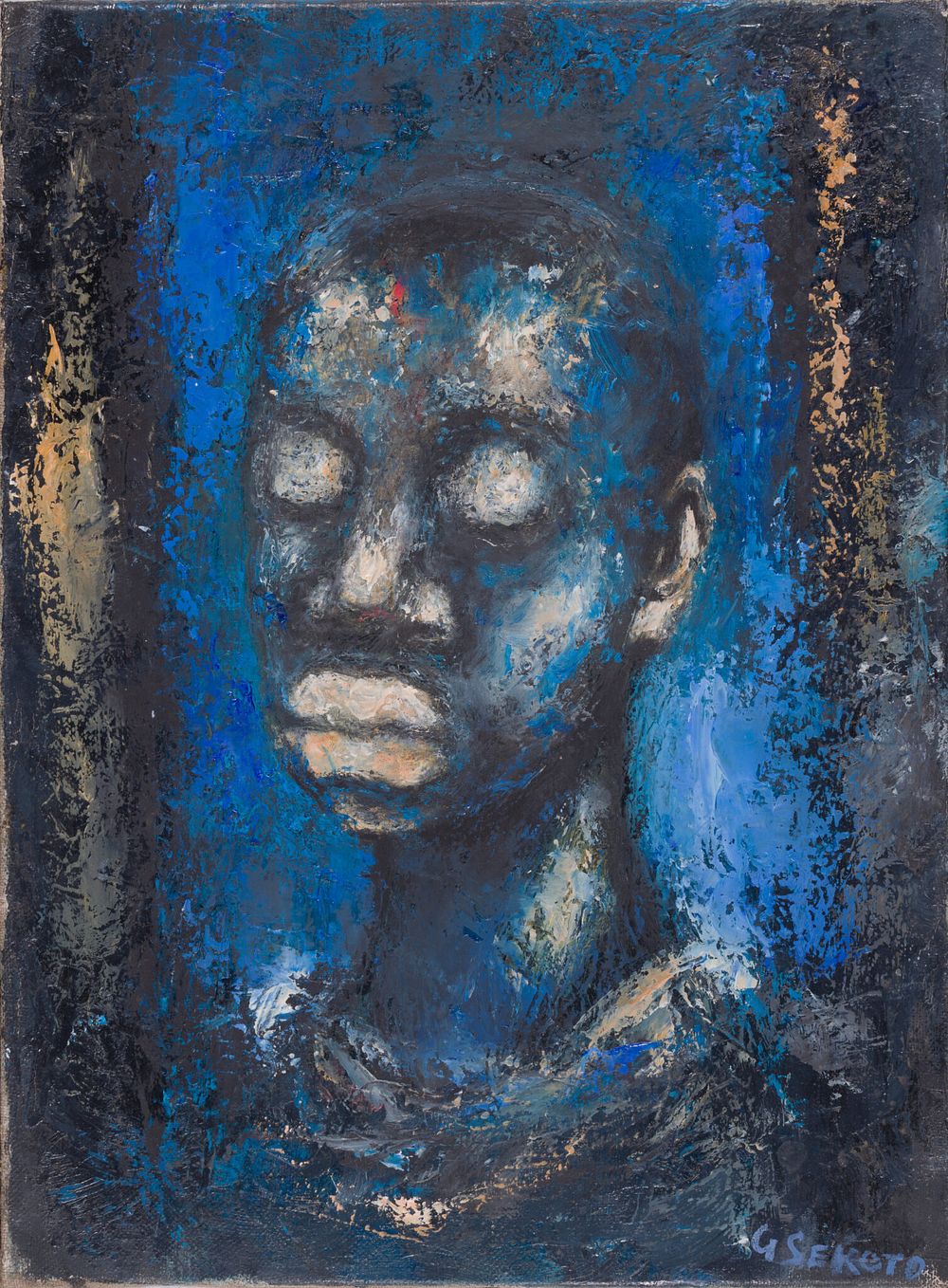
Gerard Sekoto (1913-1993) - Portrait of a Man in Blue. Gerard Sekoto (1913-1993) | South Africa Portrait of a Man in Blue Oil on Canvas Signed: Signed lower right “G SEKOTO” in blue pigment. Dimensions: Artwork: 38.5 × 28 cm | 15.2 × 11 in Provenance: Private collection, Paris, France. Acquired from the above. Condition: Good vintage condition; the work features a heavy, expressive impasto; stable paint layers with minor age-appropriate surface wear; original wooden stretcher. Conditions of Sale: All lots are sold as is. See Section 4 of our Terms and Conditions for return policy. All inquiries must be made prior to bidding, as no further details can be provided after the sale. By placing a bid, you confirm that you have read and agree to our Terms and Conditions in full. Shipping: Aurora & Athena does not provide in-house shipping. The successful buyer arranges shipping directly with a company of their choice. For shipments outside the EU, Spanish export tax may apply to certain higher-value artworks; no export tax applies within the EU. Any such tax is payable by the buyer. Please refer to our Shipping & Export Information page for further details. -- This intense and soulful portrait is a significant example of Gerard Sekoto’s work during his long exile in Paris. The subject is rendered with a haunting, statuesque quality, emerging from a deep indigo and obsidian background. Sekoto utilizes a sculptural application of paint, using thick, rhythmic brushstrokes to build the features of the face, which are highlighted with flashes of ochre and white. The use of a predominantly blue palette imbues the work with a sense of “Blue Note” melancholy, reflecting Sekoto’s dual life as a painter and a jazz musician in the clubs of Saint-Germain-des-Prés. The closed eyes and serene expression suggest a moment of deep introspection or spiritual resilience, a recurring theme in Sekoto’s depictions of the human condition. This work captures the transition of his style from the social realism of his South African years (District Six and Sophiatown) to the more atmospheric, psychological abstraction of his European period.