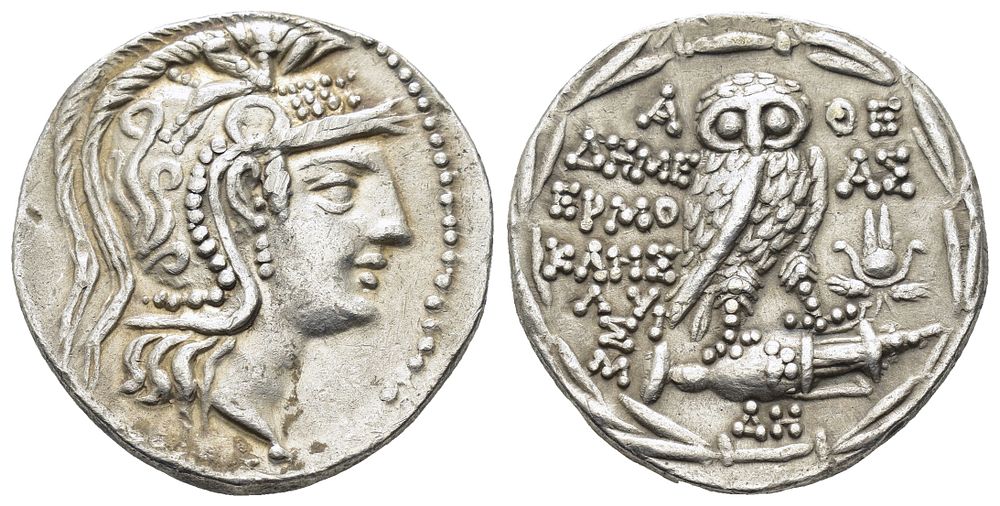
Bidspirit auction | ATTICA. Athens.(Ca. 168/5-50 BC).Tetradrachm .
ATTICA. Athens.(Ca. 168/5-50 BC).Tetradrachm . Obv : Helmeted head of Athena right. Rev : A-ӨE, ΔHME-AΣ, EPMO, KΛHΣ, ΛΥΣΜ, ΔH. Owl standing right on amphora; in right field, headdress of Isis; all within wreath. Condition : Good very fine. Material : Silver. Axis : 12h. Weight : 16.51 gr Diameter : 29 mm A Hellenistic-period Athenian tetradrachm, minted between circa 168/5 and 50 BC, during a time of significant political transition and cultural exchange in the Eastern Mediterranean. Although classical Athens had long lost its political dominance, it retained its prestige and continued to strike coinage that echoed its illustrious past. The obverse features the helmeted head of Athena, the city's patron goddess, rendered in classical style with a crested Corinthian helmet—an enduring symbol of Athenian identity and martial strength. Despite the evolving artistic and political landscape of the Hellenistic world, this portrait maintains the traditional iconography that had defined Athenian coinage since the 5th century BC. The reverse displays the iconic owl, a representation of wisdom and Athena's sacred bird, standing right atop an amphora, often used to denote official festival issues or to commemorate particular events. Surrounding the design is a wreath, and to the right is a striking symbol—the headdress of Isis, the Egyptian goddess. This exotic motif reflects the deepening influence of Eastern religions and the widespread diffusion of Egyptian cults during the Hellenistic period, especially in major cultural centers like Athens. The inclusion of multiple magistrates' names—ΔΗΜΕΑΣ, ΕΡΜΟ, ΚΛΗΣ, ΛΥΣΜ, and ΔΗ—suggests a period of collective civic administration or a shared responsibility in overseeing the minting process. Their presence not only serves as a chronological marker but also underscores the bureaucratic structure of Hellenistic Athens under Roman influence. This coin is a remarkable example of how Athens, though politically diminished, remained a vibrant center of cultural and religious integration. Its imagery bridges the city’s classical heritage with the cosmopolitan realities of the Hellenistic and early Roman periods.