Bidspirit auction | IONIA. Ephesos. (Circa 390-330 BC).
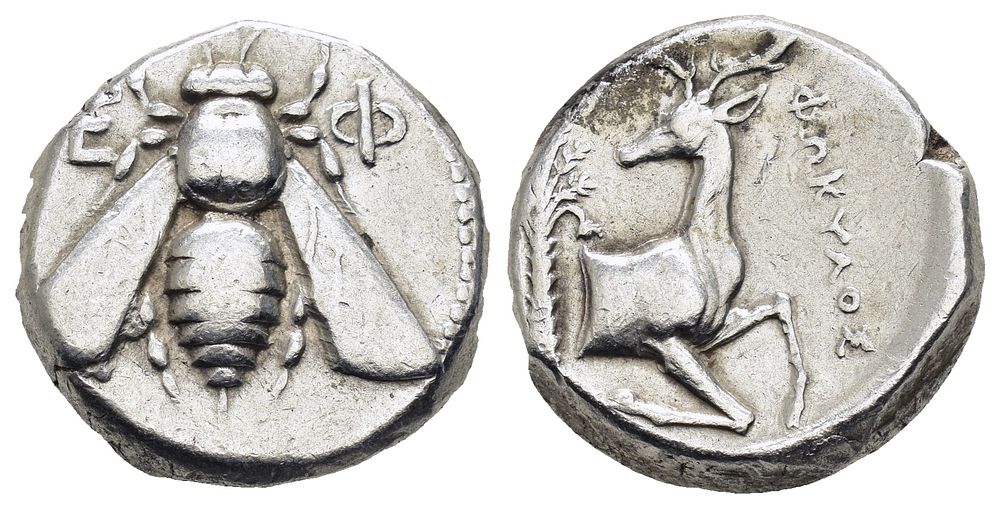
IONIA. Ephesos. (Circa 390-330 BC). Tetradrachm. Obv : E-Φ to left and right of bee with straight wings. Rev : ΦΩKYΛOΣ. Forepart of stag recumbent right, head left, palm tree to left. Hecatomnus hoard 22; Pixodarus O5-7 (I) and O90-10 (II). Condition : Good very fine. Material : Silver. Axis : 12h. Weight : 15.28 gr Diameter : 22 mm This silver tetradrachm from ancient Ephesos in Ionia, minted circa 390–330 BC, exemplifies the artistic and symbolic strength of classical Greek coinage. Combining religious symbolism with civic identity, the coin draws upon powerful imagery connected to the Ephesian goddess Artemis, whose cult dominated the city’s public and spiritual life. At the center of the obverse is a realistically engraved bee, wings outstretched in symmetrical balance. The bee was not merely decorative: it was the sacred emblem of Artemis Ephesia, and its presence on coins signified the deep religious character of Ephesos. The letters E–Φ flanking the insect are abbreviations for Ephesia, identifying the minting city. The precision of the design—visible in the segmented abdomen, thorax, and antennae—demonstrates both the die engraver's technical skill and the importance of this emblem to the city’s identity. The reverse features the forepart of a stag recumbent to the right, with its head turned left, a highly dynamic and graceful posture. The stag, like the bee, was sacred to Artemis, frequently portrayed in her iconography as both a companion and a symbol of the wilderness she protected. To the left of the animal stands a stylized palm tree, a nod to the legendary founding location of the Ephesian sanctuary. The vertical inscription ΦΩKYΛOΣ names the magistrate (Phokylos), under whose authority this coin was issued. Identifying the magistrate by name was a common practice in Greek civic mints, linking the coin’s authority directly to the city's political structure. Coins like this one served not only economic functions but also religious, political, and cultural purposes. The bee and stag motifs were instantly recognizable across the Greek world as Ephesian symbols. The artistry of this particular example—refined, balanced, and symbolically dense—makes it a quintessential example of Ephesian Classical silver. This tetradrachm of Ephesos is a masterwork of Greek numismatics, integrating mythology, civic identity, and fine art. The powerful imagery of Artemis’ sacred animals, combined with historical context from the Persian-influenced Ionian coast, makes it a valuable piece for historians, collectors, and admirers of the ancient world alike