Bidspirit auction | KINGS of LYDIA.Time of Alyattes-Kroisos.(610-546
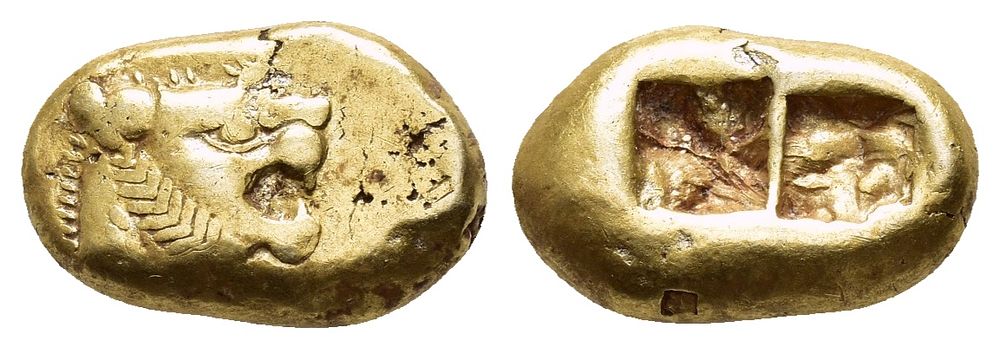
KINGS of LYDIA.Time of Alyattes-Kroisos.(610-546 BC).Sardes.EL Trite or 1/3 Stater. Obv : Head of roaring lion right; star on forehead. Rev : Two incuse square punches. SNG Kayhan 1013; SNG Aulock 2868-2869. Condition : Good very fine. Material : Gold. Axis : 12h. Weight : 4.73 gr. Diameter : 14 mm. This electrum trite (1/3 stater), struck in Sardes, the capital of ancient Lydia, during the reigns of Alyattes or Kroisos (Croesus), represents one of the earliest forms of coinage in human history. Issued circa 610–546 BC, these coins belong to the birth of standardized currency and reflect the economic and political sophistication of early Anatolian kingdoms. The obverse features the confronting forepart of a lion, with open jaws and a prominent eye, a recurring royal emblem of Lydian authority. The lion was a symbol of power, ferocity, and divine favor, likely associated with the sun and protection. The meticulous rendering of its facial features, especially the stylized mane, shows the early attempt at combining symbolism with figural realism. These types are sometimes interpreted as heraldic devices, emblematic of royal sovereignty—either of the individual king or of the ruling dynasty more broadly. The reverse displays a two-part incuse punch, a typical feature of early Lydian and Ionian coinage. These punches were not decorative but functional—created by the reverse die to stabilize the coin blank during striking. Their deep recess and irregular interior are characteristic of early electrum issues and represent one of the oldest numismatic “reverse” conventions. The coin is struck in electrum, a naturally occurring alloy of gold and silver that was abundant in the rivers of western Anatolia, particularly the Pactolus River. The use of electrum, while valuable, introduced weight and value inconsistencies due to natural variation in composition—a challenge that Kroisos would later address by separating gold and silver coinage. The reigns of Alyattes (ca. 610–560 BC) and his son Kroisos (ca. 560–546 BC) marked the height of Lydian wealth and innovation. Alyattes is credited with stabilizing Lydia and engaging in regional warfare, while Kroisos is famed for his immense riches and as the first ruler to issue pure gold and silver coinage. This trite, issued during their rule, comes from a transitional phase when Lydians began formalizing currency systems. Lydia’s economy flourished under their leadership, and these coins helped facilitate large-scale trade throughout the Aegean and Near East. Earliest coinage system, Lydian electrum coins are the earliest known state-issued coins in history. Standardized denominations: The trite (1/3 stater) was part of a weight-based monetary system, allowing for commerce at various levels. Iconic design the lion symbol became iconic in early numismatics and inspired coinage in Ionia, Persia, and beyond. Historical milestone coins like this mark a decisive step from barter and bullion economy to true monetary circulation. This electrum trite from Sardes is a cornerstone of numismatic and economic history. Struck under the powerful kings Alyattes or Kroisos, it carries the imagery of royal authority and the innovation of one of the world's first monetized economies. Its rough but bold design serves as a tangible link to the dawn of coinage, trade, and financial civilization.