Bidspirit auction | A Painted Kashmiri Papier-Mâché Bowl
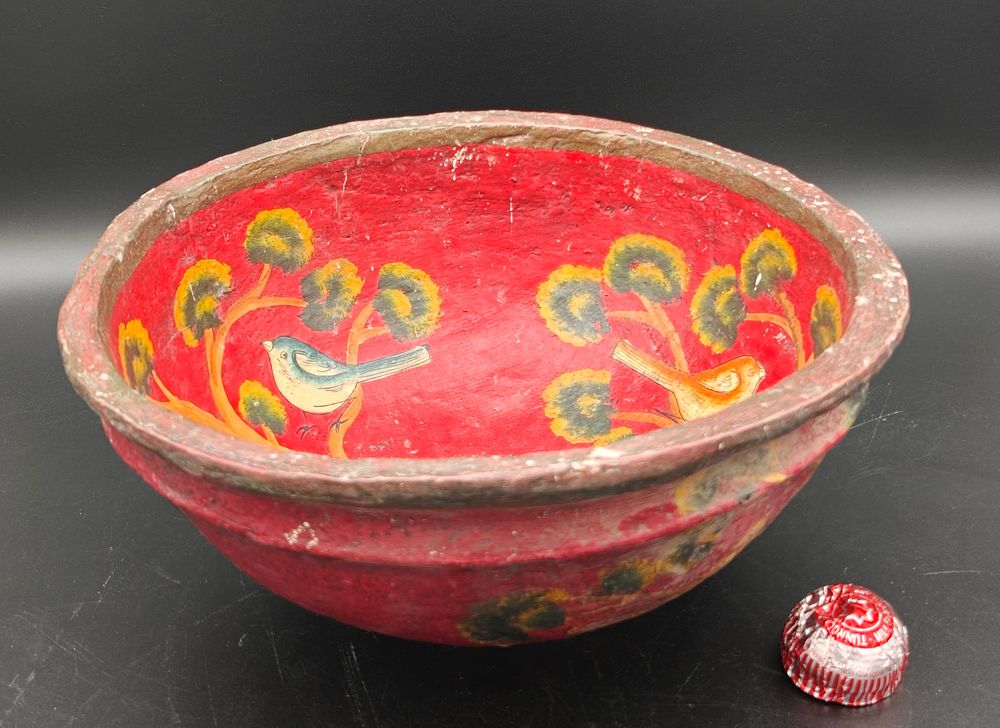
A Painted Kashmiri Papier-Mâché Bowl - A footed bowl crafted from hand-painted papier-mâché. The bowl features a rounded, footed form with a deep well and a flared rim. It is constructed from layers of paper pulp and finished with a thick coating of lacquer. The interior and exterior surfaces are decorated with a vibrant red ground. The ornamentation includes birds perched on stylized tree branches with yellow and green foliage. No maker's marks, signatures, labels, or country of origin stamps are visible on the base or body of the piece. Diameter: Approximately 12 inches Height: Approximately 6 inches. These specific hand-painted papier-mâché bowls were traditionally crafted in India—most notably through the 600-year-old Kashmiri papier-mâché tradition—for household decoration, dry storage, and high-status gifting. It is a vintage item most likely dating to between the 1950s and 1980s. 1. Functional Art & Dry Storage In Indian households, larger bowls like this were designed as functional art to store dry goods: • Fruit and Nuts: Serving dry fruits, walnuts, and traditional sweets. • Grain Storage: In some rural regions, large reinforced papier-mâché containers were used to store dry grains due to the material's natural insulation properties. • Trinket and Vanity Organizers: Holding daily household items, keys, or personal accessories. 2. Prestigious Gifts & Trousseaus Historically, these heavily ornamented items were luxury goods commissioned for royal courts and wealthy merchants. Over time, they became central to regional gifting customs. Elaborately painted bowls and matching lidded boxes were traditionally given as prestigious wedding gifts or included in a bride's wedding trousseau (dowry) to showcase cultural sophistication and bring color into her new home. 3. Decorative Folk Art (Naqashi) The striking red background and the nature-inspired birds and trees (hazara or gul-e-bulbul motifs) were painted by master artists to bring natural beauty indoors during the stark winter months. They were widely placed on shelves, mantels, and tables purely as decorative centerpieces to showcase the family's taste. 4. Eco-Friendly Repurposing On a practical level, these items were born out of resourcefulness. Craft communities created them to upcycle waste materials—using a pulp of discarded paper, old cloth, and straw mixed with copper sulphate and rice glue paste—turning simple scrap into highly durable, beautifully lacquered household treasures.