Bidspirit auction | The Struggle of the Lithuanians
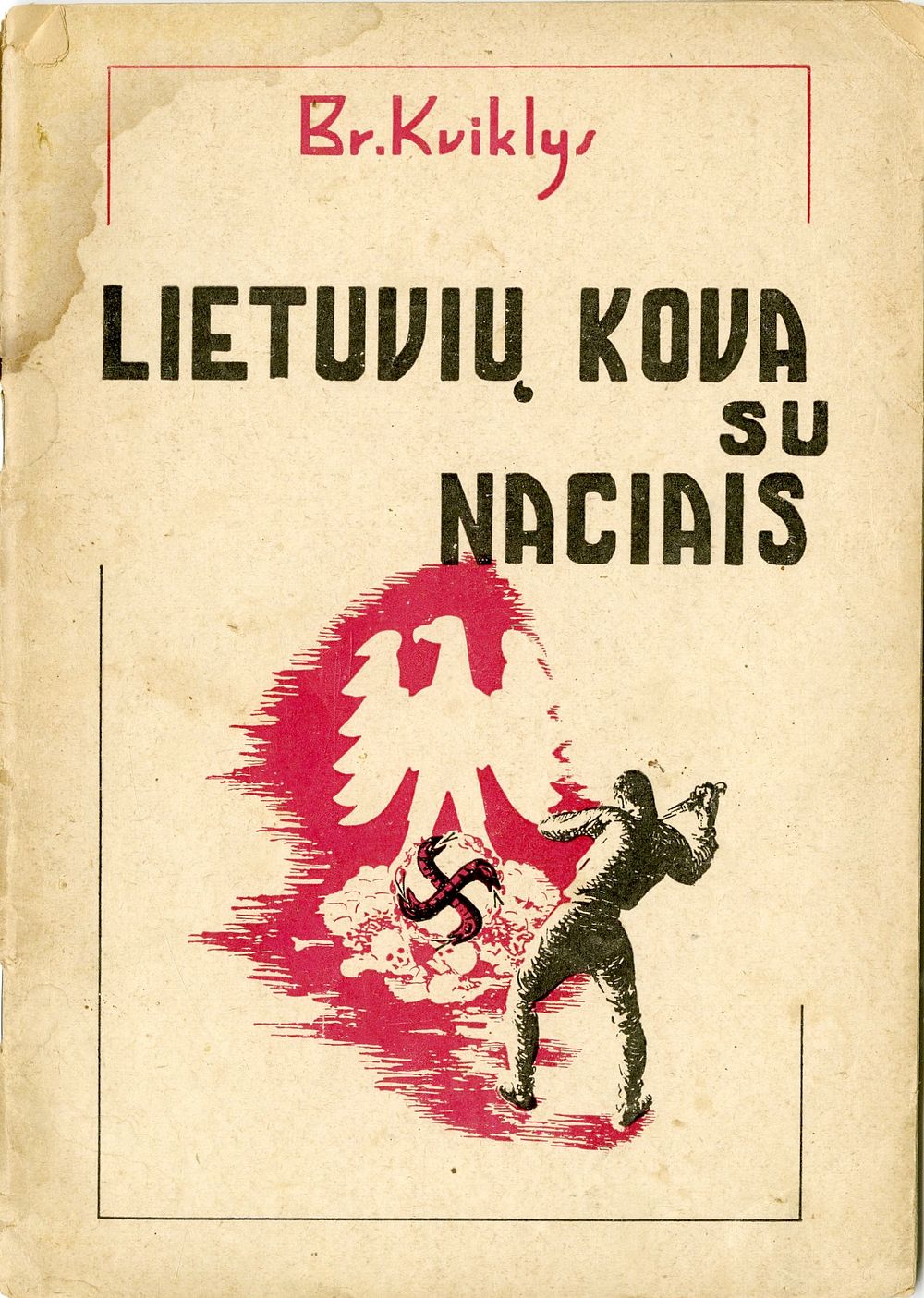
The Struggle of the Lithuanians Against the Nazis 1941–1944 – an early publication based on testimonies about the atrocities committed by the Nazis in occupied Lithuania - Lietuvių kova su naciais 1941–1944 – The Struggle of the Lithuanians Against the Nazis 1941–1944 by Br. Kuiklys. An early publication documenting the atrocities committed by the Nazis in Lithuania, including the persecution and murder of Jews, as well as the Lithuanian people’s fight for liberation. Published by Memmingenas, 1946 – cover design by Vilkutaitytės. On the page following the title page appears an official stamp of the UNRRA – United Nations Relief and Rehabilitation Administration, indicating that the book was distributed in DP camps in Germany at the end of the war. In Lithuanian. Rare. “The purpose of this booklet is to briefly and concisely describe the struggles of the Lithuanian people against the Nazi-German occupiers during the period between 1941 and 1944... The author drew upon personal observations and experiences, material published in the underground Lithuanian press during the Nazi occupation, as well as several documents... Nevertheless, I believe that even from these modest lines, the reader will gain an impression of the struggle of one small nation against Prussian militarism- a nation that also wishes to live and breathe the free air of its homeland.” (From the author’s introduction). The author describes how conditions in Lithuania gradually deteriorated, step by step: “When the Hitlerist movement began to rise in Germany, it was clear to Lithuanians that this did not bode well for our nation. In his book Mein Kampf, Hitler emphasized above all his Eastern policy and Germany’s colonization plans, writing, as you may have heard, ‘We must begin where we left off 500 years ago.’” He documents the early stages of aggression against Lithuania beginning with propaganda on all fronts: – anti-Lithuanian rhetoric in the German press; – acts of intimidation such as staged hangings and the public burning of an effigy of a Lithuanian figure upon Hitler’s rise to power; – and later, the practical steps: the German annexation of the Klaipėda region; the takeover of the Lithuanian government following the occupation in 1941; the renaming of Lithuania to “Generalkommissariat Ostland” by the Nazis; the replacement of Lithuanian city and street names with German ones; the expulsion of Lithuanian families from their homes and estates, followed by the mass resettlement of Germans in their place in 1943. He details the planned Aryan colonization of Lithuanian cities through the German institution Ansiedlungsstab, which was established in Kaunas; the Nazi takeover of Lithuania’s economic system and currency; the devaluation of the ruble; looting of Lithuanian banks; the dismantling of Lithuanian educational institutions; the arrest of Lithuanian intellectuals, and more. In contrast, the author documents the underground resistance efforts in Lithuania against the Nazi occupiers: the establishment of an armed Lithuanian force; the political liberation movement led by the Supreme Underground Committee for the Liberation of Lithuania (VLIK); the activities of the underground press; and the enlistment of Lithuanian artists in producing anti-Nazi caricatures, among other acts of resistance. Extensive sections of the booklet are dedicated to the persecution of Jews in Lithuania. It begins with the Nazi occupation and the declaration that all property belonging to Lithuanian Jews, their factories, shops, businesses, and land, was now German property. The author describes the stripping of Jewish rights: “All Jews living in Lithuania were deprived of their rights as human beings. The Gestapo equated them with the most savage and dangerous animals that had to be exterminated. Their property, homes, apartments, shops, furniture, money, jewelry, everything they owned, was confiscated by the brown-shirted looters. After separating the Jews from the rest of the population and forcing them into prisons, so-called ghettos, they began their physical destruction. ”In designated areas, long and deep trenches were dug for mass graves. “Jewish men, women, and children were herded into them. Gestapo officers began the murder in the cruelest fashion. Rifles and bullets were fired into the Jewish crowd…”. The author continues with harrowing accounts of the Jewish persecution: “Jews disappeared day and night. Mass graves appeared across the land. Those who weren’t shot were deported to Germany, where they were tortured in concentration camps until the Allied invasion. Woe to the Lithuanian who dared to help a Jew, even by offering a piece of bread or a word of sympathy. Such a person, of course, would share the Jew’s fate…”. He includes horrific reports from the underground Jewish press in Lithuania, detailing mass executions of Jews into death pits,