Bidspirit auction | The pogroms in Germany -
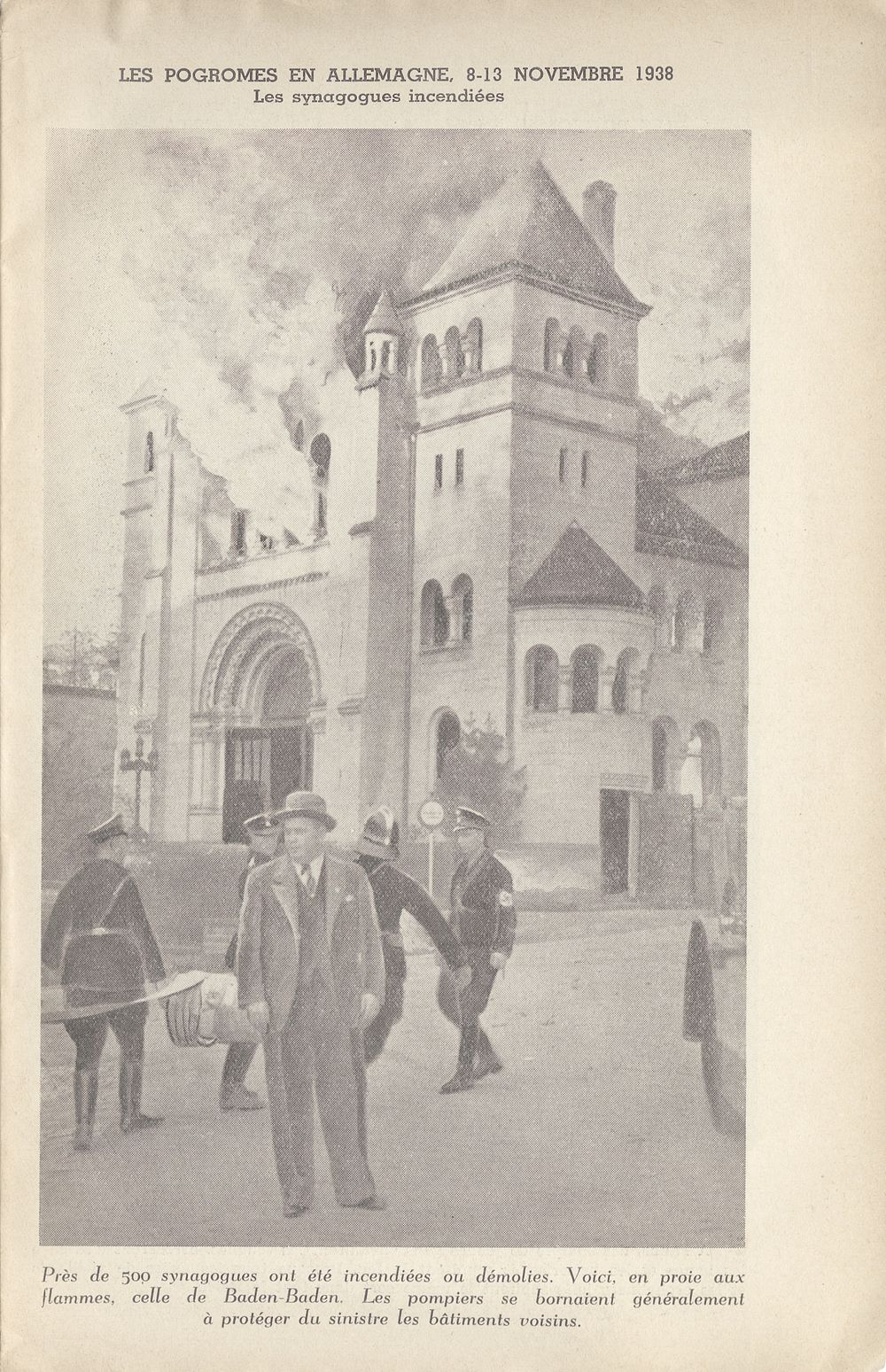
The pogroms in Germany - the racial, religious, and political minorities - the official response in the British House of Commons to the Kristallnacht riots. Paris, 1939 - First edition - Les Minorités Raciales, Religieuses et Politiques Les Pogromes en Allemagne - The pogroms in Germany - the racial, religious, and political minorities. A rare publication by Races et Racisme, documenting in real time the debates in the British House of Commons on November 21, 1938 – which addressed the planned response against Nazi Germany a few days after the Kristallnacht riots. Paris, 1939 - First edition. An important publication presenting the British and European response to the atrocities committed on Kristallnacht in Germany shortly after the events. Extremely rare. ”The latest manifestations of German racism, which in the Reich led to the blood-soaked pogroms of November 1938, aroused deep emotions in England. A wave of outrage swept through public opinion in this great country, where human dignity and freedom of conscience are among the fundamental principles of the social system. The House of Commons, in a debate of elevated character and rare emotional depth, devoted an entire session to the question of racial, religious, and political minorities. From the Conservatives to the Labour Party, including the representative of the government, the House, through its finest speakers, sought to condemn the incomprehensible methods of racism in action, what one of the noblest figures in England, Lord Baldwin, described as the cruelty of man toward man. After considering ways to assist the unfortunate victims of religious persecution, the House unanimously adopted a motion calling for a severe judgment against the rulers of Germany of today. The support of the House of Commons reflects the support of the English people...”. (from the booklet). An important booklet documenting the official British response to the events of Kristallnacht (which occurred in November 1938), following the call of Lord Stanley Baldwin, who had served as Prime Minister of Britain shortly before, and who established the ”Baldwin Fund” to assist refugees from Germany in the wake of the riots. The booklet was translated into French by Mr. Simon Wonikoff and was intended for distribution among French speakers in order to raise international awareness of what was taking place in Nazi Germany. The booklet includes protocols of the debates of the House of Commons (Chambre des Communes), and in particular transcripts of the debate held in the British Parliament on November 21, 1938, a few days after Kristallnacht. In this debate, members of the British Parliament whose names appear at the head of the title page (some from the Labour Party and some Conservatives), who at that time led the critical line against Germany, condemned the events; among them: Philip Noel-Baker - future Nobel Peace Prize laureate and activist for refugees; Sir Samuel Hoare - the British Home Secretary at the time, who was a key figure in authorizing the ”Kindertransport” (the rescue of the Jewish children), and others. At the opening, the words of the Speaker of the House of Commons were presented, conveying to the public shocking details about the events that took place on that night between November 9 and 10, 1938, which were far more severe than “just” the burning of synagogues: ”The entire Jewish population suffered yesterday under a regime of terror; pogroms broke out simultaneously across Germany, and the police made no attempt to stop the mob’s savagery. Almost all the synagogues in the country were burned; scarcely a single Jewish shop escaped destruction; acts of looting were widespread. Parts of the elegant districts of Berlin were devastated. Jews of all ages and of both sexes were beaten in their streets and in their homes; a great number of them were lynched. It is said that a synagogue caretaker was burned alive together with his entire family. I shall cite, among others, the case of a boarding school in Caputh, near Potsdam, which was seized at two o’clock in the morning and completely destroyed. The children were driven outside, alone, into the night. In Bad Soden, the only Jewish sanatorium in Germany for tuberculosis patients was destroyed and looted. The patients were expelled with nothing but their shirts. In Nuremberg, patients in a Jewish hospital were forced to stand at attention; some had just undergone serious operations, and my correspondent informs me that one of them died on the spot. In Ems, a Jewish nursing home was invaded, and the patients were expelled; a paralytic was forced to leave his bed, and his wife, who refused to abandon him, was struck with an axe; her disabled husband was forced to leave. In a Jewish camp in Bernsdorf, in Silesia, a roll call of the youths was held; some were missing. One of the agitated guards, at gunpoint, asked a young Jewish boy if he knew where the others were. The boy was frightened,