Bidspirit auction | Mountain of Horror: Atrocities Experienced
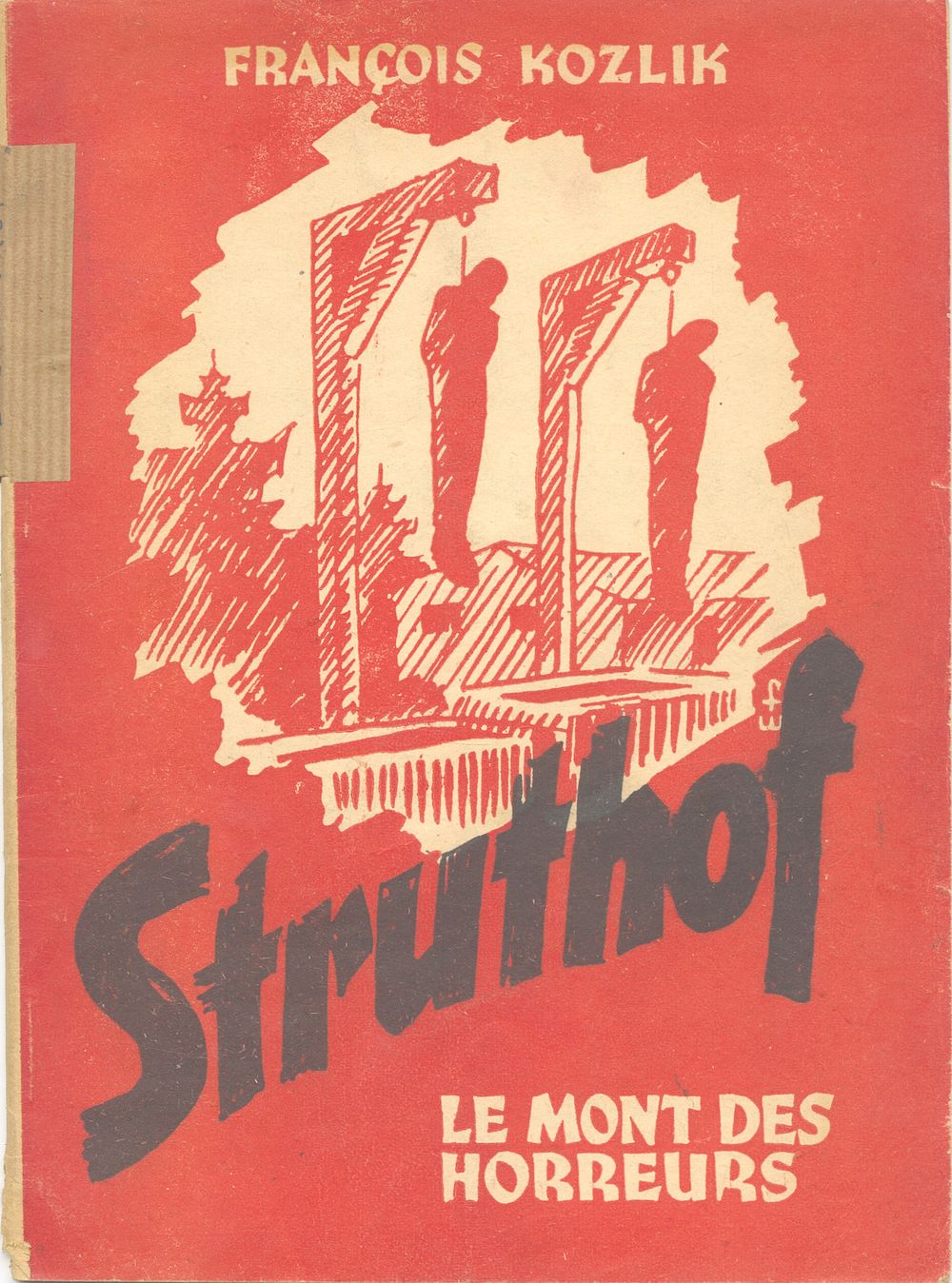
Mountain of Horror: Atrocities Experienced in the Struthof Camp - Testimony of a Former Prisoner of the Struthof Camp - France, 1945 - First Edition - Struthof - Le Mont de l'Épouvante: Horreurs vécues au camp du - Mountain of Horror: Atrocities Experienced in the Struthof Camp, by the survivor François Kozlik. Éditions Sedal, Strasbourg, 1945 - First edition. Ownership stamp of Count de Lazarem. Rare. French. ”For seven and a half years, the Nazis kept me imprisoned behind high-voltage barbed wire. For seven and a half years, I watched people die miserably, people who had done nothing except defend their country against the Nazi hordes...” - an early and firsthand testimony from one of the Nazis' most brutal concentration camps. Struthof was the only concentration camp established by the Germans on French soil (in occupied Alsace), and it served as a labor camp under appalling conditions (in the stone quarries), as well as a site for medical experiments on human beings and a gas chamber. François arrived at Struthof in a transport of 1,000 prisoners that departed from Dachau, having been carried in cattle cars on a journey that lasted three days. Immediately upon his arrival at the camp, he describes the forced labor to which he and his fellow prisoners were subjected. François describes the various forms of punishment employed by the Nazis in the camp, the cruelty of the camp commandant Kramer, the terrible hunger and diseases that raged in the camp, the daily beatings inflicted upon the prisoners while at work, and the brutality of the kapos, naming several of those who were particularly cruel and describing their crimes. Among other things, he reveals in his testimony shocking incidents that took place at Struthof - he describes executions carried out by the Nazis while they themselves were drunk, the horrifying executions of children, and more. In October 1942, he witnessed for the first time the public execution of a prisoner named Christmann. Describing these harrowing scenes, he writes: ”The scene described here must sound unbelievable to any normal person... but we saw it with our own eyes and heard it with our own ears, and I guarantee its truth, together with all my comrades of every nationality who were at Struthof.” François recounts cases of prisoners who were promised that they would be released and, before they had time to rejoice at the news, were executed that very day. He also witnessed the horrific execution of a prisoner who had managed to escape from the camp and was captured while hiding in the nearby forest, among other incidents. The book contains countless harrowing descriptions of the atrocities suffered by prisoners whom he knew personally and whom he mentions by name. He also describes in detail the manner in which the camp's gas chamber operated and the shock of the prisoners when they realized that the bathhouse was, in fact, a killing chamber. François was in the camp during the large-scale transports carried out in September 1944, when the Nazis emptied the camp of most of its prisoners. He remained behind together with only about 500 other prisoners. These prisoners were employed in dismantling aircraft engines that had been brought to the camp. By the end of October, only 16 men remained in the camp, whom he lists by name, himself among them, and they were guarded by approximately two hundred men. One night, François and another prisoner named Robert took advantage of the chaos that prevailed in the camp while the Nazis were loading equipment for removal from the camp and slipped out through one of the side paths. The two men equipped themselves with a large quantity of poison so that, if captured, they would be able to swallow it before being tortured by the Nazis. They managed to get only a few hundred meters away from the camp when a snowstorm began, making it easier for them to conceal themselves from the Nazis and, in effect, saving their lives. They succeeded in reaching a farmer's yard, where they found weapons that partisans had left behind. In the farmer's house, they heard a news report announcing that the Americans intended to liberate Alsace by November 26; it was then November 24, and the two men realized that freedom was near. After two days in hiding, they noticed American tanks on the roads near the camp, and the two emerged from their hiding place into freedom. At the end of the book are ten pages of photographs depicting harrowing scenes from the Struthof camp - torture facilities, the electrified fence, the autopsy room, the urns containing ashes, victims of the camp, the Nazi camp commandants Kramer and others, and more. On the title page appears the embossed stamp: ”Ex Libris / COMTE DE LAZERME / PERPIGNAN” - Count de Lazerme of the city of Perpignan in southern France. The de Lazerme family is a very well-known noble family in this region;