Bidspirit auction | The Inn of Lost Time
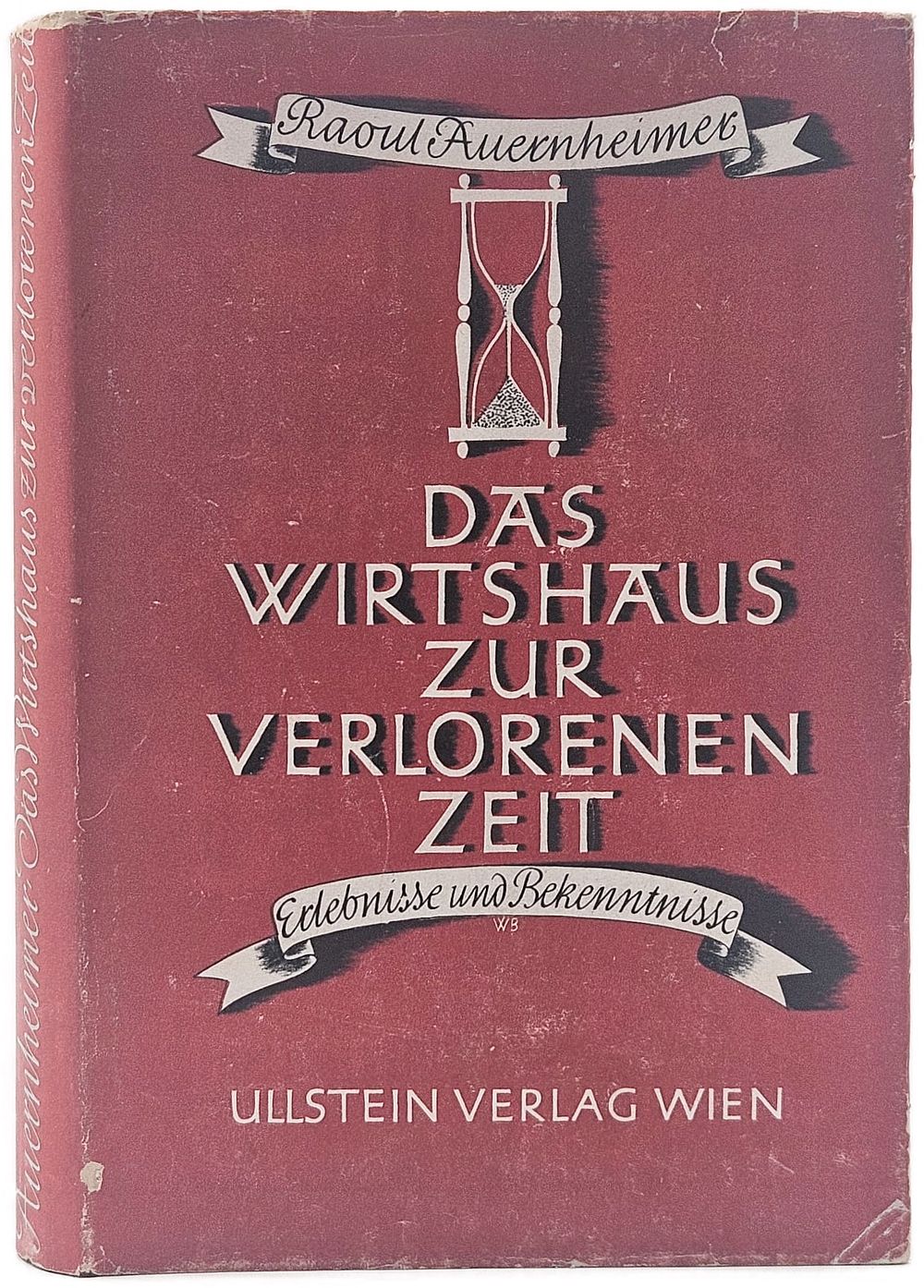
The Inn of Lost Time - Experiences and Confessions - The Story of the Austrian Jewish Dachau Prisoner Raoul Ornaheimer. Vienna, 1948 - First Edition. The copy of H. D. Heilman - ”Das Wirtshaus zur verlorenen Zeit” - The Inn of Lost Time - Experiences and Confessions - an autobiography and memoir by the Austrian-Jewish playwright and journalist Raoul Auernheimer. Ullstein, Vienna, 1948 - First edition. The copy of the freedom fighter H. D. Heilman, with his signature on the front endpaper and several pencil markings and annotations throughout the book. A fascinating documentary work preserving, from the personal perspective of a former prisoner from Vienna's upper class, the decline of the magnificent Viennese culture of the early twentieth century and the generation that experienced the abrupt transition from the stable world of yesterday into the abyss of war, Nazi persecution, and deportation to the camps. The author completed the manuscript shortly before his death and did not live to see the book appear in print. German. Raoul Auernheimer, who was born in Vienna in 1876 and died in exile in the United States in 1948, was a key figure in the literary and journalistic circles of the Austrian capital, serving as a lawyer, journalist, and Austrian writer. He was a cousin of Theodor Herzl on his mother's side and worked for many years as an editor and esteemed theatre critic for the prestigious Viennese newspaper Neue Freie Presse. This position afforded him a unique vantage point on the intellectual and social life of the city, and he was closely associated with the leading cultural figures of the period, among them Arthur Schnitzler, Stefan Zweig, and Hugo von Hofmannsthal. In this book, written from the perspective of a man who had lost his homeland, Auernheimer looks back with both nostalgia and critical reflection upon that golden age. With great literary skill, he describes the atmosphere of Vienna's cafés, the heated discussions in newspaper editorial offices, and the cultural dynamics that shaped European modernism. Auernheimer was arrested by the Gestapo immediately after the annexation of Austria by Nazi Germany in 1938 and was sent to the Dachau concentration camp. He was released several months later thanks to international efforts and succeeded in emigrating to the United States, where he completed the writing of his memoirs. The book contains a direct and poignant account of his imprisonment in Dachau, in which he describes in detail the tragedy he endured. He was sent to Dachau in an early and well-known transport of Viennese men of letters, journalists, and intellectuals, where he was held for approximately five months. In his memoir, he describes the naivety of Austrian citizens who believed Hitler's promises that he would refrain from interfering in Austria's internal affairs. In the chapters dealing with his imprisonment in Dachau, the refined and nostalgic tone that characterizes his descriptions of Vienna's cultural life changes, giving way to a realistic, sober, and chilling style of writing. He describes the Nazi persecutions in Vienna, the experience of his sudden arrest, the loss of identity and freedom, and the brutal confrontation with the reality of the camp. He also describes the collapse of the values of European culture in which he had believed and the ways in which the prisoners attempted to preserve their humanity. These chapters are not merely a personal testimony of physical and emotional suffering; they serve as a powerful indictment of Nazism and document the precise moment when Auernheimer's ”world of yesterday, ” and that of his companions, finally collapsed into monstrous barbarism. In Dachau, he was forced to work in the ”brickworks” while endeavoring to maintain ”academic conversations” with his fellow prisoners in order to preserve his sanity. Shortly after his arrival in the camp, the Nazis forged a letter sent to his family stating that he had died of illness, intending to discourage them from making further efforts to secure his release. Nevertheless, he managed to send a letter in secret informing them that he was still alive. The circumstances of his release from the camp in August 1938 were made possible through intense international diplomatic pressure exerted by American writers and government officials. The United States Consul General, Raymond Geist, intervened on his behalf following a petition by the writer Emil Ludwig. After his release, he emigrated with his family to New York via Venice in early 1939. The story of his emigration is also recounted in the book. This work is regarded as one of the most important and moving testimonies concerning the fate of the Austrian and Jewish intelligentsia. In 1960, Auernheimergasse, a street in Vienna's 22nd district, was named in his honor. 374, [2] pages. Hardcover with the original dust jacket, complete. Minor wear to the dust jacket. The text block is in very good condition.