Bidspirit auction | Triumph of the Will -
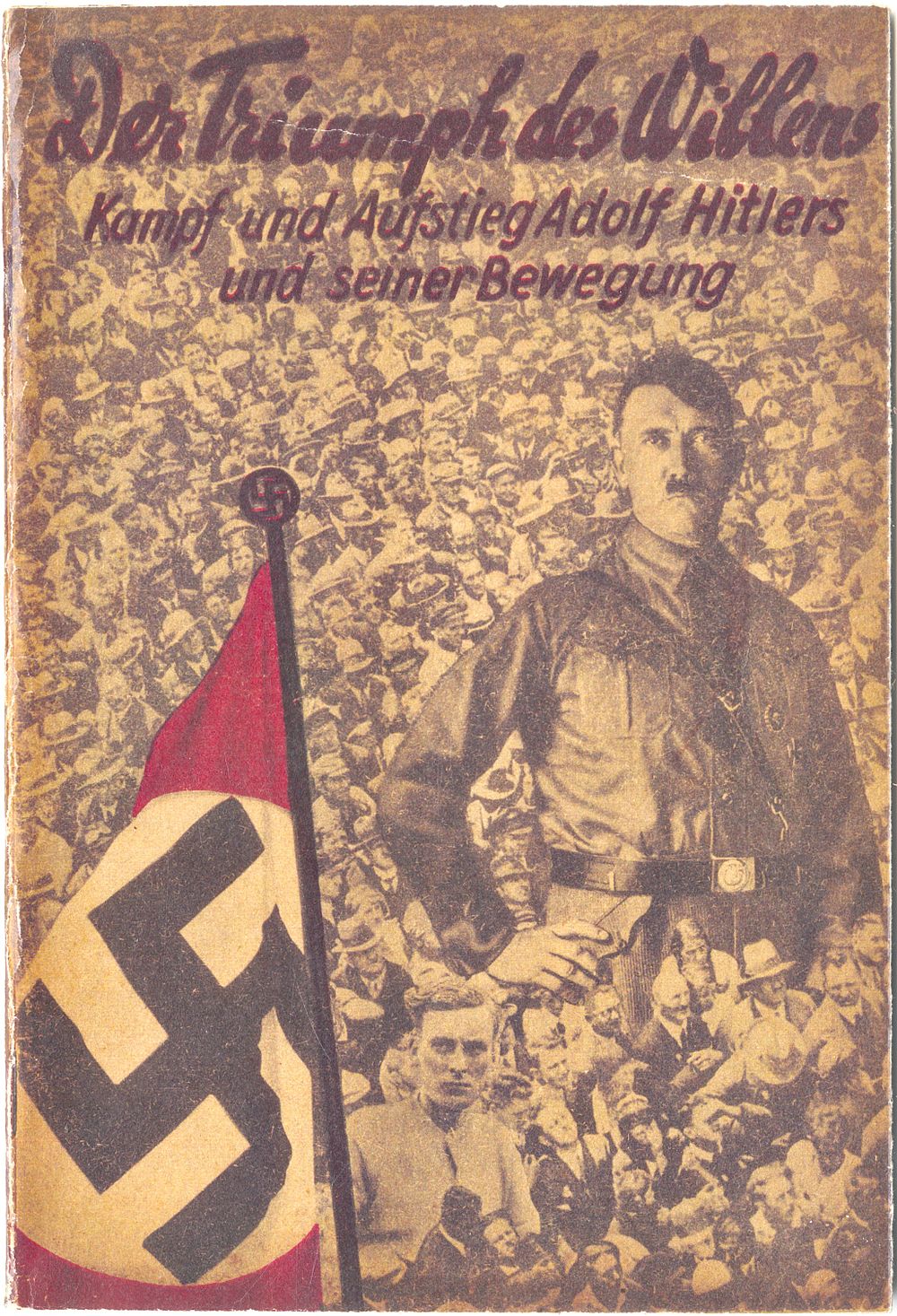
Triumph of the Will - The Struggle and Rise of Adolf Hitler and His Movement - Special Photographic Booklet Documenting the Rise of the Nazi Party. Berlin, 1933 - First Edition - Der Triumph des Willens - Kampf und Aufstieg Adolf Hitlers und seiner Bewegung - Triumph of the Will: The Struggle and Rise of Adolf Hitler and His Movement. Published by Zeitgeschichte, Berlin, [1933] - First edition. A special photographic album issued following Adolf Hitler's electoral victory and his appointment as Chancellor of Germany. Rare. A highly impressive photographic booklet edited by Heinrich Hoffmann - Adolf Hitler's personal photographer and one of the principal propagandists of the Nazi regime. At the beginning of the booklet is an introduction by Baldur von Schirach, leader of the Hitler Youth (Hitlerjugend) and later Governor of Vienna, in which he portrays Adolf Hitler as a fearless leader around whom the entire German people are united. The purpose of the booklet is to glorify Hitler's political career and the development of the Nazi Party from its formative years to its seizure of power. The booklet presents a carefully staged and manipulative narrative depicting Hitler as a great leader acting ”solely by his own strength, ” as stated beneath his profile portrait on the inner pages. Throughout, the album documents formative moments in the history of the Nazi Party during the 1920s and early 1930s, up to its assumption of power - beginning with photographs of the first party headquarters established in Munich in 1920, photographs from the party's early events in 1922, party marches held during the early 1930s accompanied by photomontages of Adolf Hitler, Adolf Hitler at the time he was sentenced to five years' imprisonment, the Brown House in Munich (”the House of the Nazi Community”), military training exercises at Freimann near Munich, and political parades featuring key figures such as Alfred Rosenberg, the party's chief ideologue, and Adolf Hitler. The photographs document the period of reorganization, expansion of the party's ranks, and the establishment of the cult of personality surrounding Adolf Hitler during the 1920s and early 1930s. For example, there is a dramatic portrait of Hitler in party uniform, gazing intently into the room. Beneath the image appears a direct quotation from his words, emphasizing the ideas of determination and ideological perseverance: ”He who wishes to fight for an absolute value cannot permit himself to be selfish.” This is followed by an abrupt transition from the personal portrait to dynamic scenes of mass gatherings, devoted entirely to the early Party Rallies at Nuremberg (Reichsparteitag). In these photographs, long and orderly columns of uniformed marchers can be seen carrying the early swastika flags of the various subordinate organizations. The captions accompanying the images describe these events as the ”First National Party Days” and emphasize the sense of strength, military discipline, and the rising power of the movement. The photographs were carefully selected to convey to the viewer a message of exemplary order, ideological unity, and a growing force capable of drawing the masses into the streets. Also included, one after another, are photographs from party events held in 1927, early photographs of SA marches, party gatherings from 1931-1932, various images from the election propaganda campaign of 1933, Berlin saluting Adolf Hitler in January 1933, and Hitler's principal speech of February 1933. The photographs also depict leading figures of the party, including Hermann Göring, Alfred Rosenberg, Julius Streicher, Wilhelm Brückner, Pfeffer von Salomon, Ritter von Epp, Horst Wessel, Captain Hans Baur, Franz Schwede-Coburg, Ernst Röhm, and many others. Another page presents rows of young boys wearing the uniforms of the youth movement beneath the prominent heading ”Hitlerjugend” (Hitler Youth). The photographs emphasize the boys' serious and determined expressions, while the accompanying text praises their role as the movement's ”guardians of the future” and as the foundation upon which the future Reich would be built. This is a classic depiction of the process of youth recruitment and indoctrination, intended to demonstrate that the Party was not merely a political movement of adults but a broad cultural and educational enterprise that sought to reshape German society from its very foundations. A substantial portion of the documentation is devoted to Hitler's trial in Munich in 1924 on charges of treason, his period of imprisonment in Landsberg Prison, and the period immediately following his release, when he began reorganizing the Party, including the printing of public declarations and leaflets inviting the public to mass meetings at the Bürgerbräukeller. There is a direct and unmistakable conceptual connection between the title of this booklet and the infamous propaganda film by the director Leni Riefenstahl, Triumph of the Will (1935),