Bidspirit auction | Death at Breendonk - Early
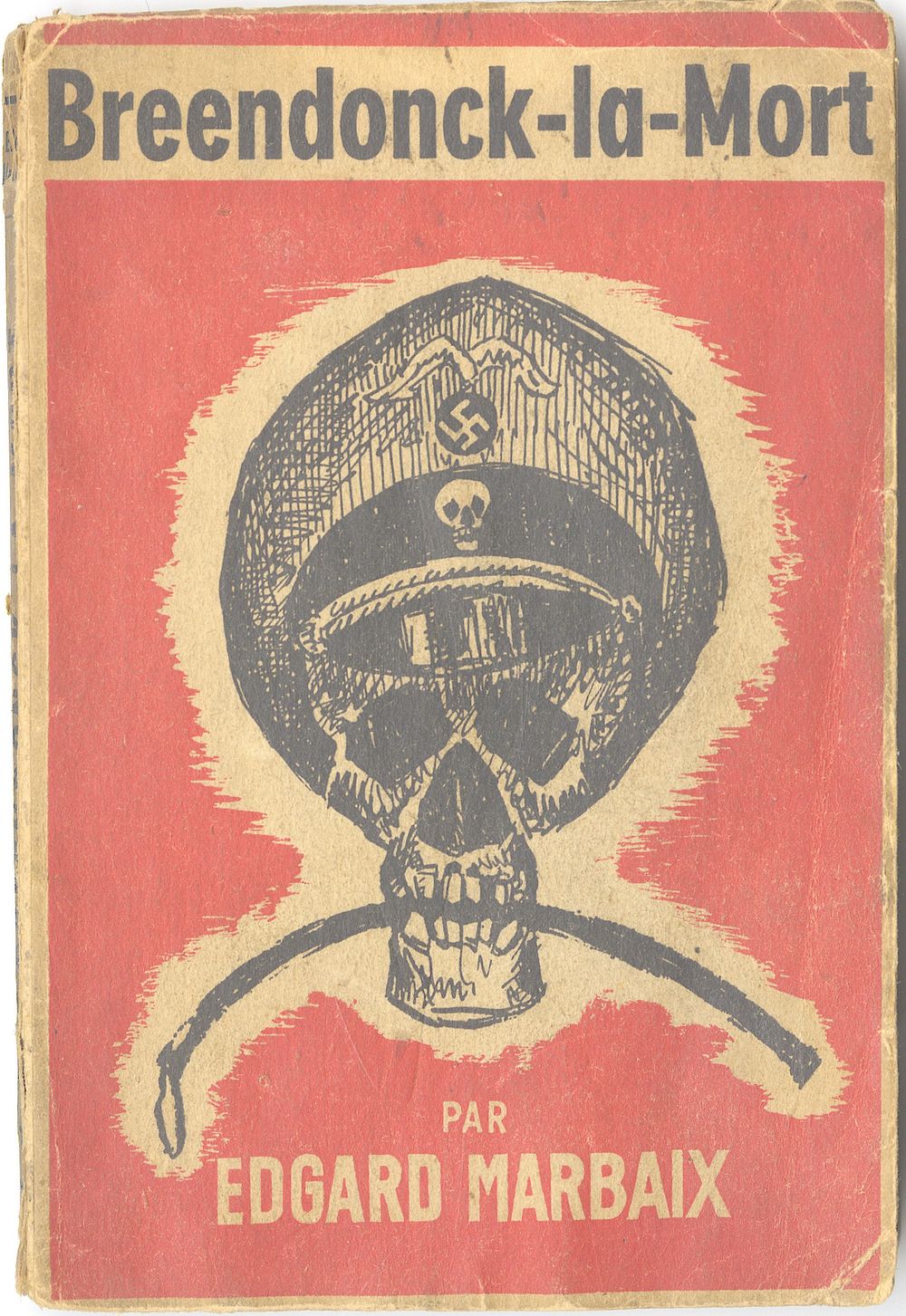
Death at Breendonk - Early Testimony of Breendonk Camp Prisoner Edgard Marbaix - Copy Signed by the Author - BREENDONCK LA-MORT (Death at Breendonk) by Edgard Marbaix. P. de Myttenaere, Brussels, 1944. An early account of the harrowing experiences of a Belgian prisoner in the Breendonk camp in Belgium. Copy signed by the author. Illustrated with stark drawings depicting the horrors of the camp by Wilchar. French. The testimony of Edgard Marbaix, a member of the Belgian Resistance and a political prisoner at Breendonk Camp. At the beginning of the book, the author writes: ”This book is a simple account of our imprisonment in the concentration camp of Breendonck-lcz-Willebroeck, in the Province of Antwerp. I have no other intention than to relate - as faithfully as possible - everything we saw, heard, and suffered there.” He dedicates the book to his fellow prisoners who perished in the camp, briefly recording the manner of their deaths and the exact date of each. Marbaix provides a detailed account of daily life in the camp, the torture methods employed by the SS, the inhuman living conditions, the starvation, and the personalities of the camp's most brutal guards, including Commandant Philipp Schmitt and the Belgian collaborator Fernand Wyss. The book is illustrated with stark drawings depicting the torture and conditions within the fortress, documenting what took place behind its concrete walls. In his testimony, he recounts his story from the moment of his arrest and arrival at the camp. Beyond the harrowing descriptions of everyday life under the constant shadow of death, Marbaix devotes considerable attention to the difficult decisions, thoughts, and inner dilemmas that occupied his mind throughout his imprisonment. He reflects on questions such as whom to trust among the prisoners, how to gain the confidence of the SS officers, whether to appear cheerful despite his suffering, or instead to display despair in the hope of eliciting mercy. At one point, he considered joining a group of partisans planning to escape from the camp, but ultimately decided to remain for fear of being caught. One of the book's most disturbing episodes recounts the execution of several of his fellow prisoners in a cellar near the camp, where the Nazis forced him to witness the killings. The testimony, published here for the first time, helped shape public opinion in liberated Belgium in advance of the major Mechelen trials held in 1946 against the ”Executioners of Breendonk.” Those proceedings ended with the execution of thirteen members of the camp staff, including the German commandant Philipp Schmitt and the Belgian guard Fernand Wyss. Breendonk had originally served as a fortified military base of the Belgian Army, located between Antwerp and Brussels. During the German occupation of Belgium in the Second World War, it was converted into an internment camp in which Jews from the Belgian Jewish community were also imprisoned. The first prisoners arrived at the fortress on September 20, 1940. Those incarcerated included Belgian Communists, members of the Resistance, hostages seized by the Germans, Jews from the Belgian Jewish community, and common criminals. During the camp's first year of operation, Jews constituted approximately half of its prison population and were held separately from the other inmates. Among those imprisoned at the fortress were Rabbi Shlomo Ullmann, Chief Rabbi of the Belgian Jewish community, and leaders of the Association of Jews in Belgium. Prisoners remained at the fortress for an average of three months before being deported to concentration camps in Germany, Austria, and Poland. They endured appalling living conditions, starvation, denial of medical care, and brutal treatment by the camp staff, while being subjected to forced labor. The Germans also carried out interrogations, torture, and executions by hanging within the fortress. Political prisoners, in particular, were subjected to severe torture during interrogation. The fortress's first German commandant, Philipp Schmitt, was tried in Belgium in 1949, convicted, sentenced to death, and executed in 1950. 104 pages. 18 cm. Illustrated wrappers featuring a skull wearing an SS cap and gripping a whip in its teeth. Good condition.