Bidspirit auction | The Liberation of Paris from
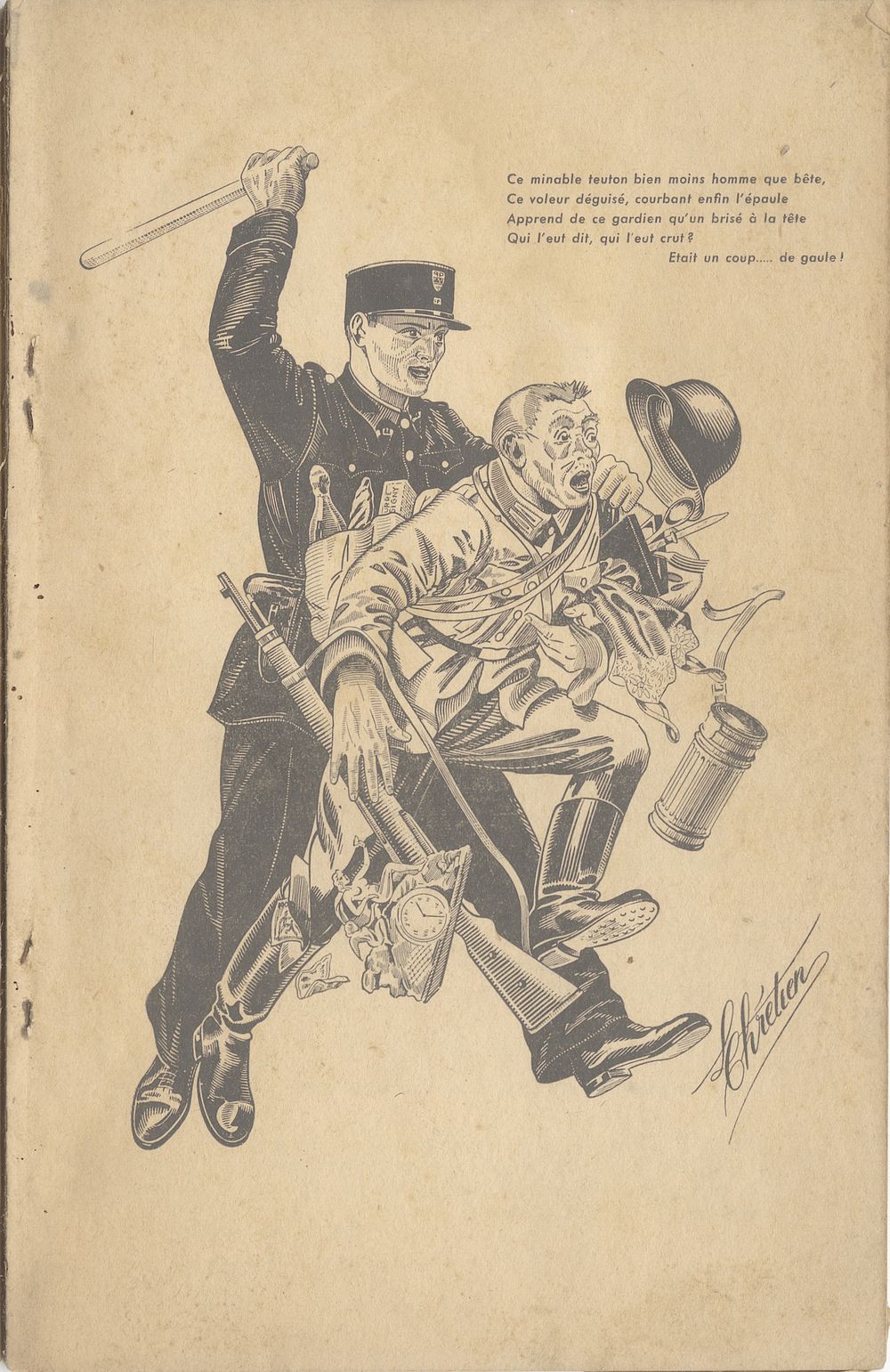
The Liberation of Paris from the Perspective of a Police Commissariat - Daily Police Log Documenting the Events That Led to the Liberation of Paris. Paris, 1944 - First Edition - La Libération de Paris vue d'un Commissariat de Police (The Liberation of Paris from the Perspective of a Police Commissariat) by Ferdinand Dupuy, who served as Chief Secretary of the Central Police Commissariat of Paris's 6th Arrondissement. A firsthand police journal documenting, day by day, the events leading to the liberation of Paris from Nazi occupation. Paris, 1944 - First edition. Extremely rare. The booklet presents a dramatic chronological account of the uprising and liberation of Paris in August 1944 from the perspective of the district police force, which took an active part in the fierce fighting against the last remaining SS commanders. It describes in detail the various stages of the uprising, beginning with the initial upheaval caused by the violent German action against police stations in the suburbs and the declaration of the police general strike (La grève). It goes on to document the escalating street fighting in Paris, the disappearance of the established newspapers, the silence of occupied Paris's radio station, direct exchanges of gunfire targeting the police commissariat (Fusillade contre le Commissariat), and the mounting tension as the Allied forces approached (Les Alliés approchent). Following the German surrender, the author recounts the dramatic turning points within the police commissariat of the 6th Arrondissement, the return of the police officers to their official uniforms, and the fierce fighting in the area of the Senate. The heavy human cost is likewise recorded, with special chapters commemorating the fallen of the struggle (Les Martyrs), who were executed at Luxembourg and Vincennes, alongside triumphant calls celebrating the restoration of liberty to the city. The events are presented in chronological order, day by day and hour by hour. During the years of the Nazi occupation, the Paris police largely cooperated with the German authorities under the Vichy regime. The booklet describes the moments when the police officers decided to reverse course and turn against their former allies. It portrays the rupture that occurred in August 1944, when the Germans began taking direct and increasingly aggressive action against the French police themselves, disarming and arresting them, and the subsequent response of the French police, who joined the uprising of the French Resistance. Thus, for example, Sunday, August 13, 1944: ”German Action Against Two Suburban Police Stations.” German forces raided the police stations at Saint-Denis and Asnières, disarming and arresting the French police officers. In response, police headquarters ordered officers to abandon their stations in civilian clothing in order to avoid further arrests. Monday, August 14, 1944: The Prefect of Police appealed to the officers to exercise restraint and maintain public order, while attempting to calm tensions with the Germans. Tuesday, August 15, 1944 (”The Strike” – La Grève): The historic turning point. The Paris police refused to obey orders and declared a general strike under the direction of the French Resistance. They abandoned their posts en masse, a move that paralyzed the city's mechanisms of control and marked the official opening of the armed uprising in which the citizens of Paris took part, culminating in the liberation of the city approximately ten days later. On the half-title page appears a patriotic and satirical cartoon signed by the illustrator Chrétien, depicting a Paris police officer brandishing his baton as he drives away a frightened German Wehrmacht soldier whose pockets are overflowing with property and loot he has plundered. In the upper right corner appears a short poem mocking the Germans. The front cover features a photograph of the façade of the Paris Police Prefecture (La Préfecture de Police) on August 26, 1944 - the day after the surrender of the German forces - decorated with French Tricolour flags, while Allied military vehicles and Liberation forces can be seen in the street. Extremely rare. Only two copies are recorded in the WorldCat global library catalog. 55 pages. Light staining to the cover.