Bidspirit auction | ”In the Days of the
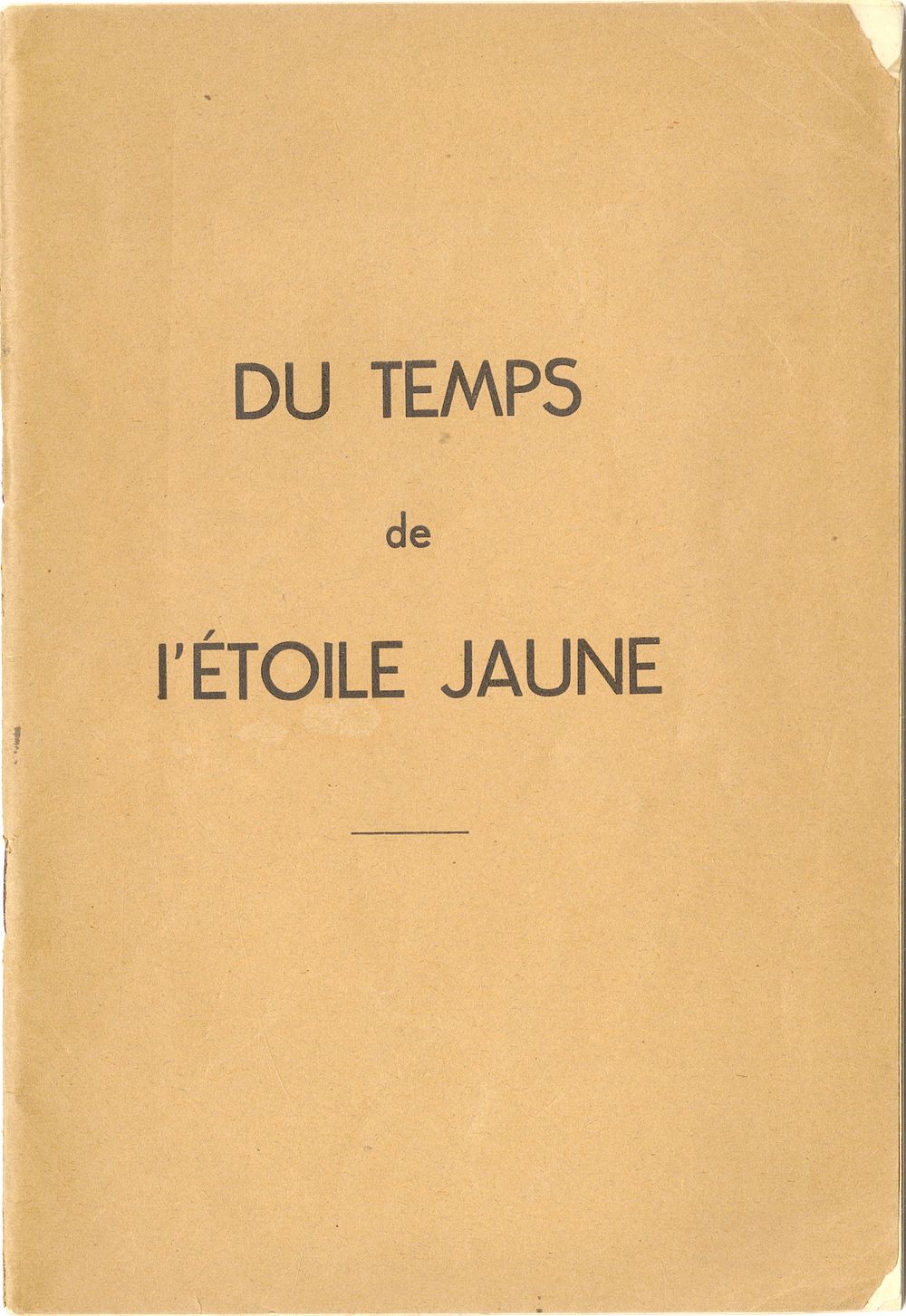
”In the Days of the Yellow Badge” - by Psychiatrist Eugène Minkowski - Paris, 1945 - Du temps de l'Étoile Jaune - In the Days of the Yellow Badge, by the Jewish-French psychiatrist and philosopher Dr. Eugène Minkowski - an early and detailed testimony on Jewish life in France under the Nazi occupation and on the psychological impact of wearing the yellow badge. Printed by A. Montourcy, Paris, [1945]. French. Rare. A rare publication printed on the occasion of Dr. Eugène Minkowski's 60th birthday (April 22, 1945) - a key figure in the Jewish underground and the OSE relief organization - only a few months after the liberation of Paris and just weeks before the surrender of Nazi Germany and the end of World War II. The booklet includes an address by Mr. Minkowski alongside speeches by key figures in the French leadership and Resistance. Minkowski's testimony is one of the earliest and most important accounts of Jewish life in France under the occupation and the Vichy regime. Minkowski describes in detail the persecution of the Jews and their attempts to hide and escape, combining personal testimony about the war years with a psychological analysis of the experience of persecution; among other things, he discusses the psychological impact of wearing the yellow badge - Minkowski himself was arrested in August 1943 after being denounced for failing to wear the yellow badge as required by the regulations. Surprisingly, he writes that once Jews were required to wear the yellow badge on their clothing, it created a profound bond among the Jews themselves, and from then on they saw themselves as sharing a common fate: ”It was this human closeness that enabled us to endure, ” he writes. At the same time, the yellow badge made Jews vulnerable and exposed to the Nazi beast - on one occasion, he recounts, when an escape occurred from the Drancy internment camp, the Nazis ordered that the first Jew encountered by the police on the street be arrested and imprisoned in place of the escapee. The conspicuous badge on his clothing gave away Mr. Tschentowski, the director of the Lucien de Hirsch School, and he was taken into custody in his place. Among other things, in his remarks he documents the clandestine rescue operations in which he was involved, through which he succeeded in saving thousands of children, including by issuing forged identity papers. He recounts a special Passover Haggadah that he received for his birthday in 1941, bearing a dedication signed by his friends who later perished - Léo Glaser and Mr. Rappaport - one was deported to an extermination camp, and the other was shot on the eve of the liberation of France. In addition, he documents the courageous actions of the Righteous Among the Nations and members of the French Resistance who helped hide Jews - thus, for example, he recounts how Father Vincent hid secretaries who worked with Dr. Minkowski in his offices, and even assisted them in obtaining forged identity papers. He also describes Mr. Pegazian, who transported secret documents between members of the Resistance by cycling between French cities, and mentions Mrs. Mounier, Mrs. Morin, and Marie, who issued forged food ration coupons for Jews, and others. The author, Dr. Eugène Minkowski (1885–1972), was a pioneer of phenomenological and existential psychiatry in France and was renowned for his studies of the perception of lived time and psychopathology. During the war, as a Jew in occupied France, he was active within the UGIF (General Union of Jews in France) and engaged in rescuing and hiding Jewish children. The book includes a plate with a group photograph of leading figures in the Jewish leadership and underground in France: the author Dr. Minkowski and his wife Dr. Françoise Minkowska, Zionist leader Marc Jarblum (head of the FSJF), Mr. and Mrs. Greenberg (among the leaders of the ”Rue Amelot” relief committee), and additional figures. Rare. Only two copies are listed in the WorldCat global library catalog. 46, [1] pages + [1] plate. 23 cm. Good condition. Minor defects. Small areas of loss from tears at the edges of the cover.