Bidspirit auction | Special Issue of the Berliner
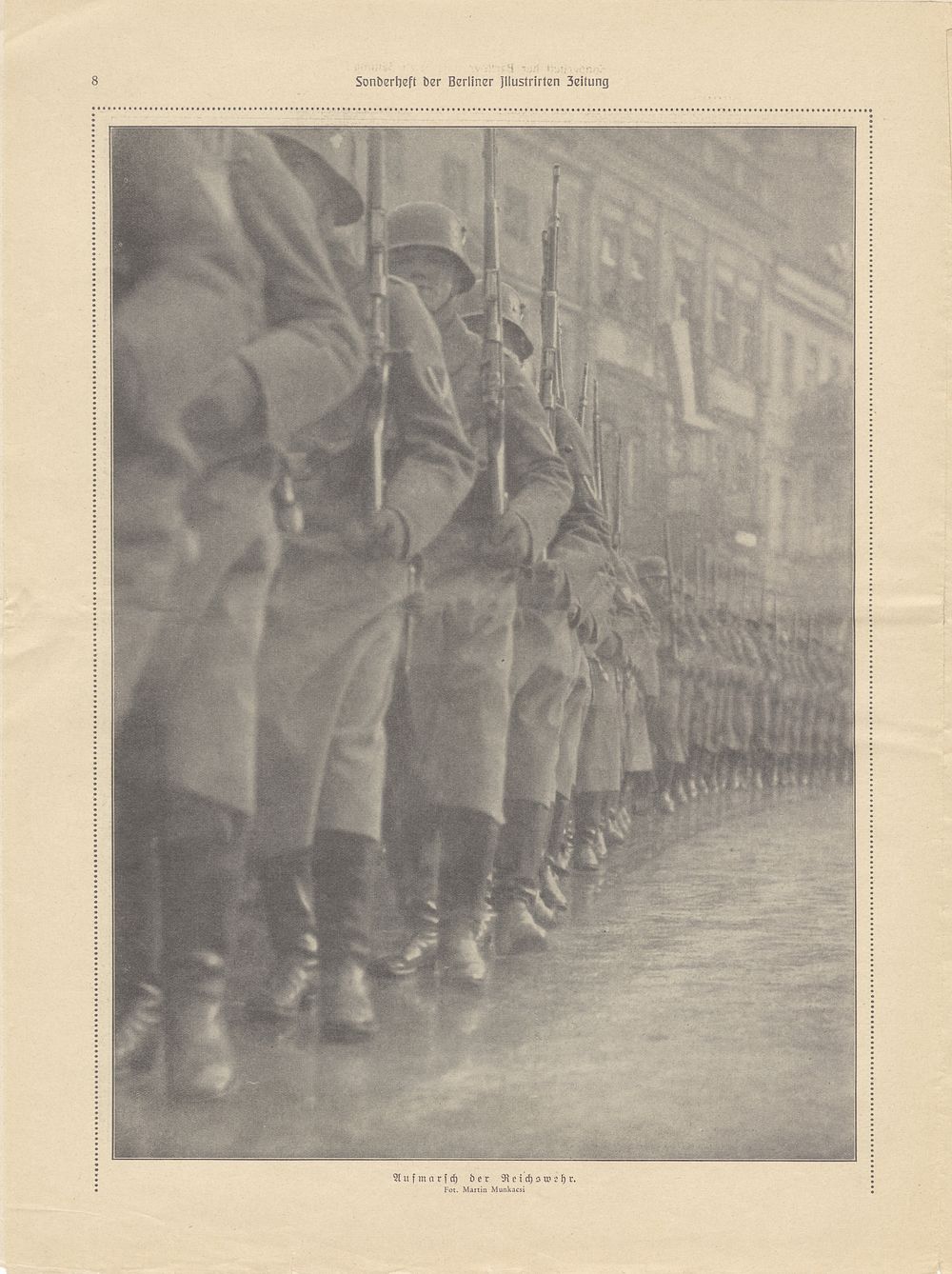
Special Issue of the Berliner Illustrirte Zeitung Devoted Entirely to the ”Day of Potsdam” - the Most Pivotal Event in the Consolidation of the Nazi Regime - Berliner Illustrirte Zeitung – Sonderheft: Der 21. März 1933 (Die Staatsfeierlichkeiten bei der Reichstagseröffnung) - Berliner Illustrirte Zeitung - Special Issue (Sonderheft): March 21, 1933 - ”State Ceremonies Marking the Opening of the Reichstag.” A special thematic issue of the renowned illustrated weekly Berliner Illustrirte Zeitung (published by Ullstein), devoted entirely to one of the most pivotal and significant events in the consolidation of the Nazi regime: the ”Day of Potsdam” (Tag von Potsdam), held on March 21, 1933. A special historic issue documenting the events of the ”Day of Potsdam” in real time through countless historic photographs. The cover of the issue features a dramatic photograph of a mass torchlight procession passing at night beneath the illuminated Brandenburg Gate in Berlin, under the main headline ”Sonderheft: Der 21. März 1933 - Die Staatsfeierlichkeiten bei der Reichstagseröffnung” - ”Special Issue: March 21, 1933 - State Ceremonies Marking the Opening of the Reichstag.” The entire issue is filled with photographs of the historic events of that day in Germany. At the beginning are transcripts of the key speeches delivered at the Garrison Church (Garnisonkirche) in Potsdam - the welcoming address by Reich President Field Marshal Paul von Hindenburg, and the speech by the new Chancellor, Adolf Hitler, under the heading ”Reichskanzler Hitler spricht, ” in which he declared at the time: ”In its first appearance before the new Reichstag at this solemn hour, the National Government simultaneously expresses its unwavering determination to undertake and resolutely carry out the great work of reform for the reorganization of the German people and the Reich.” The publication of these speeches side by side was intended to create a propagandistic impression of historical continuity, according to which the young Nazi regime derived its authority from and directly continued the tradition of the old Prussian monarchy and military represented by Hindenburg. Also featured is a famous full-page photograph taken by the renowned photographer Martin Munkácsi, showing Adolf Hitler on his way to the state ceremony at the Garrison Church in Potsdam. Hitler is shown walking in a top hat and tailored civilian attire, accompanied by the master of ceremonies and ministers, an image carefully chosen to convey respectability, statesmanship, and adherence to traditional civilian protocol before the Reich President and the conservative public. The center pages feature a magnificent panoramic double-page photograph of the interior of the Garrison Church in Potsdam during the official state ceremony. The photograph shows the church packed with senior regime officials, decorated military officers, public representatives, and clergymen, with Hindenburg and Hitler at the center of the event, in a visual display intended to confer absolute religious, military, and historical legitimacy upon the Nazi Party's rise to power. The following pages document the next and decisive stage of that day: the Reichstag session held at the Kroll Opera House (Kroll-Oper) in Berlin (following the burning of the Reichstag building). One photograph documents Hitler's arrival at the site as he is greeted with salutes by SA and SS forces, while another shows the parliamentary chamber decorated with a huge swastika flag in the background, with all those present raising their arms in the Nazi salute. This session led, only a few days later, to the enactment of the ”Enabling Act, ” which effectively abolished German democracy and granted Hitler dictatorial powers. All of the photographs are presented in a heroic manner. Additional photographs accompanying the events of the day featured in the special issue include: a parade of soldiers of the German Army, the Reichswehr, marching in exemplary formation along the street leading to the ceremony; a corresponding photograph of flag bearers from the Nazi SA carrying swastika flags, an editorial choice intended to place the Party militias on an equal footing with the official German Army; a panoramic photograph from inside the church in Potsdam during Chancellor Adolf Hitler's speech, addressed to Reich President Paul von Hindenburg and the members of parliament. The image documents the crowded and dramatic atmosphere of the event, with Hindenburg seated in full military uniform at the front and Hitler speaking from an elevated podium, in a visual display; two central photographs documenting the conclusion of the ceremony in the church. The upper photograph shows the historic and famous moment in which Reich President Hindenburg bids farewell to Chancellor Hitler with a handshake, a gesture that became the principal visual symbol of the ”Day of Potsdam.