Bidspirit auction | Issue of YANK Magazine -
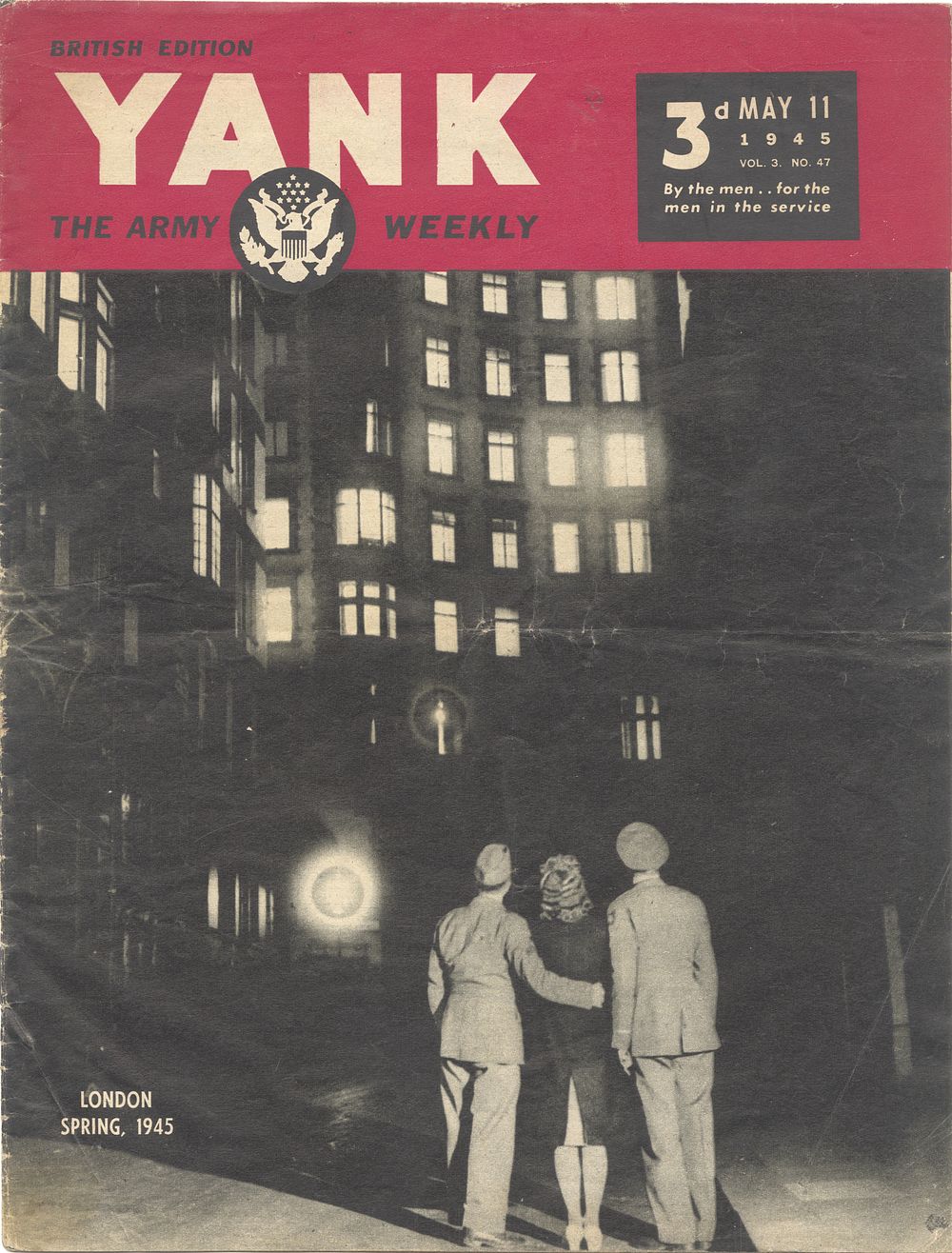
Issue of YANK Magazine - First Publication in Britain of the Atrocities Committed by the Nazis in the Death Camps, May 1945 - Issue of the American military weekly YANK - first exposure of the atrocities committed by the Germans in the death camps - British Edition. London, May 11, 1945. Special issue published only days after the surrender of Nazi Germany in Europe (at the end of World War II in Europe), devoted to exposing the murders and atrocities committed in the Nazi concentration and extermination camps uncovered by the Allied forces. The opening article of the issue reports on the horrifying findings discovered in the death camps. Here, photographic documentation of what had taken place in the camps was revealed to the public for the first time, under the headline: ”German Murder Camps – Some pictures that speak for themselves.” Among the horrifying photographs - Nordhausen: a harsh panoramic photograph showing hundreds of prisoners' bodies lying on the ground throughout the camp. Liberated American prisoners of war: photographs of American POWs who had been imprisoned at STALAG XXII-A, shown in a state of extreme emaciation and severe malnutrition. The atrocities at Gardelegen and Nordhausen (Gardelegen & Nordhausen) - photographs: the Gardelegen barn: a photograph of a man burned to death in a barn set ablaze by the Germans using fuel-soaked straw (a massacre in which more than 1,000 prisoners were murdered). Mass graves at Nordhausen: a photograph of German civilians forced by the U.S. Army to dig mass graves for the camp's victims. Victims of mass murder: harsh photos of the bodies of French, Polish, Belgian, and Russian civilians murdered at the Nordhausen camp. The issue opens with a major article reporting on what the Allied forces found at the Buchenwald death camp - an article by Corporal Howard Katzander, a correspondent for the magazine, who gives a heartbreaking account of his tour of the Buchenwald concentration camp after its liberation: ”Remember the baking ovens I described in the Marseille story, the part about the German PW camp? Their counterpart is here, but instead of baking bread in them, they were used to destroy people... I saw an ax that was undoubtedly used for this purpose. And a table where gold fillings were removed from their teeth. And a shaft through which they were raised to the oven room. And long steel stretchers on which they were rolled, often still alive, into the stinking heat. I still don't know how far German efficiency went, but I'm sure the heat from a lot of good coke and so many tons of burning flesh couldn't have been allowed to go to waste. No doubt electric blowers were also used to distribute the heat through asbestos-insulated pipes to the quarters of the SS guards... But they weren't complete beasts. They have a gentler side to their nature, as evidenced by a four-line verse painted on a sign hanging above the ovens. The verse says that man does not want his body to be eaten by worms and insects. He prefers the purifying oblivion of the flame. And there is also a practical touch - the name of the oven manufacturer on a steel plate mounted across each of the two banks of ovens - in case you too would like a crematorium for your basement...” Alongside the horrifying report are some of the first photographs taken at the Buchenwald camp - shrunken heads, body parts of prisoners, ashes and human bones of the murdered, liberated prisoners lying exhausted on wooden bunks, and a truck loaded with corpses. The issue continues with an article by Sergeant Saul Levitt, describing the scenes at Ohrdruf - the first camp liberated by U.S. Army forces: ”There are 31 bodies lying on the ground in one place, and more than that number piled one on top of another in a shed. The bodies are all partially or completely naked. Around some of them, blood has formed pools of red mud on the ground. Some of the bodies are extremely thin, with the astonishing emaciation of severe malnutrition... There were more than 2,000 men in the camp. Those who were killed were too sick or too exhausted to climb into the railway cars. They were therefore beaten with clubs until they fell and then shot at close range. Among the men in the camp were Belgians, Frenchmen, Russians, Serbs, and Poles. Among the survivors was a 16-year-old Jewish boy... The Americans who pass through this camp are very quiet. They have already seen a great deal of death, but they stare at this death, which is uglier and harder. Major John R. Scotti of Brooklyn, New York, the medical officer in charge of Combat Command A, suddenly burst out loudly, speaking to no one in particular. He simply stood in the middle of the camp and shouted what he felt, and no one was surprised to hear his voice booming so loudly. 'I'm telling you, ' he said, his angry voice trembling, 'all this German medical science is worth nothing. This is how far they've advanced in the last four years.