Bidspirit auction | Two Large Photographs of Righteous
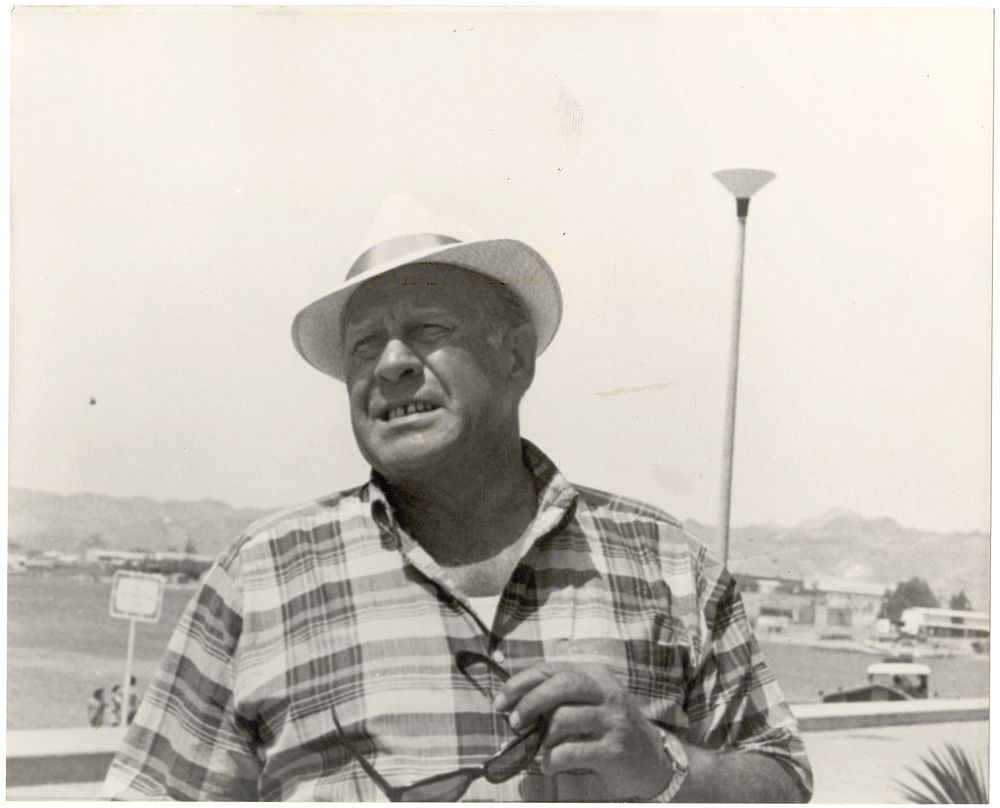
Two Large Photographs of Righteous Among the Nations Oskar Schindler During a Visit to Israel - Two large photographs of Righteous Among the Nations Oskar Schindler during a vacation visit to Israel in the 1960s. Schindler was captured by the camera at the Gulf of Eilat and on the seashore in Tel Aviv. Source: TV TIMES photo agency (stamped with the agency's ink stamp and captioned on the reverse) - original gelatin silver prints. 1. Oskar Schindler wearing a white hat and holding his sunglasses in his hand, against the backdrop of the Eilat Mountains and the Gulf of Eilat. On the reverse of the photograph: ”THAMES TELEVISION COPYRIGHT” copyright stamp, as well as an affixed printed label: ”Oskar Schindler on holiday at Eilat, Israel.” Size: 26x21 cm. Very good condition. 2. Oskar Schindler wearing swimming trunks and sunglasses on the seashore near the Tel Aviv Hilton Hotel, beside the Gordon Pool (period Hebrew advertising signs for ”Elite Coffee”). On the reverse of the photograph: TV Times archive stamp, Thames Television stamp, the handwritten notation ”Morgue” (a journalistic term for an editorial archive), and a printed label: ”Oskar Schindler, in dark glasses and trunks on holiday in Israel.” Size: 25x18 cm. Very good condition. Schindler first arrived in Israel on April 28, 1962. Hundreds of people attended the reception held in his honor at Lod Airport, most of them Jews whom he had saved. During that same week, a reception in Schindler's honor was held at a hotel in Tel Aviv. That first visit aroused great excitement among the Israeli public. Schindler maintained a warm and profound relationship with the survivors on his list (”Schindlerjuden”) who had immigrated to Israel. From 1961 until his death in 1974, he visited Israel almost every year, usually in the spring around Independence Day, dividing his time between Jerusalem and a modest one-room apartment in Frankfurt. TV Times Photo Agency / Archive was an exclusive photographic department affiliated with the long-established and renowned British television magazine TV Times, which has been published since 1955. This photographic archive is today regarded as one of the most important collections of historical and cultural photographs in Britain from the second half of the 20th century. Oskar Schindler [1908-1974], a German industrialist and businessman who, at the beginning of the war, acquired the ”Emalia” enamelware factory in Kraków out of the conventional motive of financial profit. However, when he became exposed to the extent of the atrocities and brutality in the ghetto and the Płaszów camp, he decided to transform his factory into an extraordinary haven of rescue. Schindler bribed Nazi officers, falsified documents, and claimed that his Jewish workers, some of whom were children, elderly, or lacking professional experience, were ”essential workers” for the Reich's war effort. During the war years, Schindler spent his entire personal fortune on bribes, food, and medicines on the black market to ensure that his workers would not starve or be sent to the extermination camps. When his factory was transferred to Brünnlitz and designated as a munitions factory, Schindler, in cooperation with his workers, arranged for falsified reports and deliberate sabotage of production, so that for months not a single functional shell left the factory. Through his courage and connections, Schindler saved approximately 1,200 Jews (”Schindlerjuden”) from almost certain death. On July 24, 1993, the decision to recognize Oskar Schindler as Righteous Among the Nations was approved, and it was also decided to recognize his wife, Emilie Schindler, as such. Oskar Schindler's story became widely known through the book ”Schindler's List, ” written by Thomas Keneally, upon which Steven Spielberg's 1993 film ”Schindler's List” was based. The book and film generated widespread admiration for Schindler. Schindler was buried on Mount Zion in Jerusalem.