Bidspirit auction | The Belgian Weekly Le Patriote
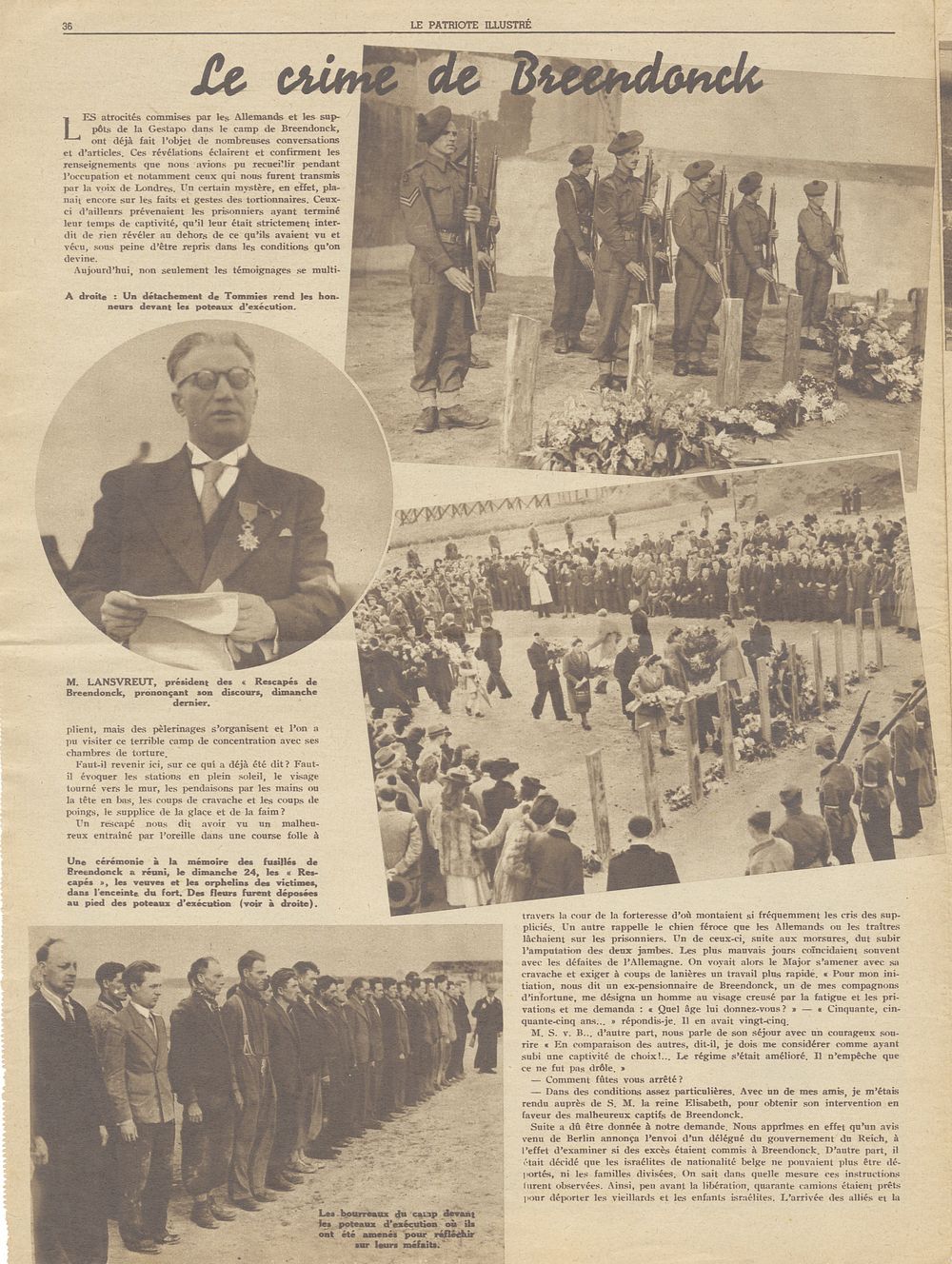
The Belgian Weekly Le Patriote Illustré – First Exposure of the Nazi Crimes at the Breendonk Camp - Issue of the Belgian weekly Le Patriote Illustré, dated October 1, 1944 – the first exposure of Nazi crimes at the Breendonk camp – containing harrowing photographs, as well as historic photographs documenting the liberation of Europe at the end of the war. This issue features a major article entitled “Le crime de Breendonck” (“The Crime of Breendonk”), devoted to exposing the atrocities and crimes committed by the Nazis and Gestapo personnel at the Breendonk detention camp (Fort Breendonk) in Belgium during the occupation. The article describes the testimonies that emerged following the liberation of the camp – the torture endured by the prisoners, starvation, solitary confinement cells, and punishments. It also presents personal testimonies concerning the Gestapo’s methods of interrogation and abuse at the camp – detention in the cellars on Avenue Louise, the starvation diet (approximately 250 grams of bread and thin soup per day), forced labor pushing carts loaded with sand, and the severe physical and psychological abuse inflicted upon the prisoners. The article also reports on the first memorial ceremony for the victims and on the investigations then being conducted against collaborators and the camp commanders. Among the harrowing testimonies presented here: “Across the courtyard of the fortress, from which the screams of the tortured so often arose. Another recalls the vicious dog that the Germans or the traitors set upon the prisoners. One of them, as a result of the bites, had to have both legs amputated. The worst days often coincided with German defeats. Then the major would arrive in his riding coat and, with blows of his strap, demand that the work be carried out faster. ‘When I first arrived, ’ a former prisoner of Breendonk told us, ‘one of my unfortunate comrades pointed to a man whose face was sunken from exhaustion and deprivation and asked me, “How old do you think he is?” Fifty, fifty-five... I replied. He was twenty-five...’” And more. The article is accompanied by photographs from the camp: the execution posts; a special torture cell in which a prisoner was strapped to a bed while a blast of freezing air was directed at him in order to extract confessions; heavy iron rings fixed into the wall, to which prisoners were shackled to prevent them from reaching food placed on a table in the cell; and a torture chamber with a special gutter in the floor for draining the blood of those being tortured. Additional photographs show British soldiers (“Tommies”) paying their final respects and saluting before the execution posts within the fortress compound; a general view of the fortress courtyard, its buildings, and the maze surrounding it; a portrait of Mr. Lansvreut (M. Lansvreut), president of the “Breendonk Survivors” organization, delivering a speech at the memorial ceremony; a photograph from the memorial ceremony held on Sunday, September 24, attended by survivors, widows, and orphans who laid flowers at the foot of the execution posts; and Belgian guards and collaborators (“the camp’s executioners”) who were held in detention and brought before the execution posts to contemplate their crimes (in the autumn of 1944, following the liberation of Belgium by the Allied armies, the fortress was used for a brief period by the Belgian authorities as a detention camp for Belgians suspected of collaborating with the German occupation forces). The issue continues with documentation of the celebrations of freedom in the city of Léopoldville (then the capital of the Belgian Congo), including a photograph of Governor Pierre Ryckmans in conversation with the Apostolic Vicar, Mgr Six, and an image of residents celebrating the liberation of Brussels, alongside an account of the colony’s contribution to the Allied war effort through raw materials and combatants; reports on the activities of the Belgian resistance (F.I.) prior to liberation, including an account of a successful act of sabotage against the railway line in the Waremme area on the night of August 31–September 1, 1944, accompanied by photographs of a German military train from Cologne that was derailed, blocking the strategic transport route between Brussels and Liège; reports on the bloody street fighting during the Warsaw Ghetto Uprising; the liberation of Bucharest; and a page paying tribute to the liberators of Europe – General Charles de Gaulle, Marshal Tito, and others. The issue also contains photographic documentation of the days of fighting and the uprising of the French Resistance that led to the liberation of Paris between August 19 and 25, 1944; the surrender of the German headquarters (the “Kommandantur”) in Paris and the end of the fighting in the city – historic photographs published here for the first time, showing German prisoners marching through the streets with their hands raised;