Bidspirit auction | HaChayal HaIvri – Special Issue
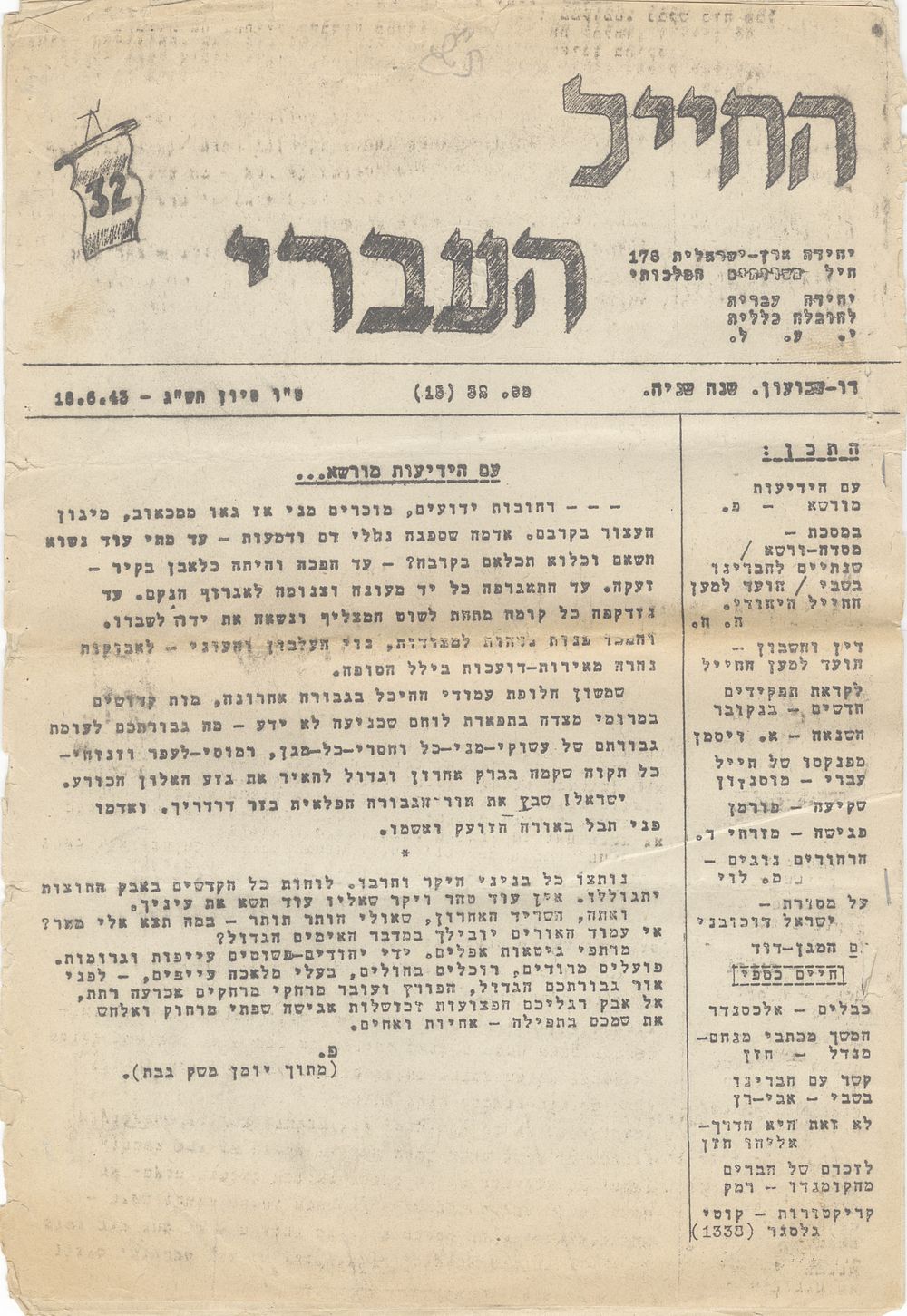
HaChayal HaIvri – Special Issue Following the Arrival of News of the Warsaw Ghetto Uprising and the Liquidation of the Ghetto – June 1943 - HaChayal HaIvri, published by Eretz-Israel Unit 178, Royal Army Service Corps / Jewish General Transport Unit, issued by the editorial board of HaChayal HaIvri (editors and contributors from among the soldiers of the unit) – Issue No. 32, dated 15 Sivan 5703, June 18, 1943 – “With the News from Warsaw...” – special issue devoted to the Warsaw Ghetto Uprising and the liquidation of the ghetto, approximately one month after the final liquidation of the Warsaw Ghetto. Stencil-printed. Rare. In June 1943, the first shocking and authoritative reports concerning the horrifying scale of the Holocaust taking place in Europe began to reach Eretz Israel and the soldiers of the Jewish units. This issue, entitled “With the News from Warsaw...”, reports on the heroic and tragic uprising of the Warsaw Ghetto and its destruction. The contributors describe, with profound reverence and anguish, the heroism of the Jewish fighters who rose to wage a battle doomed from the outset, fighting for their lives and for the honor of the Jewish people, combining deep mourning for the massacre and destruction with pride in a spirit of resistance that refused to surrender. “Familiar streets, known from days gone by, overflowed with pain, with the grief pent up within them... Samson bringing down the pillars of the temple in a final act of heroism, the martyrs’ death upon the heights of Masada in the glory of a fighter who knew no surrender – what is your heroism compared with theirs, the heroism of those oppressed by all and deprived of every means of defense, trampled into the dust and forsaken of all hope... All the precious buildings were shattered and destroyed...”. On its inner pages, the issue salutes the fighters of the Warsaw Ghetto Uprising: “Magnified and sanctified be Jewish heroism!” It also contains a remarkable article by Chaim Caspi of the 462 General Transport Company concerning the victory of the Star of David over the swastika, written at the time when it was decided that Stars of David would be displayed on the fronts of vehicles belonging to the Jewish units: “In Germany, the Jews were forced to wear the yellow badge with the ‘Star of David.’ We, of our own free will and out of conviction, have placed the symbol upon our vehicles. For when Nazi prisoners are transported in vehicles upon which this eternal Jewish symbol is displayed, the matter assumes an entirely different meaning... The ‘Star of David’ is awakening and coming back to life, and will become the symbol of victory...” – accompanied by an illustration of the flag of Israel crushing the Nazi swastika. The issue also contains a caricature mocking Adolf Hitler and senior figures of his regime; a report on the receipt of the report of the National Committee for the Jewish Soldier; “Contact with Our Comrades in Captivity”; memorial pieces for comrades from the commando unit; poems and articles written by the soldiers themselves, including a memorial composition for fallen comrades, an excerpt from a travel diary, reports on contact with fellow soldiers, and more. This newspaper was written and edited by Jewish soldiers from Eretz Israel who served in the British Army during World War II, as part of Eretz-Israel Unit 178 of the Royal Army Service Corps and a Jewish General Transport Unit. Eretz-Israel Unit 178 was established during World War II as part of the wave of enlistment from the Jewish Yishuv in Eretz Israel into the British Army. Unlike the earlier pioneer corps units, the transport units were skilled motorized units of the highest strategic logistical importance. The soldiers of Unit 178 served as drivers, mechanics, and logistics personnel, transporting supplies, ammunition, and troops on the North African fronts and later in the Italian Campaign. Throughout their service, they maintained a strong national identity and openly expressed their Hebrew pride, making a point of using the Hebrew language and the official symbols of the Yishuv, while maintaining a rich cultural life even in the midst of the fighting. 18 pages. Good condition.