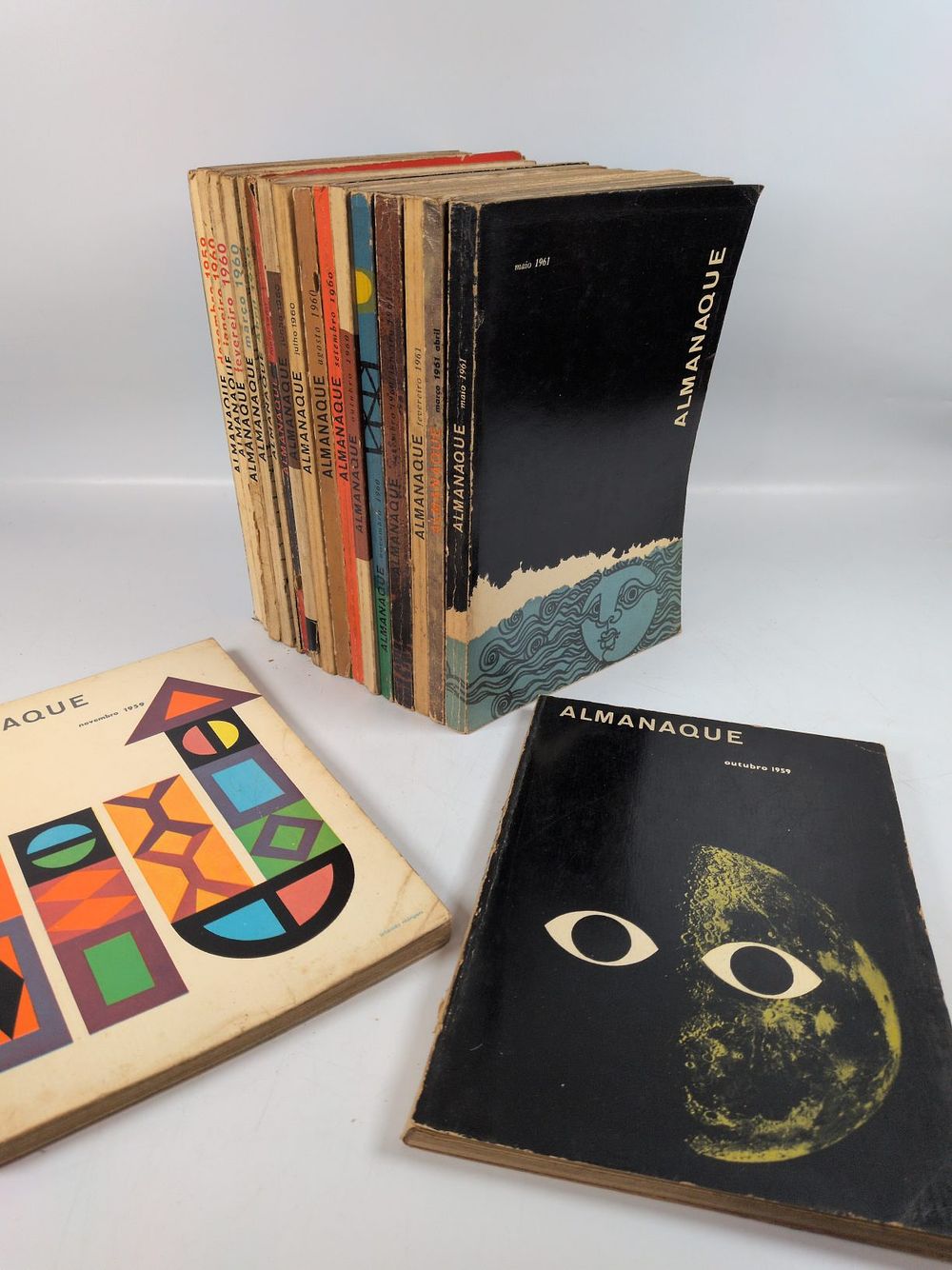
Bidspirit auction | ALMANAQUE. Lisboa. 1959-1961.
ALMANAQUE. Lisboa. 1959-1961. - ALMANAQUE . Out. 1959-maio 1961. Lisboa: Grupo de Publicações Periódicas, 1959-1961. 18 v.: il.; 250 mm. ALMANAQUE was a magazine funded in Lisbon by JA de Figueiredo Magalhães (Ulisseia Publishing House), promoted by José Cardoso Pires and, later, by Luís de Sttau Monteiro, between October 1959 and May 1961, totaling eighteen issues and a supplement. With an editorial board that included names such as José Cutileiro, Baptista-Bastos, Augusto Abelaira and Alexandre O'Neill, it assumed from the beginning a vocation of cultural intervention: a place for conviviality and circulation of ideas, ”strategically” located on Rua da Misericórdia, where current events and rumors of Lisbon met with an attentive and corrosive gaze on the habits of the time. The program, as described in the text, aimed to ridicule cultural provincialisms (cosmopolitan or otherwise), shake off complacency, and insist that a certain austerity could, after all, be a mask for fear and a lack of imagination. This impulse translates into an assumed eclecticism: anniversaries and current events (abundantly illustrated), scientific dissemination, politics, literature (short stories and poetry), painting, cinema, and also entertainment segments—from astrology and palmistry to pastimes, crossword puzzles, tests, and anecdotes—composing a vivid, simultaneously mundane and critical portrait of Portuguese daily life. The magazine also sought to offer a ”snapshot” of its time, featuring international figures and events (from cinema to music, from scandal to tragedy, from war to the ”feverish times” of rock and roll, jazz, and the Beat Generation), alongside national themes treated with irony and social observation. Among its notable features, ”In the Kingdom of Pacheco, ” associated with Sttau Monteiro, stands out, satirizing ”national folly” and playing with the mask of anonymity; and the attention given to reports on countries and customs ”beyond borders, ” in a context where television in Portugal was still in its infancy. In terms of material and graphic design, ALMANAQUE benefited from a valued visual orientation, with covers mostly by Sebastião Rodrigues (and, later, collaboration from João Abel Manta), page layout by Pilo da Silva, photography by authors such as Armando Rosário, Eduardo Gageiro and Mário Novais, and drawings by various contributors. The text also features special thematic issues (such as those dedicated to ”pleasures, ” ”commonplaces, ” and ”monuments”), and a final issue focused on nightlife, with its own supplement, also including poems and texts by Portuguese authors, excerpts, songs, and satirical exercises—signs of a magazine that wanted to be, at the same time, a cultural observatory and a writing laboratory. ⚑ Auto-translated via Google Translate ¶ Daniel Pires, v.II, t.1, p. 39ss