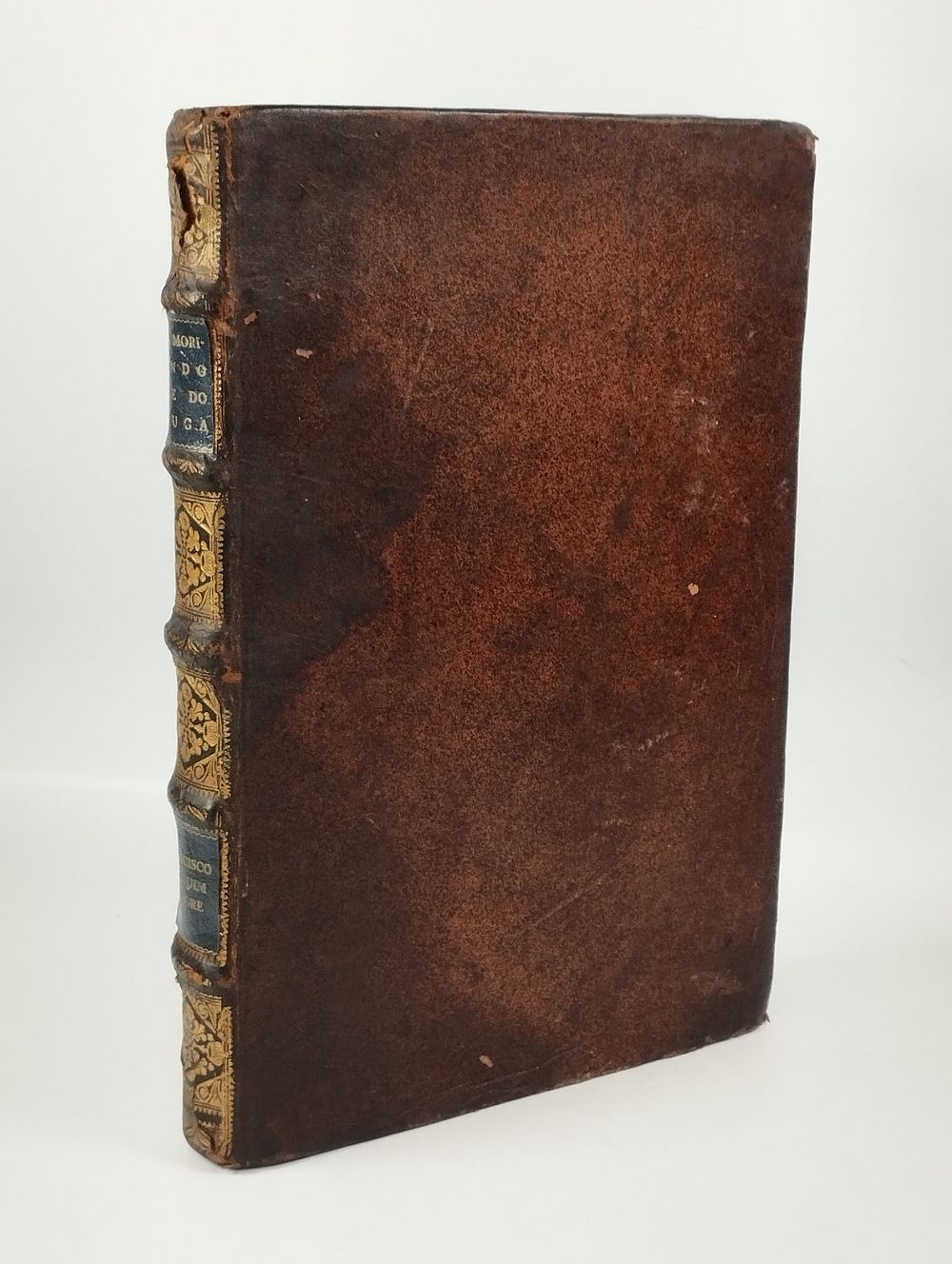
Bidspirit auction | MACEDO (António de Sousa de).
MACEDO (António de Sousa de). DECISIONES Supremi Senatus Justitiae Lusitaniae, et Supremi Concilij Fisci, ac Patrimonij Regij, cum Gravissimis Collegis decretae. Conimbricae. 1734. - MACEDO (António de Sousa de) DECISIONES Supremi Senatus Justitiae Lusitaniae, et Supremi Concilij Fisci, ac Patrimonij Regij, cum Gravissimis Collegis decretae . Triplici Indice locupletatae: uno Decisionum, altero Legum, tam Juris Communis, quam Lusitani, quae specialius explicantur, tertio denique rerum, & materiarum. Cum Apologetico Juridico pro Immaculata Conceptione Virginis Deiparae. Editio Quarta. Huic Editioni accedunt Additiones, quae singulas Decisiones exornant, & augent. Conimbricae: Apud Ludovicum Seco Ferreyra, 1734. [ ]4, A-Z, Aa-Kk6, Ll-Mm4; [4], 4, 412 pp.; 305 mm. Fourth edition, the most complete, of this fundamental collection of case law from the highest Portuguese court of the Old Regime. António de Sousa de Macedo (Porto, 1606 - Lisbon, 1682), Doctor of Law from the University of Coimbra, had a prominent diplomatic and political career: secretary of the embassy to England sent by King John IV in 1641, resident and later ambassador to Holland in 1650, and Secretary of State to King Afonso VI. Exiled to Terceira Island after the abdication of this monarch in 1669, he is also considered the founder of Portuguese journalism, having edited the Mercúrio Português (Lisbon, 1663-1666). As a writer, he published in Portuguese, Spanish, and Latin, most notably Flores de España, Excelências de Portugal (1631). The Decisiones – whose first edition dates from Lisbon, 1660 – brings together rulings from the Court of Appeals and the Treasury Council, accompanied by doctrine and commentary, making it an essential reference work for Portuguese legal practice throughout the 18th century. This fourth edition, printed in Coimbra, incorporates the Additiones of Francisco António de Almeida, a Coimbra jurist and candidate for the chair of Caesarean Law at the University, which enriched and updated each of the decisions in the original text. The presence of this additional critical apparatus – absent in the three previous editions (Lisbon, 1660; Lisbon, 1677; Lisbon, 1699) – gives the fourth edition added doctrinal value, making it the most complete and most cited by 18th-century practitioners. Estimated. ⚑ Auto-translated via Google Translate