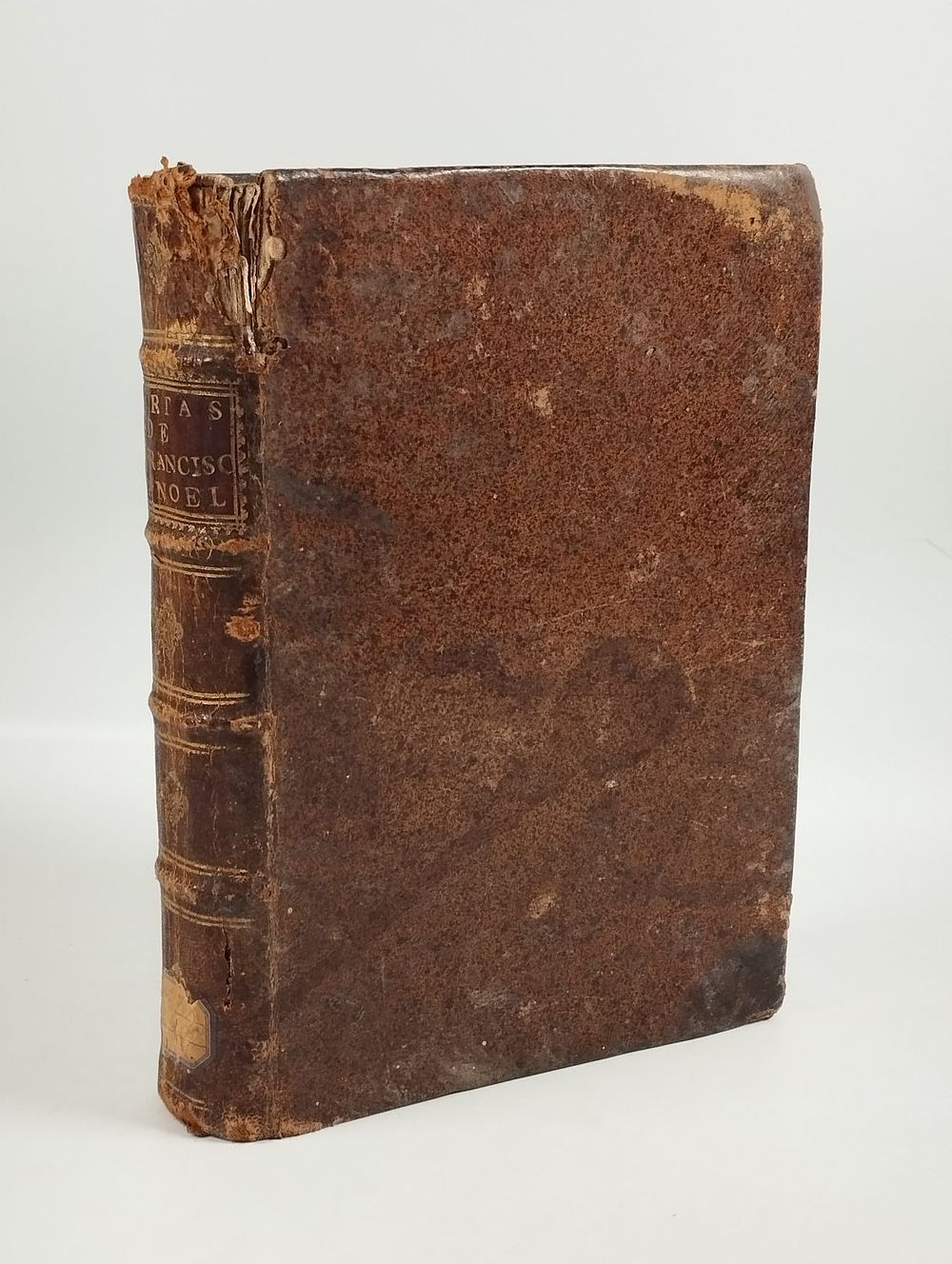
Bidspirit auction | MELO (Francisco Manuel de). CARTAS
MELO (Francisco Manuel de). CARTAS FAMILIARES de D. Francisco Manoel. Lisboa. 1752. - MELO (Francisco Manuel de) CARTAS FAMILIARES de D. Francisco Manoel . Escritas a Varias pessoas sobre assumptos diversos; Recolhidas, e publicadas em cinco Centurias por Antonio Luiz de Azevedo [...]. Lisboa: Na Offic. dos Herd. de António Pedrozo Galram, 1752. [ ]4, §-§§4, A-Z4, Aa-Zz4, Aaa-Zzz4, Aaaa4; [24], 560 pp.; 205 mm. Second edition, printed almost ninety years after the appearance of the first, published in Rome in 1664. D. Francisco Manuel de Melo (Lisbon, November 23, 1608 - Lisbon, October 13, 1666) was one of the most distinguished Portuguese writers of the 17th century, a polymath with a vast body of work in Portuguese and Spanish. Born into a noble family with connections to the courts of Lisbon and Madrid, he studied at the Jesuit College of Santo Antão, pursued a military career, and participated in the Thirty Years' War campaigns. Accused of complicity in a homicide, he was imprisoned for more than eleven years, suffering he tried by all means to remedy, even managing to enlist the help of King Louis XIII of France. After his temporary exile to Brazil (1655-1658), where he wrote part of his Dialogical Apologues , he returned to Europe, toured Italy and lived in Rome for a few years, publishing there in 1664 the Family Letters - his last work printed during his lifetime, as he died in Lisbon the year after his return. The Family Letters bring together almost all of his correspondence, in addition to literary criticism, dedicatory letters, matters of diplomacy and politics, historical studies, and a large number of courtesy and condolence letters, distributed over five centuries. They are a fundamental work for understanding Portuguese society and the worldview of the 17th century, and constitute one of the most expressive documents of Peninsular Baroque epistolary literature, with Melo corresponding with Francisco de Quevedo, Manuel de Faria e Sousa, Jacinto Freire de Andrade, and numerous other figures in Iberian literature and politics. Rare and highly prized. ⚑ Auto-translated via Google Translate ¶ Inocêncio, v. 2, p. 442