Bidspirit auction | [D. JOSÉ I / D.
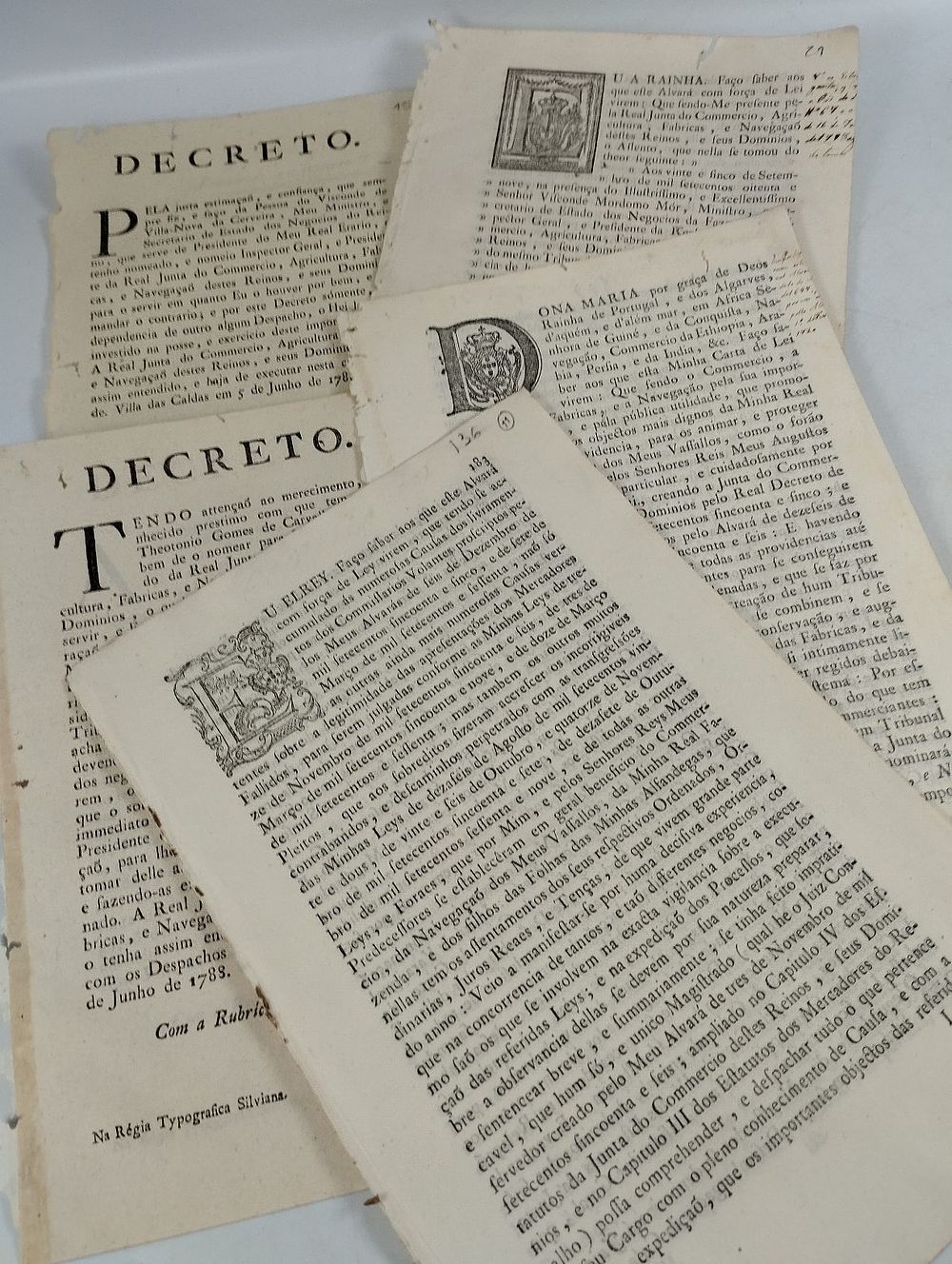
[D. JOSÉ I / D. MARIA I]. REAL JUNTA DO COMÉRCIO — Criação, Organização e Nomeações. - [D. JOSÉ I / D. MARIA I] REAL JUNTA DO COMÉRCIO — Criação, Organização e Nomeações . 5 diplomas régios; Portugal, 1771–1790; Lisboa, Vila das Caldas. A collection of five decrees concerning the Royal Board of Commerce, Agriculture, Factories and Navigation, the main body overseeing economic activity in 18th-century Portugal. The Board of Commerce was originally created in 1755 as a response to the post-earthquake crisis, but was reformed and elevated to a Supreme Court at the end of the reign of King José I and consolidated during the Marian period, accumulating powers over commerce, manufacturing and navigation. December 19, 1771 (King Joseph I) — Abolishes the position of General Conservator of Commerce, creating in its place the General Superintendent of Smuggling, the Judge of Bankruptcies, and the Judge of India and Mina; judicial reorganization of commerce. June 5, 1788 (Queen Maria I) — Appointment of the Viscount of Vila Nova da Cerveira as Inspector General and President of the Royal Board of Commerce, Agriculture, Factories and Navigation; filling of the highest magistracy of the court. June 5, 1788 (Queen Maria I) — Two Decrees appointing Teotónio Gomes de Carvalho as Deputy Secretary of the Royal Board of Trade and providing for other positions; renewal of the governing body of the court. c. June 1788 (Queen Maria I) — Creates and establishes the Royal Board of Commerce, Agriculture, Factories and Navigation as the Supreme Court, with a President-Inspector General and eight Deputies; decree of reorganization and definitive consecration of the court. July 9, 1790 (Queen Maria I) — Authorizes and ratifies the decision taken by the Royal Board of Trade on matters already decided, so that they may not be contested further; reinforcement of the authority of the court's rulings. The collection articulates two distinct moments: the judicial restructuring of commerce during the Josephite period and the elevation and definitive organization of the Junta as a Supreme Court during the Marian period. It is a primary source for the study of the institutional history of Portuguese commerce. ⚑ Auto-translated via Google Translate