Bidspirit auction | [D. JOSÉ I / D.
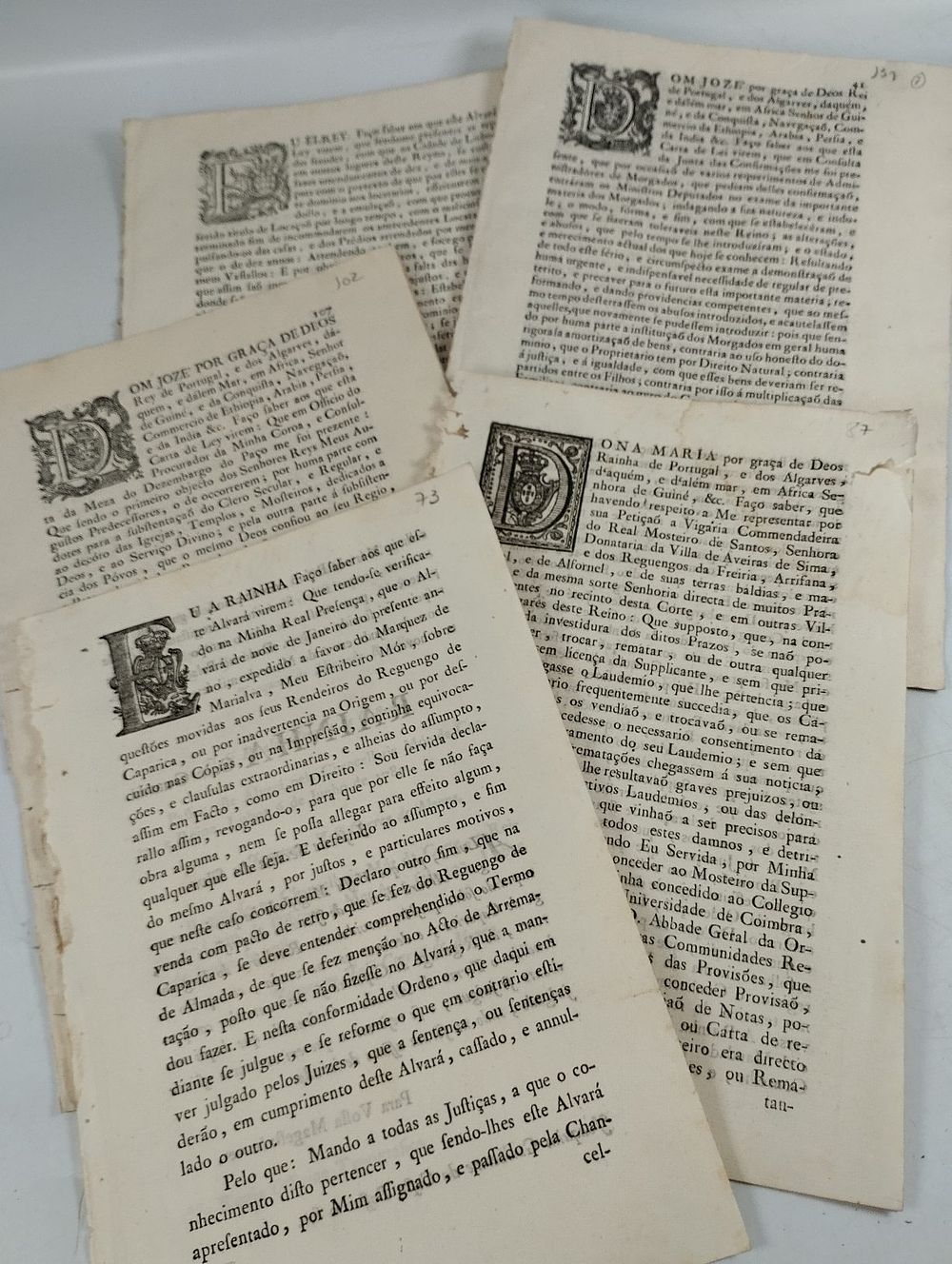
[D. JOSÉ I / D. MARIA I]. MORGADOS, PRAZOS E ENFITEUSE — Vinculações, Domínio e Reguengos. Portugal, 1768–1789. - [D. JOSÉ I / D. MARIA I] MORGADOS, PRAZOS E ENFITEUSE — Vinculações, Domínio e Reguengos . 5 diplomas régios; Portugal, s.d.–1789. A set of five decrees concerning the regime of entailed property—morgados, prazos foreiros, and reguengos—which constituted a fundamental part of real estate property in Portugal during the Old Regime. The regulation of this matter was complex, involving the rights of the Crown, monasteries, noble families, and private individuals, and was the subject of reform legislation during both the Josephite and Marian periods, in a progressive movement towards rationalization and limitation of entailments. 9 Jul 1768 (D. José I) — Declares null and void the consolidations of beneficial ownership in the leaseholds of churches, monasteries and mortmain properties, made by devolutions, commissions or other titles; protection of direct ecclesiastical ownership against absorption by tenants. August 7, 1770 (King José I) — Regulates entailed estates, determining quality and income requirements for their establishment; excludes abusive clauses and reduces the scope of excessive encumbrances; a Pombaline decree aimed at containing entailed estates. sd — Annuls any and all leases of ten years or more, made or to be made, to acquire ownership of houses or buildings with the aim of expelling the rightful owners; protection of property against contractual abuses. 5 Mar 1787 (D. Maria I) — Provision granted to the Vicar Commander of the Royal Monastery of Santos, grantee of Aveiras de Sima and other royal lands, regarding the rights and powers in those areas. April 17, 1789 (Queen Maria I) — Revokes the Royal Decree of January 9th concerning matters of the tenants of the Reguengo de Caparica; declares the conditions of the sale with a right of reversion in that royal estate; resolution of a specific conflict regarding royal domain. The collection documents the tension between the interests of the Crown, the clergy, the nobility, and the tenants in one of the most contentious matters of civil law during the Old Regime. ⚑ Auto-translated via Google Translate