Bidspirit auction | [D. JOÃO V / D.
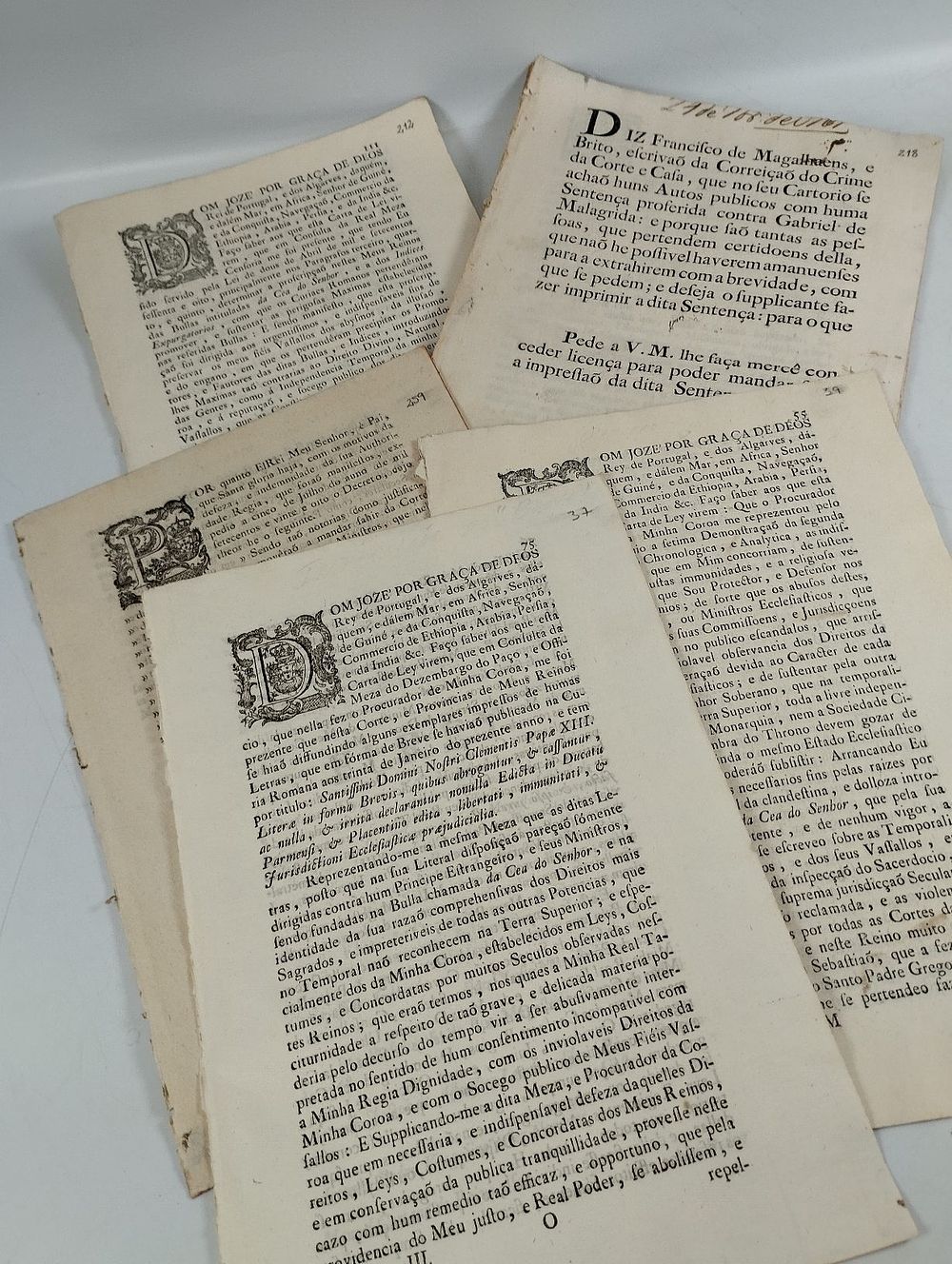
[D. JOÃO V / D. JOSÉ I]. REGALISMO E RELAÇÕES COM A SANTA SÉ — Bulas, Jurisdição Régia e Inquisição. Portugal, 1728–1769. - [D. JOÃO V / D. JOSÉ I] REGALISMO E RELAÇÕES COM A SANTA SÉ — Bulas, Jurisdição Régia e Inquisição . 5 diplomas: 1 Resolução (1728, repub. 1760), 2 Decretos (1768), 1 Sentença (1761), 1 Declaração (1769); Portugal, 1728–1769. A collection of five documents that record the conflict between the Portuguese royal power and the Holy See in the second half of the 18th century, culminating in the assertion of the Throne's full sovereignty over ecclesiastical matters. The regalist policy, radicalized under Pombal, aimed to subject the Church and its courts to the authority of the State, annul the effectiveness of papal bulls in the Kingdom without royal approval, and reduce the power of the Society of Jesus. 5 Jul 1728 / 4 Aug 1760 (D. João V / D. José I) — Resolution of 1728 ordering the departure of all vassals linked to the Roman Curia within a specified period; republished and executed in 1760 in the context of the diplomatic break with Rome. 28 Mar / 6 Apr 1768 (D. José I) — Royal jurisdiction over ecclesiastical matters; declares the Bull In Coena Domini null and void ; prohibits the Expurgatory Indexes; delimits the jurisdiction of ecclesiastical courts in the Kingdom. April 25 / May 5, 1768 (King Joseph I) — Declares the copies of the Brief of Pope Clement XIII published in the Roman Curia to be obscene, surreptitious, and offensive to the independence of the Royal Throne; the Crown refuses to recognize the validity of the papal document. September 20, 1761 (Reign of King José I) — Sentence of the Holy Office of the Inquisition against Gabriel de Malagrida, a religious priest of the Society of Jesus, condemned as a heretic; a document that illustrates the political use of the inquisitorial tribunal against the Jesuits. November 24, 1769 (King Joseph I) — Declaration that the works of many authors in which the maxims of the Papal Bulls In Coena Domini are amplified should not be accepted; extension of the prohibition to the doctrine, not only to the papal document. This collection coherently documents the regalist offensive of the Josephite-Pombaline period, articulating measures of diplomatic policy, ecclesiastical legislation, and judicial instruments. It is of unusual interest for the study of Church-State relations in enlightened Portugal. ⚑ Auto-translated via Google Translate