Bidspirit auction | [D. JOSÉ I / D.
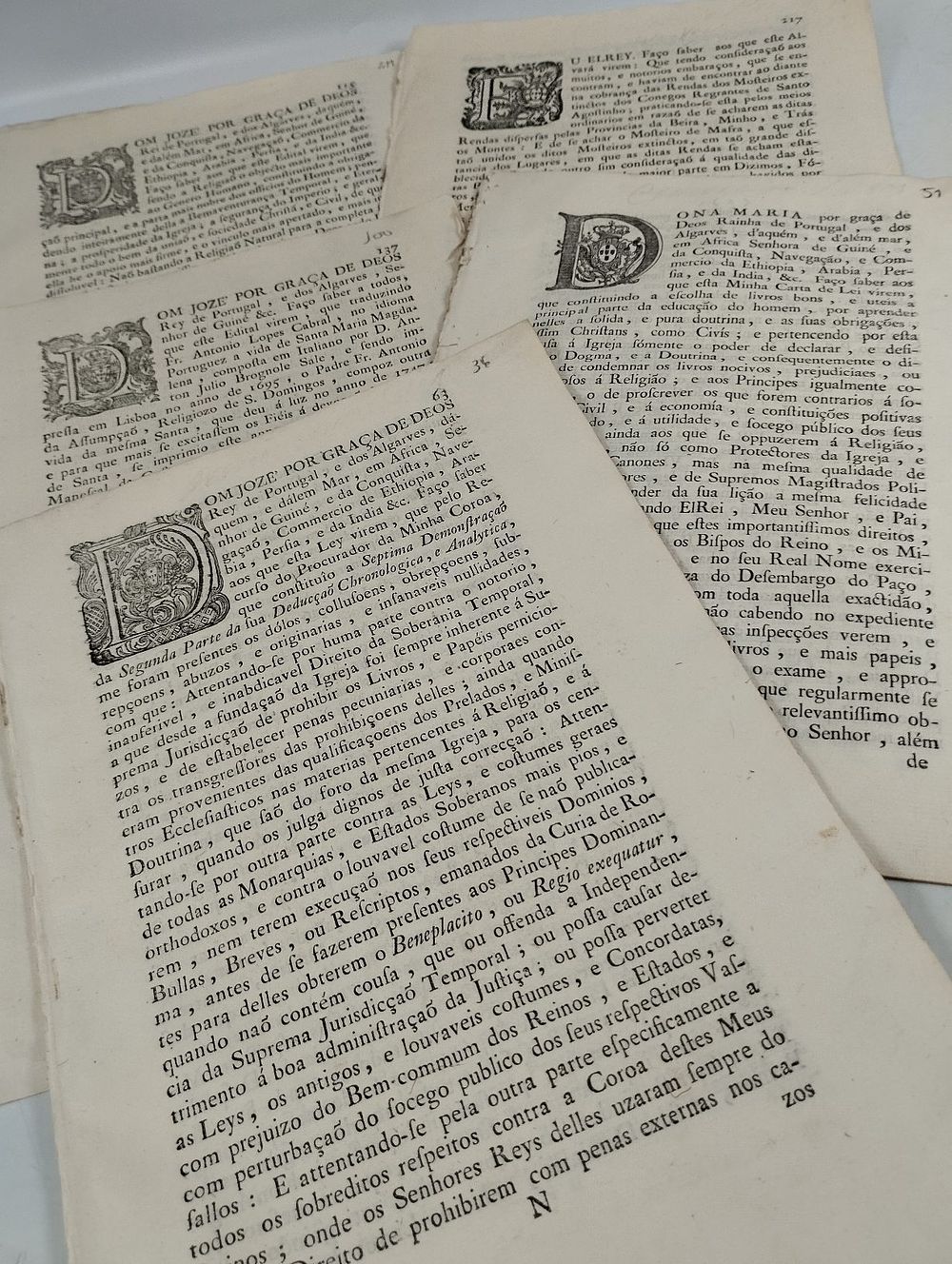
[D. JOSÉ I / D. MARIA I]. CENSURA DE LIVROS E REAL MESA CENSÓRIA — Criação, Competências e Proibições. Portugal, 1768–1787. - [D. JOSÉ I / D. MARIA I] CENSURA DE LIVROS E REAL MESA CENSÓRIA — Criação, Competências e Proibições . 5 diplomas: 1 Alvará de criação, 1 Alvará de ampliação de competências, 3 Editais de proibição; Portugal, 1768–1787. A collection of five decrees concerning royal censorship of books and publications, from the creation of the Royal Censors' Board in 1768 to the consolidation of the Royal Censorship Board as the sole competent court in matters of faith and books. The transfer of censorship from the Inquisition to a royal court was a central element of Pombal's regalist policy, which aimed to subordinate to state control all functions that the Church exercised over the circulation of ideas. April 5, 1768 (King Joseph I) — Creation of the Royal Censors' Board with exclusive jurisdiction for the examination, approval, and rejection of books and papers to be introduced into the Kingdom; a founding milestone of royal censorship in Portugal. November 10, 1768 (King Joseph I) — Edict from the Royal Censorship Board prohibiting the book Magdalena, Peccadora, Amante, e Penitente , translated by Anton Julio Brognole Sale with additions; one of the first acts of censorship by the new tribunal. December 12, 1769 (King Joseph I) — Edict from the Royal Censorship Board ordering the delivery, within 30 days, of all prohibited books of any edition; accompanied by a list of banned works. April 30, 1772 (King Joseph I) — Edict from the Royal Censorship Board condemning the paper ” Juízo da verdadeira casa do Terremoto” (Judgment of the True House of the Earthquake ), relating to the earthquake of November 1, 1755; an example of the censorship of prophetic and non-orthodox literature. June 21, 1787 (Queen Maria I) — Having obtained a broad commission from the Apostolic See, all jurisdiction over the censorship of books and dogmas of the Faith passed to the Royal Censorship Board, renamed; a definitive reinforcement of royal sovereignty over censorship to the detriment of the Inquisition. The collection articulates the normative (creation and expansion of the tribunal) and executive (prohibition edicts) dimensions of royal censorship, constituting firsthand documentation for the study of the history of reading and ideological control in Portugal in the second half of the 18th century. ⚑ Auto-translated via Google Translate