Bidspirit auction | [D. JOSÉ I]. PROCESSO PENAL
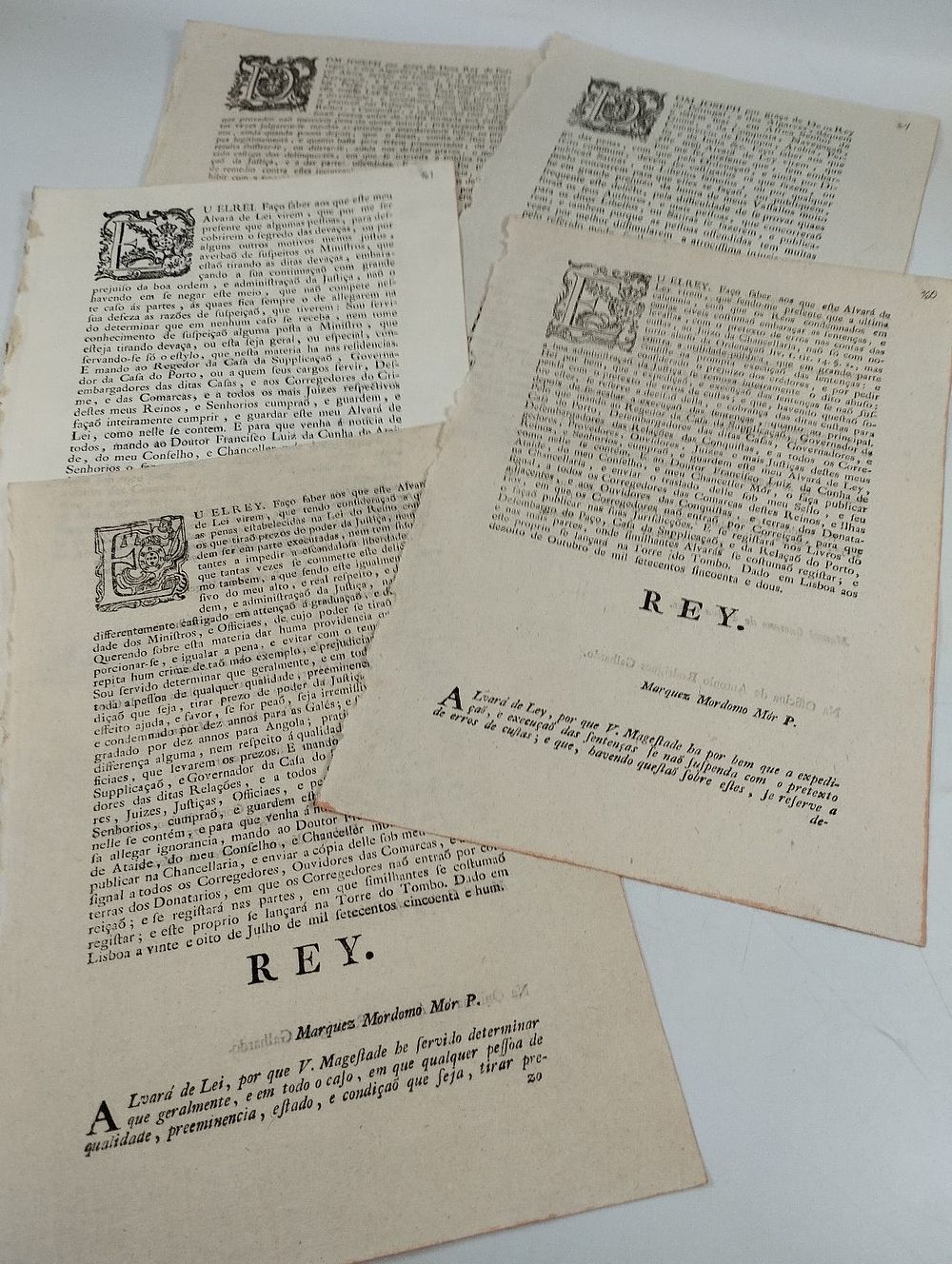
[D. JOSÉ I]. PROCESSO PENAL — Penas, Presos, Suspeições e Libelos. 1751–1754. - [D. JOSÉ I] PROCESSO PENAL — Penas, Presos, Suspeições e Libelos . 1751–1754. 5 diplomas régios: 5 Alvarás de Lei e Leis. A set of five criminal procedure decrees promulgated in the early years of the reign of King José I, at a time when Joseph's legislation sought to methodically remedy procedural abuses that corrupted the functioning of the courts. The matters addressed—resistance to authority, suspension of sentences, suspicions against Ministers, notorious libels, and arrest without due process—constituted the points of greatest tension between the effectiveness of royal justice and the delaying tactics of defendants and parties. August 12, 1751 (King José I) — Decrees that in any case where any person takes a prisoner from the power of Justice or gives help: if a commoner, he is irrevocably flogged and sentenced to ten years in the galleys; if a nobleman, degraded for ten years to Angola. April 18, 1752 (King Joseph I) — Prohibits the receipt or acknowledgment of any suspicion raised against a Minister who is conducting a general or special investigation, while maintaining the customary practices of residences. October 31, 1752 (King Joseph I) — Determines that the dispatch and execution of sentences shall not be suspended on the pretext of errors in costs; if there is a question about costs, the decision and its collection shall be reserved until after the execution of the principal amount is completed. September 12, 1752 (King José I) — Orders an investigation into the creation or publication of famous satires or libels, in the declared form; a measure to repress written criticism. September 23, 1754 (D. José I) — Extends to the trial by investigation the provision of §14 of the Law of Justice Reform, allowing the arrest before guilt is established of persons deserving of the death penalty, provided that guilt is proven within eight days; it applies equally to cases with penalties of whipping or six years of exile to Brazil. The collection articulates measures to reinforce the authority of Ministers (prohibition of suspicions during investigations), procedural speed (execution of sentences without suspension due to cost issues), repression of specific forms of crime (resistance to justice, libel), and anticipation of pre-trial detention. Essential documentation for the study of Portuguese criminal procedure in the 18th century. ⚑ Auto-translated via Google Translate