Bidspirit auction | [D. JOSÉ I / D.
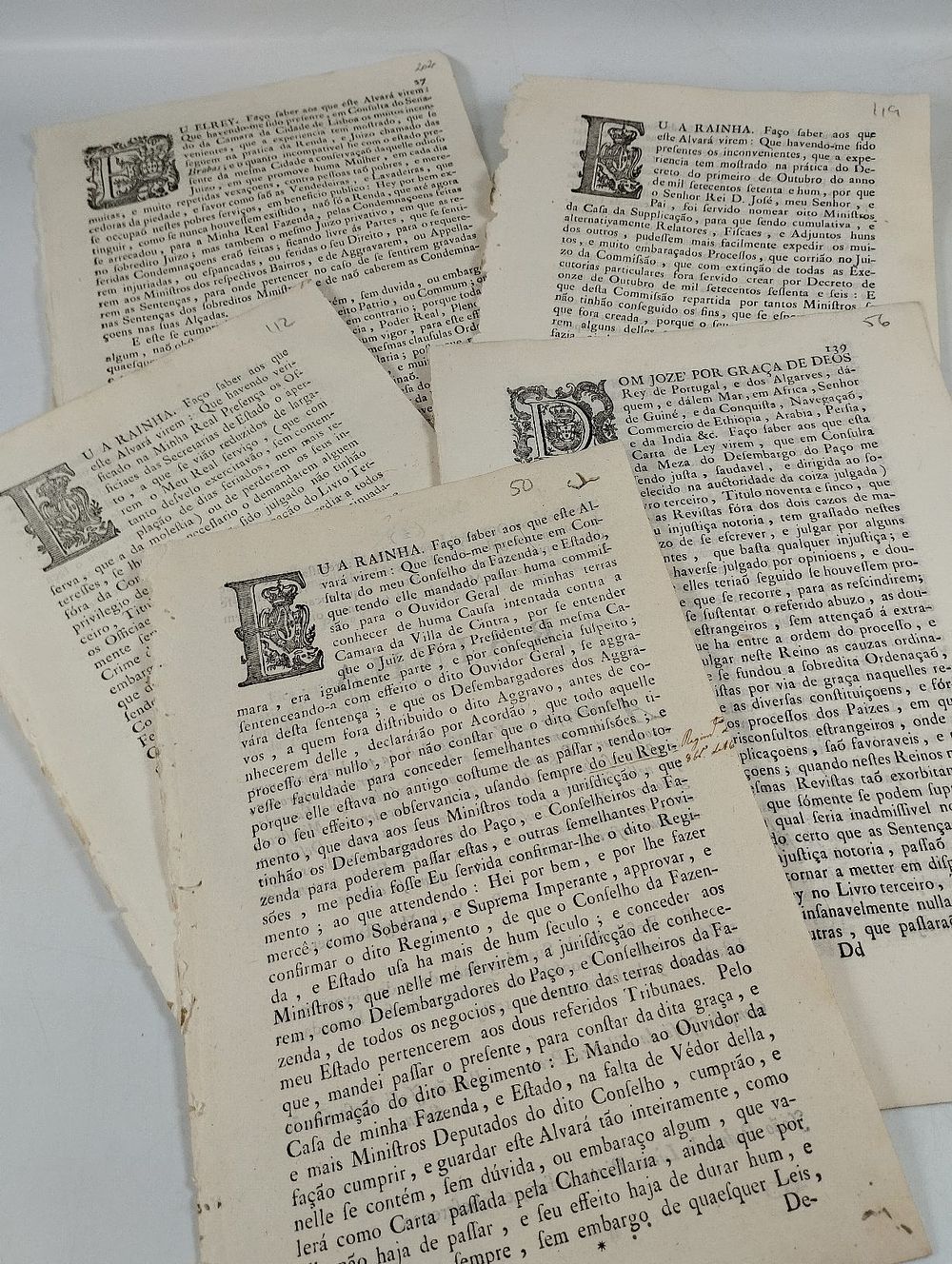
[D. JOSÉ I / D. MARIA I]. TRIBUNAIS — Competência, Revistas e Jurisdição. 1765–1786. - [D. JOSÉ I / D. MARIA I] TRIBUNAIS — Competência, Revistas e Jurisdição . 1765–1786. 5 diplomas régios: 3 Alvarás, 1 Carta de Lei, 1 Alvará de confirmação A collection of five decrees concerning the organization and competence of the main superior courts of the Kingdom. The question of jurisdiction—who could judge what, to what degree, and with recourse to which instances—was central to the judicial architecture of the Portuguese Old Regime, where the multiplicity of exclusive jurisdictions (ecclesiastical, military, commercial, aristocracy) generated permanent conflicts. The decrees gathered here touch on topics as varied as journals, the privileges of jurisdiction of the State Secretariats, the creation of specialized panels, and the extinction of abusive jurisdictions. February 12, 1765 (King Joseph I) — Extinguishes the revenue collected for the Royal Treasury from the convictions of the court known as the ”Brabas” court and abolishes the very private court in which said convictions were made; elimination of a jurisdiction considered abusive. 3 Nov 1768 (D. José I) — Law to prevent abuses in the granting of appeals as a special or very special favor; total denial of second appeals; prohibition of documents in their proceedings; fundamental decree limiting extraordinary appeals. May 14, 1782 (Queen Maria I) — Grants to the Officials of the three State Secretariats the privilege of being able to bring cases with their litigants to the Court, expanding the Ordinance of Book III, Title V. April 15, 1785 (Queen Maria I) — Creates a separate table in the Court of Appeals for handling cases from the Commission on Past Royal Debts (Tuesdays and Saturdays), with two judges and two fiscal prosecutors; specialization of the work of the highest court in the Kingdom. February 3, 1786 (Queen Maria I) — Approval and confirmation of the Rules of Procedure of the Treasury Council, in use for over a century; granting its Ministers jurisdiction as Judges of the Palace and Treasury Councilors. This collection documents complementary aspects of the superior judicial organization: the containment of extraordinary appeals, the creation of specialized panels, the granting of privileges of jurisdiction to royal officials, and the confirmation of the regulations of the tax court. It is of interest for the study of the history of Portuguese judicial institutions in the 18th century. ⚑ Auto-translated via Google Translate