Bidspirit auction | [D. JOSÉ I / D.
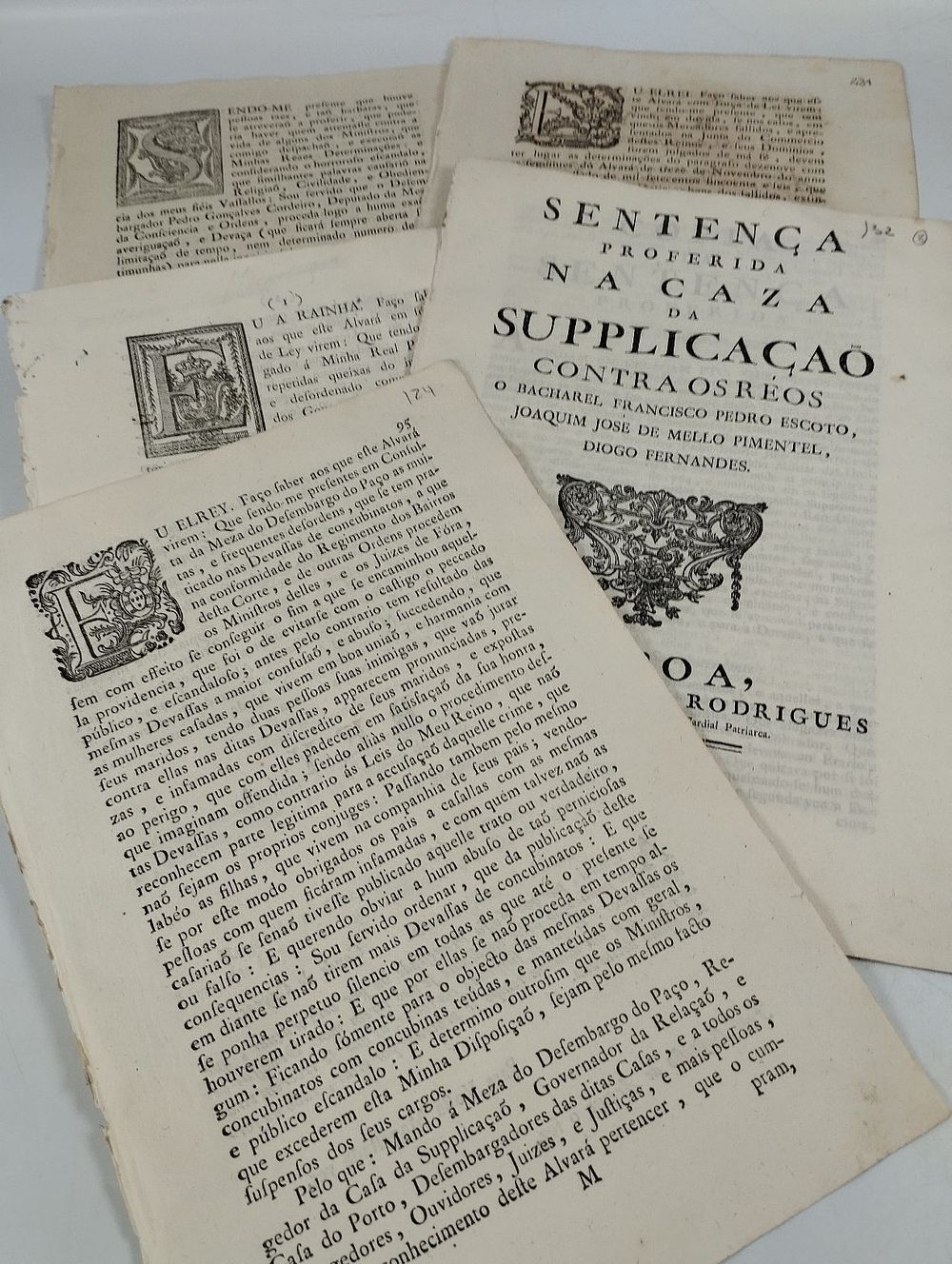
[D. JOSÉ I / D. MARIA I]. PROCESSO PENAL — Crimes Especiais, Devassas e Ordem Pública. c. 1756–1784. - [D. JOSÉ I / D. MARIA I] PROCESSO PENAL — Crimes Especiais, Devassas e Ordem Pública . c. 1756–1784. 5 diplomas: 2 Alvarás, 1 Alvará com força de Lei, 1 Alvará em forma de Lei, 1 Decreto. A set of five procedural criminal laws relating to specific crimes and particularly serious public order situations. The types of crimes addressed are heterogeneous—concubinage, political crimes, overseas abuses of power, fraudulent bankruptcies, and threats against the King's Ministers—but they share the characteristic of requiring specific procedural solutions that general rules did not adequately cover. c. 1756–1757 (D. José I) — Declares that in the collection and adjudication of the assets and shares of bankrupt merchants in bad faith, the provisions of paragraphs 19 and following of the Royal Decree of November 13, 1756, shall be applied, except for the separation of ten percent in favor of those deemed to be in good faith. February 8, 1758 (King José I) — Orders an investigation into individuals who made threats against the lives of King José's Ministers; assigns the task to Judge Gonçalves Cordeiro; promises twenty thousand cruzados and pardon to informers. Accompanying is a Notice to Mr. José Cardoso Castelo regarding the transfer of sick prisoners from Limoeiro to the Royal Hospital and St. John of God (February 21, 1758). October 14, 1769 (King José I) — Prohibits the opening of investigations for the crime of concubinage and orders the suspension of all those already initiated, with no further proceedings allowed; partial decriminalization of a practice that had previously been the object of judicial prosecution. July 10, 1770 (King José I) — Judgment of the Court of Appeals against Bachelor Francisco Pedro Escoto, Joaquim José de Mello Pimentel, and Diogo Fernandes; with a second judgment confirming the first. October 21, 1784 (Queen Maria I) — Regarding the abuses committed in Mozambique by the Governors, Captains General, and Auditors of that Captaincy; orders the means of addressing them in the manner declared; decree to combat corruption in overseas administration. This collection documents the versatility of the royal penal response to exceptional situations: the decriminalization of concubinage, the repression of political threats, the accountability of colonial administrators, and the regulation of fraudulent bankruptcies. It is documentation of unusual interest for the study of criminal law and overseas administration during the Josephite and Marian periods. ⚑ Auto-translated via Google Translate