Bidspirit auction | [D. JOSÉ I / D.
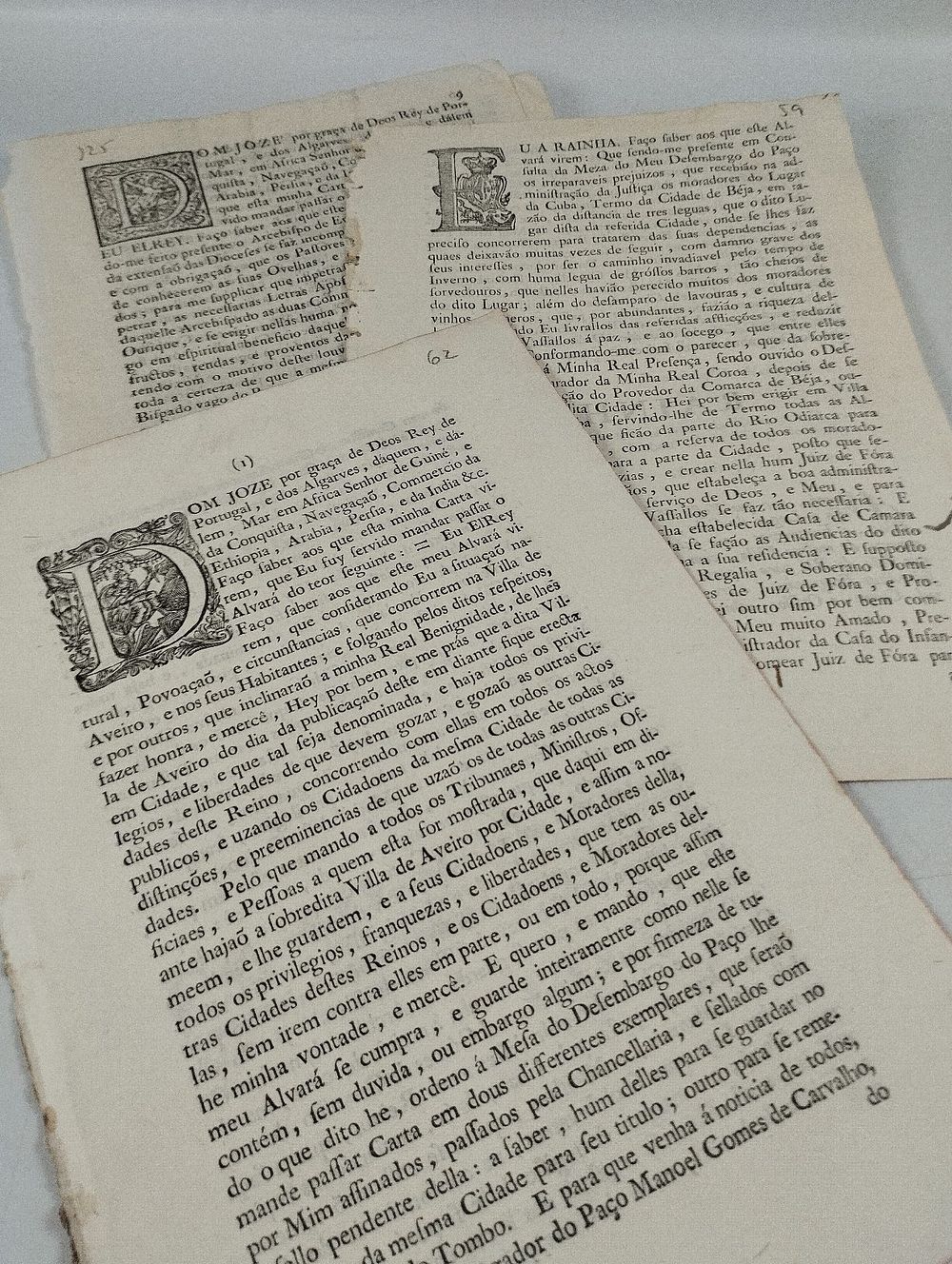
[D. JOSÉ I / D. MARIA I]. ELEVAÇÃO DE LUGARES A VILA E CIDADE — Aveiro, Penafiel e Cuba. 1759–1783. - [D. JOSÉ I / D. MARIA I] ELEVAÇÃO DE LUGARES A VILA E CIDADE — Aveiro, Penafiel e Cuba . 1759–1783. 3 diplomas régios: 1 Carta, 1 Carta de Lei, 1 Alvará. A set of three decrees elevating localities to new administrative categories. The promotion of villages to cities, or of hamlets to towns, was an act of royal grace with important practical consequences: it conferred privileges and exemptions on the inhabitants, created new local courts, and altered the hierarchy of municipal institutions. During the Josephite and Marian periods, these elevations were frequently associated with local development processes or political rewards. August 11, 1759 (King José I) — Elevates the town of Aveiro to city status, with all the privileges and freedoms of other cities in the Kingdom, in all public acts. Also includes provisions regarding teachers and public education (post-Jesuit reform, July 1759). 24 Mar 1770 (D. José I) — Elevates the village of Arrifana de Sousa to the category of City with the title of Penafiel, with all the privileges of the other cities of the Kingdom. 18 Mar 1783 (D. Maria I, register) — Establishes the place of Cuba as a town, with the villages and parishes on the Odiarca River side serving as its territory, reserving the inhabitants on the city side; and creates a Judge of the Civil, Criminal and Orphans Court. The collection documents three moments in the royal policy of territorial reorganization: the elevation of Aveiro to city status in the context of the expulsion of the Jesuits and the reform of education, the promotion of Arrifana de Sousa — present-day Penafiel — and the creation of the new town of Cuba in the Alentejo region with its respective local court. These pieces are of interest for the study of municipal history and the territorial organization of 18th-century Portugal. ⚑ Auto-translated via Google Translate