Bidspirit auction | [D. MARIA I]. FÁBRICAS —
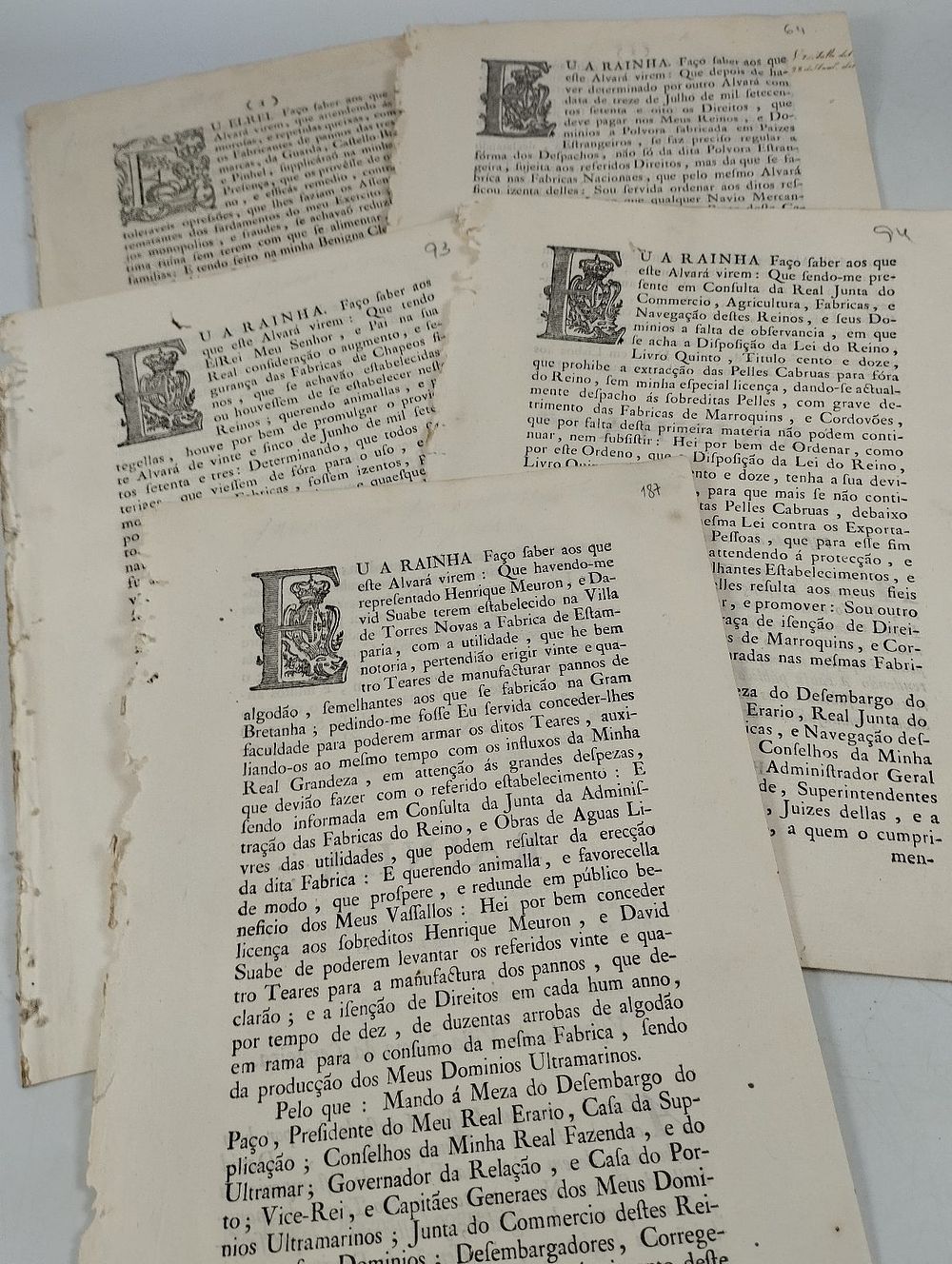
[D. MARIA I]. FÁBRICAS — Chapéus, Panos Militares, Pólvora e Algodão. 1783–1790. - [D. MARIA I] FÁBRICAS — Chapéus, Panos Militares, Pólvora e Algodão . 1783–1790. 5 diplomas régios: 5 Alvarás. A set of five decrees concerning the promotion and regulation of manufacturing industries during the Marian period: the manufacture of hats, military uniform cloths, gunpowder, and cotton fabrics. The industrial policy of Queen Maria I continued, with some variations in tone, the protectionist and promotional orientation of the Pombaline period, favoring tax exemptions and the extension of privileges as instruments to stimulate national manufacturing. August 29, 1783 (Queen Maria I) — Grants permission to Henrique Meuron and David Suabe to erect 24 cotton fabric manufacturing looms (similar to the English ones) at the Torres Novas Printing Factory; and exemption from duties on 200 arrobas of raw cotton annually from the Overseas Territories, for ten years. 1 Oct 1788 (D. Maria I) — Grants the requests of the manufacturers of cloth for troop uniforms, renewing and expanding the Regulation of January 7, 1690; royal protection of the textile industry for military equipment. October 22, 1788 (Queen Maria I) — Extends for fifteen years all the Graces, Privileges and Exemptions granted to the Fine Hat Factories by the Royal Decree of June 25, 1773, which will remain in full force for this purpose. 6 Nov 1788 (D. Maria I) — Revokes the provision of the Ordinance (Book V, Title 112) that prohibits the extraction of Cabrua hides outside the Kingdom; and exempts from export duties all Moroccan and Cordovan hides manufactured in the Kingdom's factories. July 19, 1790 (Queen Maria I) — Regulates the manner of dispatching gunpowder from foreign countries and that manufactured in National Factories, both for internal use and for export to the Portuguese Conquests. The collection documents Mariana's industrial policy in four strategic sectors: textiles-cotton (Torres Novas), military textiles (uniform fabrics), hat making, and tanned leather. The emphasis on privileges and exemptions as instruments of protection reveals the continuity of the mercantilist tradition in late 18th-century Portugal. ⚑ Auto-translated via Google Translate