Bidspirit auction | [D. JOSÉ I]. ALFÂNDEGAS —
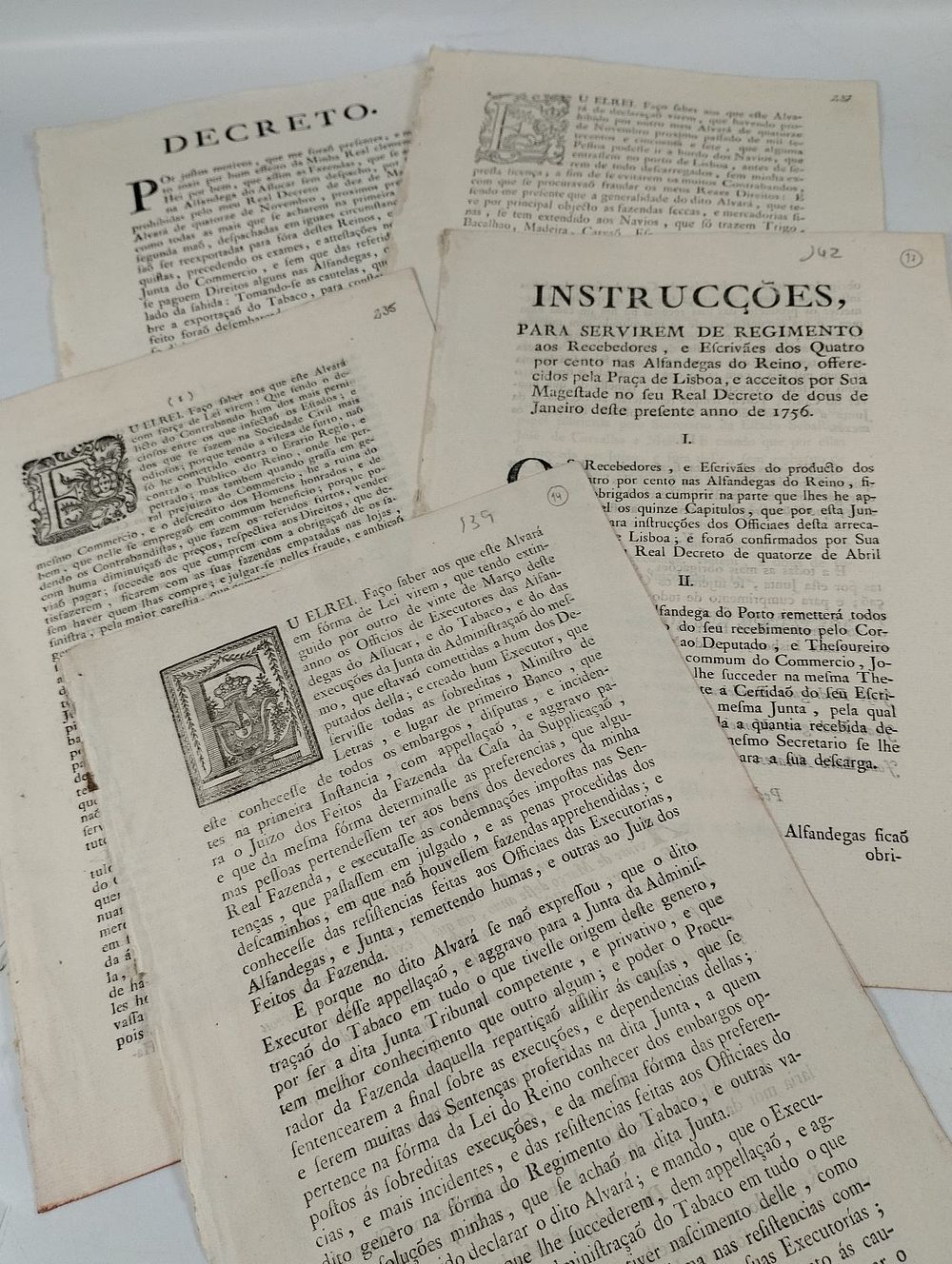
[D. JOSÉ I]. ALFÂNDEGAS — Despacho, Contrabando e Géneros Coloniais (1756–1758). 1756–1758. - [D. JOSÉ I] ALFÂNDEGAS — Despacho, Contrabando e Géneros Coloniais (1756–1758) . 1756–1758. 5 diplomas régios: 2 Alvarás, 1 Alvará com força de Lei, 1 Alvará de Declaração, 1 Decreto. A collection of five customs decrees from the years 1756 to 1758, a period of intense legislative activity in the customs sector. The abolition of the sugar and tobacco customs officers, ordered in 1756 as part of the Pombaline reorganization after the earthquake, required several clarifying and implementing decrees; at the same time, the fight against smuggling and the regulation of the clearance of specific goods led to the promulgation of detailed rules on customs procedures. 2 June 1756 (D. José I) — Confirms the five chapters of the Instructions drawn up by the Board to serve as Regulations for the Receivers and Clerks of the Revenue of the Four Percent of the Lisbon Square; orders that they be followed in and out of court. June 22, 1756 (King José I) — Declares the Royal Decree of March 20, 1756, regarding the extinction of the customs officers for sugar and tobacco, determining that, in the case of tobacco, recourse goes to the Tobacco Administration Board. November 19, 1757 (King Joseph I) — Expands the fifth, sixth, and seventh paragraphs of the seventeenth chapter of the Statutes of the Board of Trade to more effectively prevent smuggling in the Customs Houses of the Kingdom and its Dominions. 17 Jan 1758 (D. José I) — Declares that the Administrator of the Lisbon Customs House and the Judges of the Customs Houses of Porto and Algarve may grant licenses for any persons to go aboard ships bringing wheat, cod, wood, coal, esparto grass, and other bulky goods. February 3, 1758 (King Joseph I) — Decrees that goods held at the Sugar Customs House without clearance, prohibited by the Decrees of May 10 and November 14, may be re-exported out of the Kingdom without payment of duties, taking precautions regarding tobacco. The collection documents a specific and well-defined moment in Portuguese customs history: the adjustments immediately following the major reorganization of 1755-1756, with an emphasis on combating smuggling, regulating the clearance of bulk goods, and resolving pending situations in the sugar and tobacco customs offices. ⚑ Auto-translated via Google Translate