Bidspirit auction | [D. MARIA I / D.
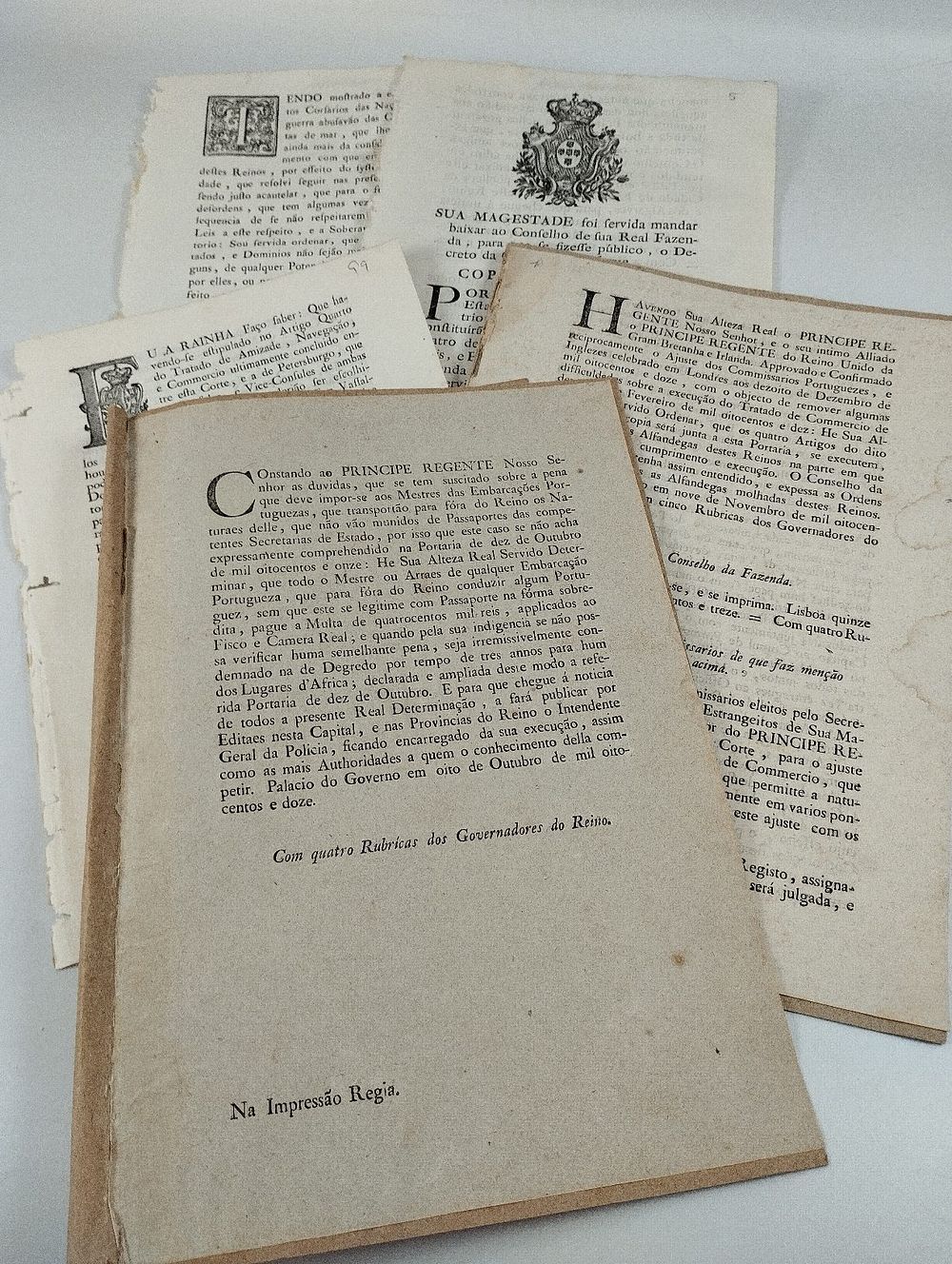
[D. MARIA I / D. JOÃO (Príncipe Regente)]. RELAÇÕES COMERCIAIS EXTERNAS — Estados Unidos, Inglaterra, Rússia e Corsários. 1780–1813. - [D. MARIA I / D. JOÃO (Príncipe Regente)] RELAÇÕES COMERCIAIS EXTERNAS — Estados Unidos, Inglaterra, Rússia e Corsários . 1780–1813. 5 diplomas: 2 Resoluções / Decretos, 1 Alvará, 1 Instrucções, 1 Determinação. A set of five decrees concerning Portugal's commercial relations with foreign powers: the regulation of privateers in the Kingdom's ports, the recognition of the independence of the United States and the opening of Portuguese ports to its ships, the abolition of the Vice-Consuls of Russia, and the regulation of trade with England during the Napoleonic Wars. The chronological span is broad—from 1780 to 1813—encompassing both the reign of Queen Maria I and the period of the regency of Prince John. August 30, 1780 (Queen Maria I) — Regulation of relations with privateers in the ports of the Kingdom: no privateer vessels allowed; procedures for prizes; privateers with a twenty-day deadline to leave; diplomacy of neutrality in the context of the American Revolutionary War. February 15, 1783 (Queen Maria I) — With the independence of the United States, the reasons for the Decree of July 4, 1776 ceased; abolition of that Decree and Edict; free entry of American ships into all ports of the Kingdom and the Algarve; practical recognition of the new nation. 9 Mar 1789 (D. Maria I) — Declares all appointments of Vice-Consuls and their Factors made by the Consul General of the Russian Nation to Portuguese Vassals to be revoked and abolished; declares the Letters and Patents issued consequently null and void. October 8, 1812 (Prince Regent D. João) — Decrees that any Master or Captain of a Portuguese vessel who takes any Portuguese person out of the Kingdom without a passport from the State Secretariats shall pay a fine of 400,000 réis to the Royal Treasury and Chamber, or, if without means, be condemned to three years of exile in Africa; declares and expands the Decree of October 10, 1811. 9 Nov 1813 (Prince Regent D. João) — Orders the execution in the Customs Houses of the Agreement of the Portuguese and English Commissioners on the Luso-British Trade Treaty of December 1812, regulating the identification of British ships, 5% duties, tonnage and fees of the Houses of the Trinity. This collection documents five moments in Portuguese foreign trade relations during a period of great international turbulence: neutrality in the face of the American war, opening to US ships, regulation of the Russian consulate, restrictions on illegal emigration, and the implementation of the trade treaty with England. It is a valuable source for the study of Portuguese economic diplomacy between 1780 and 1815. ⚑ Auto-translated via Google Translate