Bidspirit auction | [D. JOSÉ I]. CASA DA
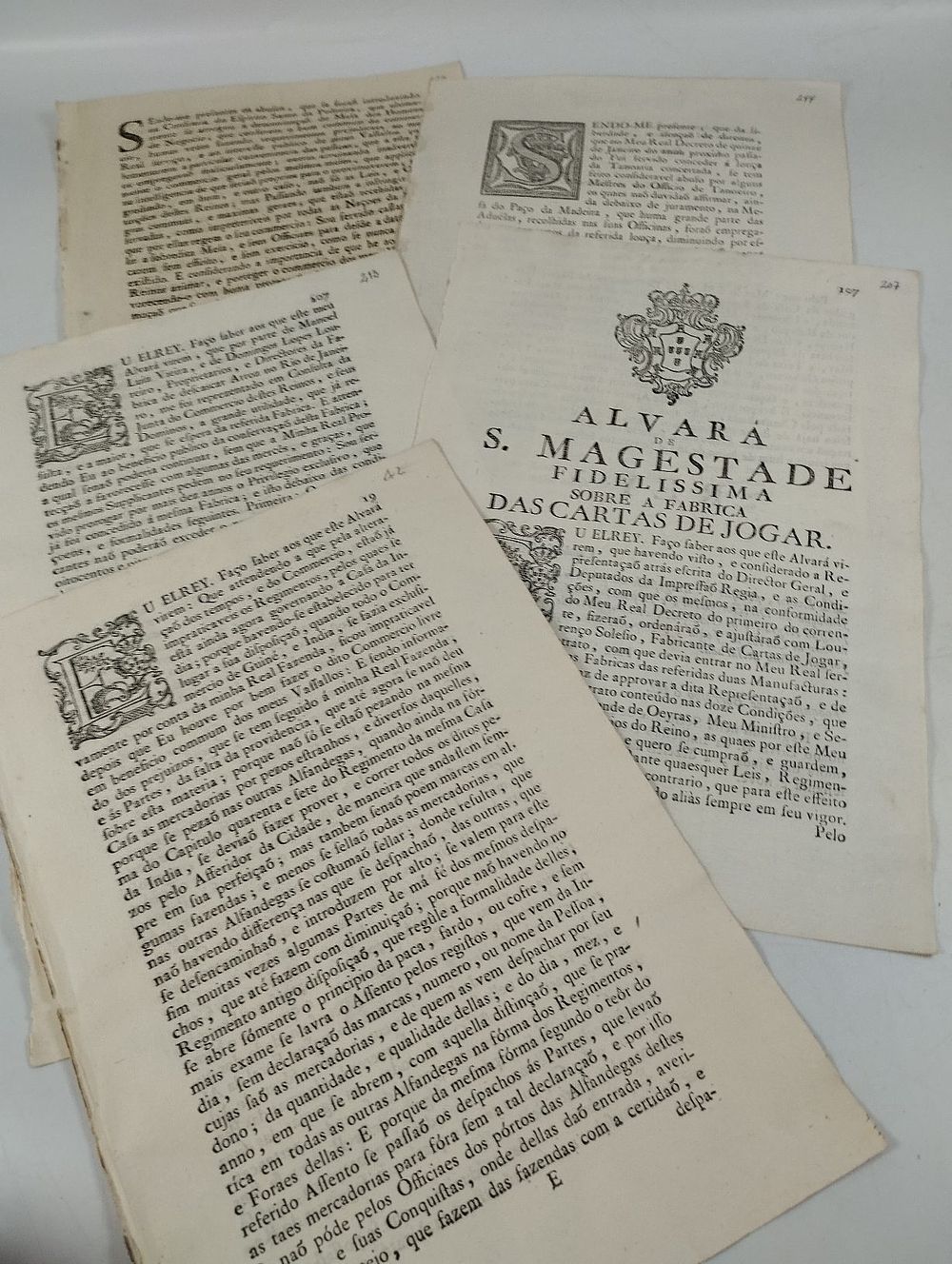
[D. JOSÉ I]. CASA DA INDIA, IMPRESSÃO RÉGIA E INDÚSTRIA COLONIAL — Monopólios, Privilégios e Regulação. 1755–1769. - [D. JOSÉ I] CASA DA INDIA, IMPRESSÃO RÉGIA E INDÚSTRIA COLONIAL — Monopólios, Privilégios e Regulação . 1755–1769. 5 diplomas régios: 3 Alvarás, 1 Decreto / Resolução, 1 Decreto. A collection of five decrees concerning the management of colonial and publishing monopolies and privileges during the reign of Joseph I: the decree concerning the Casa da Índia (House of India), the Royal Printing Office, and the concessions regarding pottery, cooperage, rice from Rio de Janeiro, and the initial project of the Junta de Homens de Negócio (Board of Businessmen). The collection documents how the Pombaline state articulated the control of colonial trade circuits with the promotion of specific industrial and publishing interests, frequently through combinations of monopolies, exemptions, and exclusive contracts. September 30, 1755 (King José I) — Creates a Board of Businessmen at the House of the Confraternity of the Holy Spirit of Pedreira to advocate for the common good of Commerce; sessions on Thursdays; composed of a Provider, six Deputies, a Secretary, and a Procurator; entrusts Judge Inácio Ferreira Souto with drafting the Statutes; the embryo of the future Board of Commerce. October 27, 1758 (King Joseph I) — Restricts the exemption from duties granted by the previous January Decree to the pottery of the concerted cooperage; determines that from January 1759 onwards, the Master Coopers pay the full duties on the entire stave, without reduction. July 27, 1767 (King Joseph I) — Regulates the dispatch of goods belonging to the Casa da India; decree reorganizing customs procedures at the main entrepot for Asian trade in Lisbon. October 11, 1766 (King José I) — Extension for another ten years of the exclusive privilege granted to the rice husking factory established in Rio de Janeiro, owned by Manuel Luiz Vieira and Domingos Lopes Loureiro, under the stated conditions. September 16, 1769 (King José I) — Approval of the Representation of the Director General and Deputies of the Royal Printing Conference and the conditions under which the Playing Card and Cardboard Factories of Lourenço Solesio are intended to be established; extension of the Royal Printing activity to new products. The collection documents the logic of selectively granting monopolies and privileges that characterized Joseph I's economic policy: from the Casa da India to Brazilian rice, from the Royal Printing Office to playing cards, the State reserved control of profitable circuits for itself, granting it to private individuals under precise conditions. ⚑ Auto-translated via Google Translate