Bidspirit auction | [D. JOSÉ I / D.
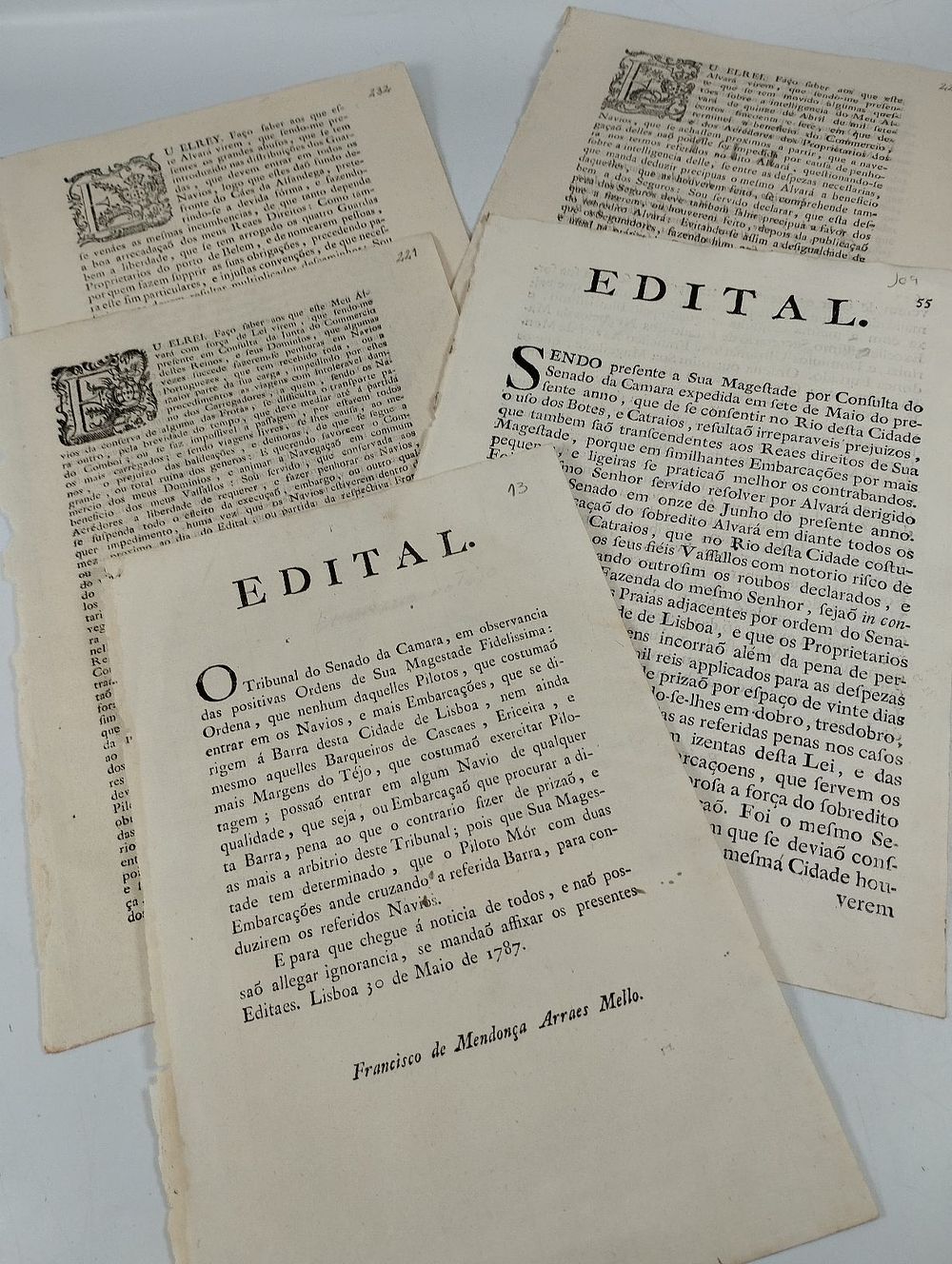
[D. JOSÉ I / D. MARIA I]. MARINHA — Navegação Fluvial, Portuária e Seguros Marítimos. c. 1757–1787. - [D. JOSÉ I / D. MARIA I] MARINHA — Navegação Fluvial, Portuária e Seguros Marítimos . c. 1757–1787. 5 diplomas: 3 Alvarás, 1 Alvará de Declaração, 1 Edital. A set of five decrees concerning the regulation of navigation in Portuguese ports and rivers and related matters of maritime insurance, ship guarding, and pilotage. The Tagus River was the country's main waterway, and the port of Lisbon was the busiest; the regulation of vessel traffic, the duties of pilots, and the conditions for ship guarding in port was a matter of great economic and public safety interest. c. 1757 (D. José I) — Authorizes the Treasury Inspector to appoint forty subsidiary guards for ships entering the port of Lisbon, in addition to the forty already appointed with lifetime tenure; and grants the Board of Trade the power to appoint twelve guards for ships in the port of Belém. c. 1757 (D. José I) — Declares that among the principal expenses to be deducted by the Royal Decree of April 15, 1757, for the benefit of the creditors of the ship owners, the expense of insurance should also be included. Includes the Decree of April 2, 1757, on exemption from customs duties for silk pieces manufactured in the Kingdom, and the Edict on the extraction of green leather. April 21, 1757 (King Joseph I) — Suspends seizures, embargoes, and other impediments that disrupt the voyages of Portuguese ships in the ports of the Kingdom and Dominions, postponing their execution until after the voyages are completed; protection of nautical activity against frivolous executions. June 15, 1765 (King José I) — Edict prohibiting the use of boats and small vessels on the Tagus River in Lisbon because they caused damage and facilitated smuggling; orders their burning and establishes penalties; a measure to control river traffic and combat smuggling. May 30, 1787 (Queen Maria I) — Edict of the Lisbon City Council ordering that no private pilot enter ships heading to the Lisbon harbor entrance, nor that Tagus River boatmen perform piloting duties; navigation carried out by the Chief Pilot with two vessels; reserving functions for the professional body of official pilots. The collection documents complementary aspects of port and river administration: the guarding of ships in port, the protection of creditors over vessel owners, the suspension of seizures during voyages, the regulation of traffic on the Tagus River, and the reservation of pilotage to qualified pilots. It is a source of interest for the maritime and port history of Lisbon. ⚑ Auto-translated via Google Translate