Bidspirit auction | [D. JOSÉ I / D.
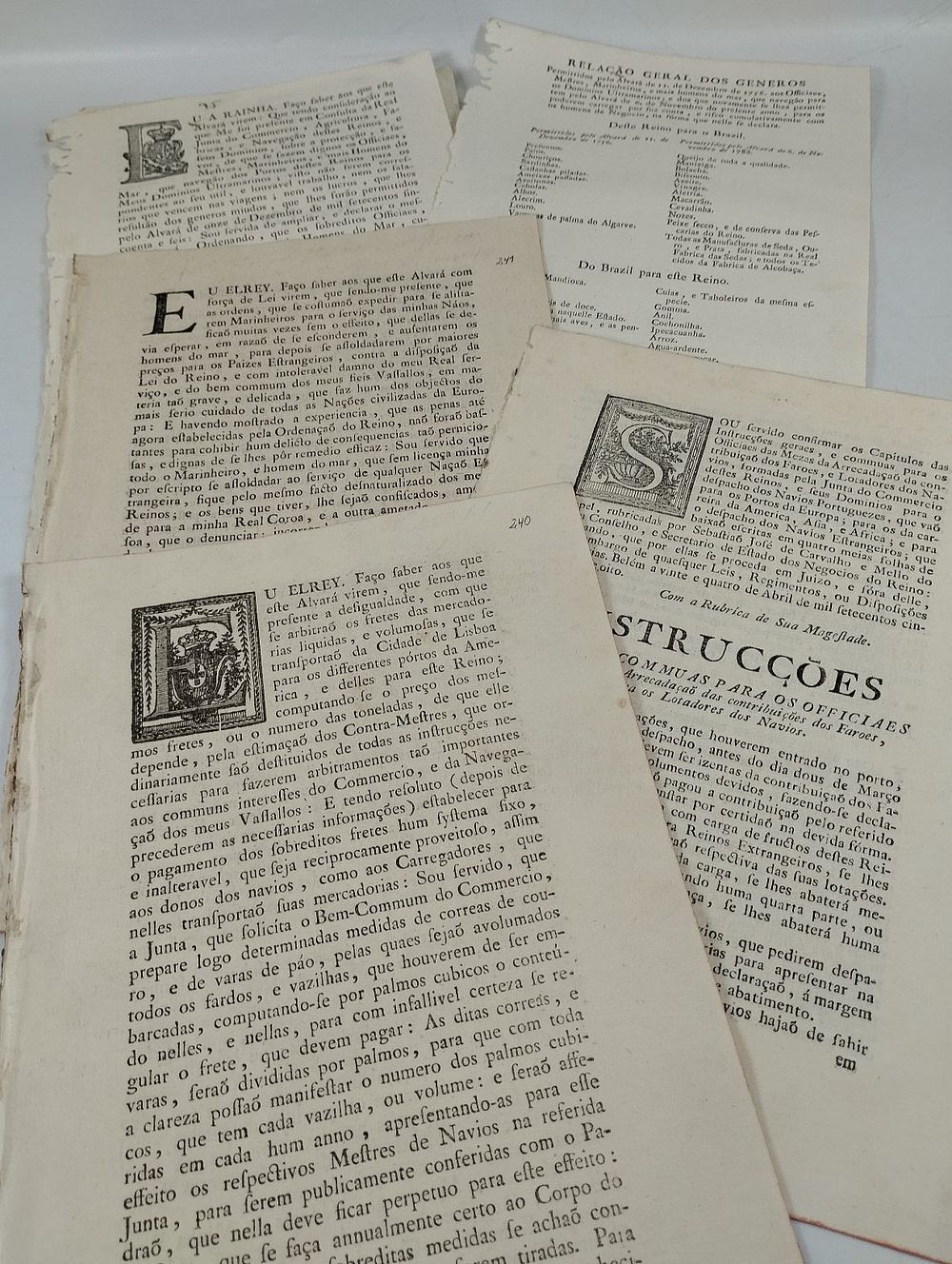
[D. JOSÉ I / D. MARIA I]. MARINHA — Pessoal Náutico, Governo Ultramarino e Arrecadação Colonial. 1756–1788. - [D. JOSÉ I / D. MARIA I] MARINHA — Pessoal Náutico, Governo Ultramarino e Arrecadação Colonial . 1756–1788. 5 diplomas: 3 Alvarás, 1 Instrucções, 1 Alvará com força de Lei. A set of five decrees concerning nautical personnel and the articulation between the Navy and the government of overseas territories. The issue of sailors who were employed by foreign nations, the careers of Officers and Masters who sailed overseas, and the definition of governmental successions in overseas states were matters of great strategic relevance for a country whose power rested on the ability to maintain and control a vast imperial network. September 7, 1756 (King Joseph I) — Orders that any sailor and seaman who, without written royal permission, hires himself to serve a foreign nation, be denaturalized and have his property confiscated; prohibits leaving the Kingdom without permission; a measure to retain nautical human resources. c. 1757–1758 (D. José I) — Orders that the Board that requests the Common Good of commerce determine measures to consolidate all bales and vessels shipped to the ports of Rio de Janeiro, Bahia and Pernambuco, and that freight be paid at the determined prices. April 24, 1758 (King Joseph I) — General and common instructions for the Officers of the Boards for the Collection of contributions from the Lighthouses and for the Supervisors of Portuguese Ships, formed by the Board of Trade; confirmed by Royal Decree of April 24, 1758, ordered to be observed in and out of court. December 14, 1770 (King Joseph I) — Declares the persons who should succeed to the government of the States of Brazil, Pará, Angola and adjacent islands in case of death or absence of the Governors and Captains General; regulation of the chain of succession in the overseas government. October 13, 1788 (Queen Maria I) — Expands and clarifies the Royal Decree of December 11, 1756; orders that Officers, Masters, Sailors and other Seamen who sail to the Overseas Territories may carry goods, cumulatively with Businessmen. This collection documents the articulation between nautical personnel policy (retention of sailors, regulation of freight rates, instruction of tax collectors) and the government of overseas territories (successions in colonial states). It is a source of interest for the study of Portuguese naval and colonial history of the 18th century. ⚑ Auto-translated via Google Translate