Bidspirit auction | [D. JOSÉ I]. FAZENDA —
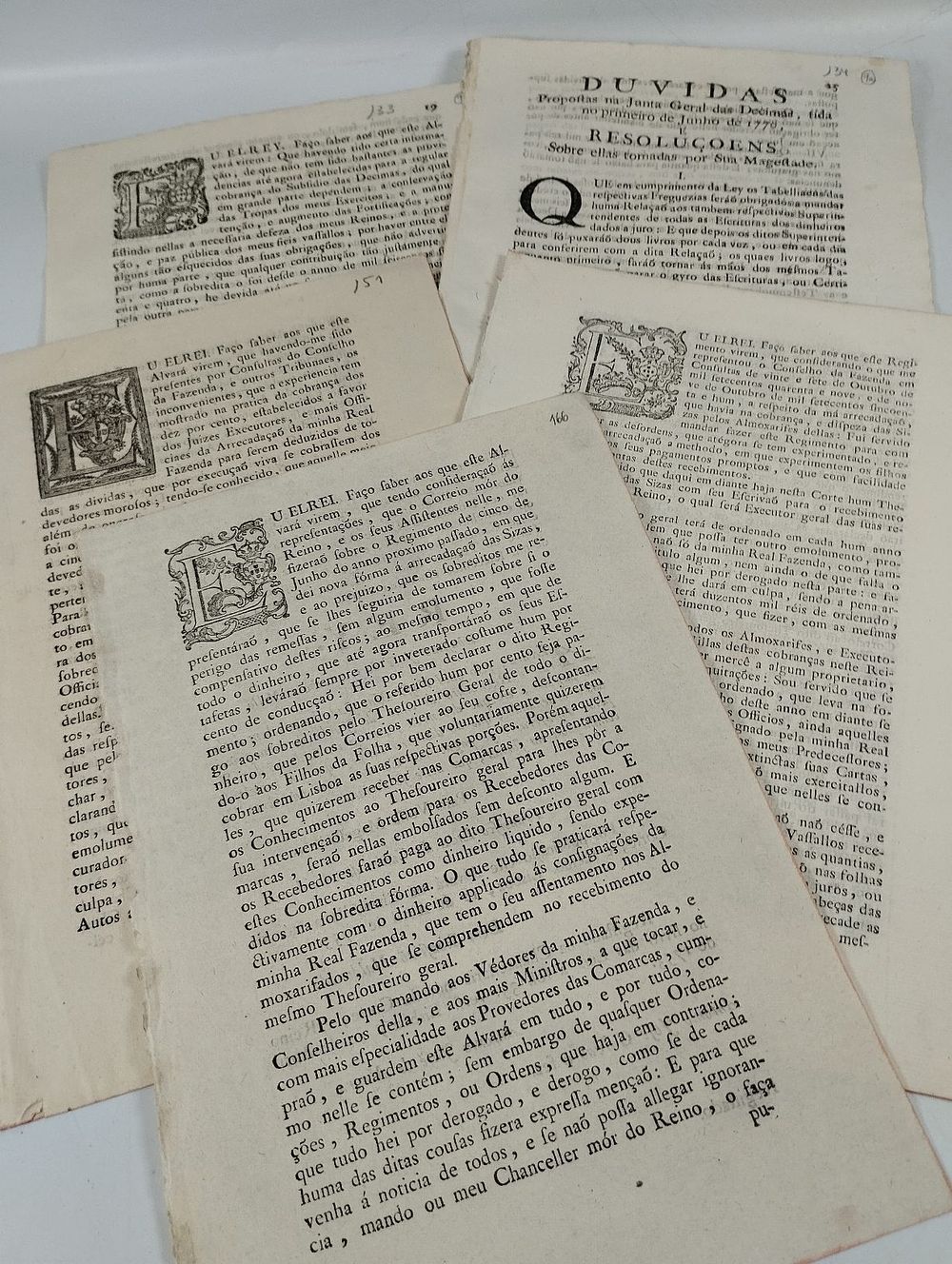
[D. JOSÉ I]. FAZENDA — Décima, Sizas e Emolumentos dos Executores. 1752–1770. - [D. JOSÉ I] FAZENDA — Décima, Sizas e Emolumentos dos Executores . 1752–1770. 5 diplomas régios: 2 Alvarás, 1 Regimento, 1 Resolução, 1 Alvará. A set of five decrees concerning three of the main direct taxes in 18th-century Portugal: the Décima (tax on income), the Sizas (tax on real estate transactions), and the fees of tax collectors. The creation of a General Treasurer of the Sizas in 1752, the regulation of the Décima, and the reduction of the fees of the Executing Judges in 1760 were fundamental pieces of the reorganization of the tax system under Joseph I, which sought to increase the efficiency of collection and reduce abuses by tax collectors. June 9, 1752 (King Joseph I) — Creates a new General Treasurer of the Taxes, with a salary of 700,000 réis, and a Clerk with 200,000 réis; abolishes the Storekeepers and Executors of the Districts, Cities and Towns; creates annual Collectors elected by the Chambers; central reform of the collection of taxes. April 12, 1753 (King José I) — Repeals the Regulation of June 5, 1752, regarding the collection of taxes; orders that 1% of the money sent by the couriers be paid to the Post Office for transportation. October 18, 1760 (King Joseph I) — Reduces the fees from ten percent to five percent for the Executing Judges and other Royal Treasury Collection Officers charged to delinquent debtors; reserves one percent for the Solicitors of the same Treasury's cases. May 11, 1770 (King José I) — Expands and clarifies the Royal Decree of September 26, 1762, regarding the collection of the Military Subsidy of the Tenth, disapproving of and curbing the frauds committed; reinforcement of the fight against tax evasion in the Tenth. June 12, 1770 (King José I) — Resolution of doubts raised at the General Board of Tithes on June 1, 1770: obligations of notaries, manifests, collection of rents from tenants, ground rents and emphyteusis; resolution of questions regarding the application of the Tithe to different types of income. This collection documents the reform and consolidation of the direct tax system in Portugal during the reign of Joseph I: the reorganization of the collection of excise taxes, the reduction of excessive fees charged to tax collectors, and the fight against fraud in the tithe tax. It is a primary source for the study of Portuguese fiscal history in the 18th century. ⚑ Auto-translated via Google Translate