Bidspirit auction | [D. JOSÉ I / D.
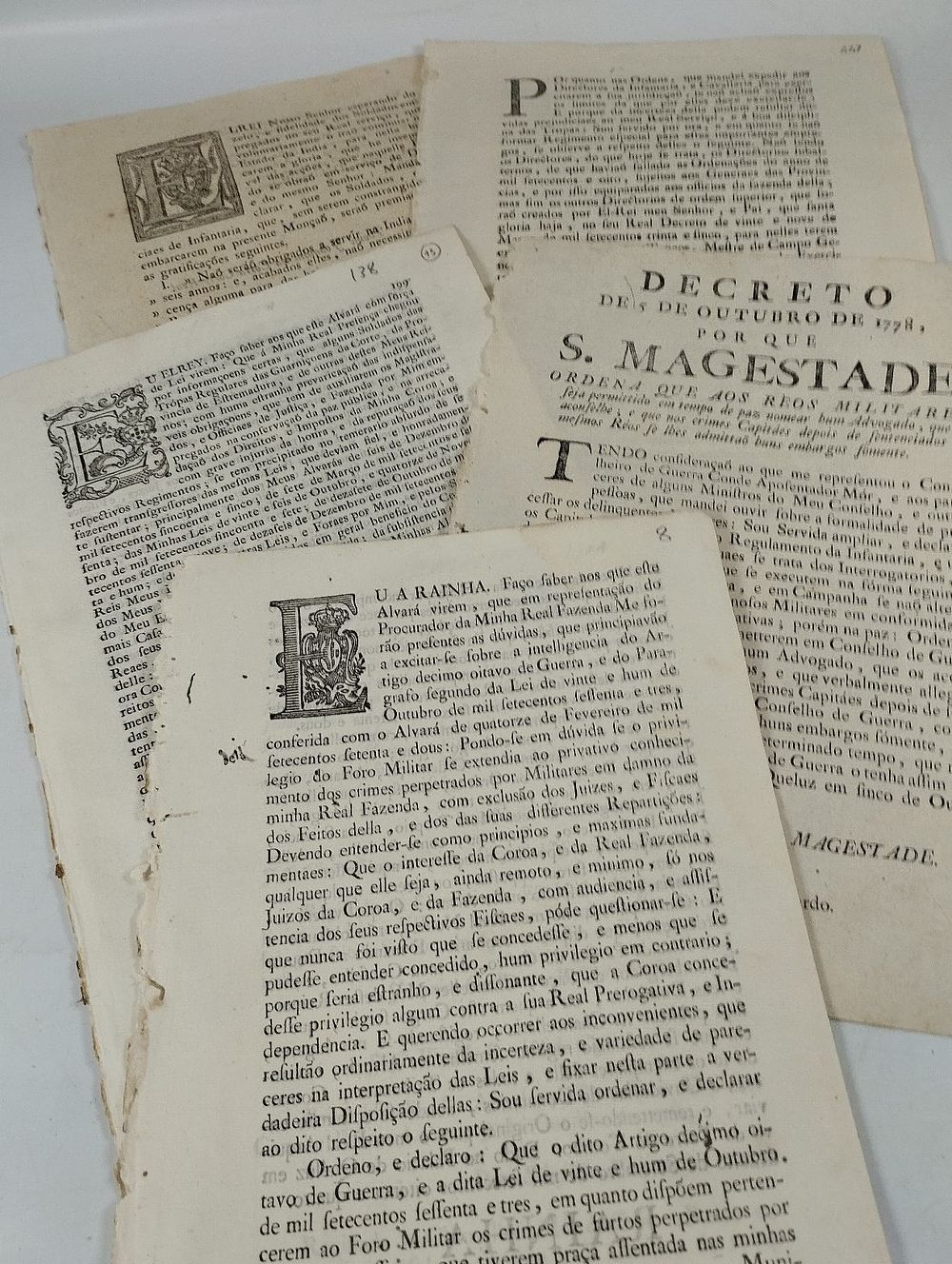
[D. JOSÉ I / D. MARIA I]. MILITAR — Foro Militar, Processo Penal e Incentivos ao Serviço. 1757–1784. - [D. JOSÉ I / D. MARIA I] MILITAR — Foro Militar, Processo Penal e Incentivos ao Serviço . 1757–1784. 5 diplomas: 2 Decretos, 1 Alvará com força de Lei, 1 Alvará, 1 Decreto. A set of five decrees concerning military jurisdiction, the criminal procedure for military personnel, and incentives for voluntary overseas service. The delimitation of military jurisdiction—which crimes were judged by military courts and which by civilian courts—was one of the most sensitive matters of Portuguese public law, as it involved the balance between the autonomy of the armed forces and the sovereignty of the ordinary royal courts. The set also includes decrees on procedural guarantees for military defendants and incentives for service in India. 24 Mar 1757 (D. José I) — Determines the jurisdiction of the Directors of Infantry, Cavalry, Artillery and Dragoons (created by Decree of 29 March 1735), making them subordinate to the Royal Person and independent of the Generals of the Provinces; defines hierarchical relations with the Commanders of the Regiments. February 27, 1758 (King Joseph I) — Declares the benefits granted to soldiers and infantry officers who voluntarily embark for the State of India during the current Monsoon: six months' pay in advance, return transport, freedom of choice after service, and preference for vacant posts. c. Feb 1772 (D. José I) — Prohibits soldiers of the Regular Troops from engaging in smuggling and evading royal taxes, with penalties for those who resist justice and Treasury officials. October 5, 1778 (Queen Maria I) — Military defendants may appoint a lawyer in peacetime; in capital crimes, after sentencing by the War Council, only one appeal is allowed, with a four-day deadline; procedural guarantees for military defendants. c. Sept 1784 (D. Maria I) — Delimitation of the jurisdiction of the Military Court in crimes of theft against the Royal Treasury: the Military Court only has jurisdiction when theft involves weapons, ammunition, equipment, or items made in barracks or lodgings; clarification of the limits of the special jurisdiction. This collection documents the evolution of Portuguese military law with regard to jurisdictional competences, guarantees for defendants, and the system of incentives for voluntary overseas service. It is of interest for the study of the history of military law and Portuguese military institutions of the 18th century. ⚑ Auto-translated via Google Translate