Bidspirit auction | [D. JOSÉ I / D.
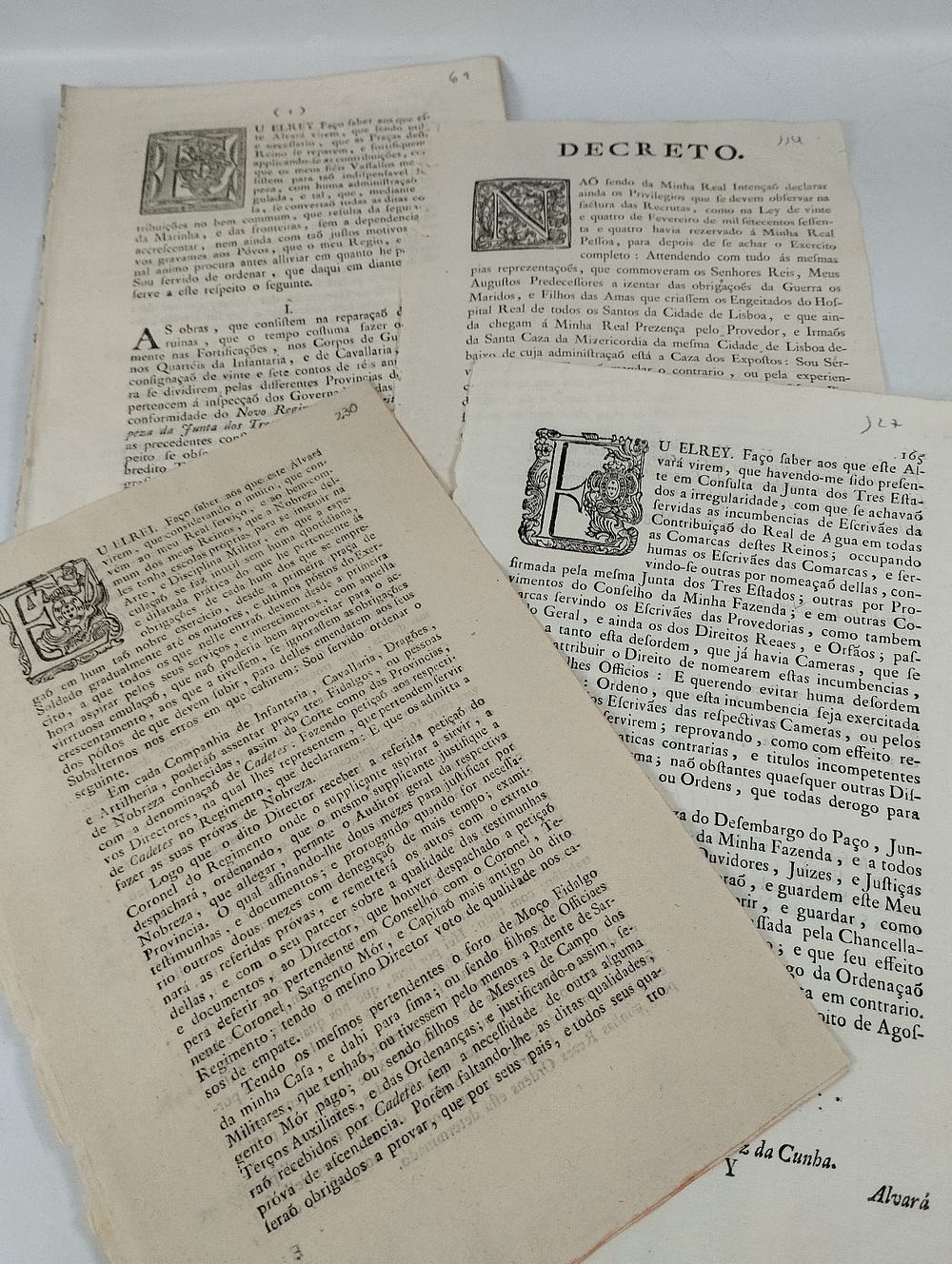
[D. JOSÉ I / D. MARIA I]. MILITAR — Obras de Fortificação, Recrutamento, Cadetes e Contribuições. 1752–1787. - [D. JOSÉ I / D. MARIA I] MILITAR — Obras de Fortificação, Recrutamento, Cadetes e Contribuições . 1752–1787. 4 diplomas: 3 Alvarás, 1 Decreto. A collection of four decrees on logistical and organizational aspects of the Army: the regulation of fortification works in squares, the admission of Cadets to Regiments, the duties of the Clerks of the Royal Water Contribution, and the exemption from recruitment for the husbands of wet nurses who raised foundlings. The collection documents less studied facets of the military organization of the Old Regime, related to the management of military works, the training of young officers, and the impact of recruitment on the civilian population. 7 Feb 1752 (D. José I) — Establishes the rules for the expenditure on the fortification of the squares and for the inspection, bidding, administration and measurement of the works pertaining to them; decree regulating the management of military defense works. August 8, 1771 (King Joseph I) — Determines the duties of the Clerks of the Royal Water Contribution in the Army Companies and Ordinances; regulation of the agents responsible for collecting the contribution for water supply works. 31 Mar 1787 (D. Maria I) — Exempts from military recruitment the husbands and sons of wet nurses who raise foundlings from the Royal Hospital of All Saints and the Santa Casa da Misericórdia of Lisbon; protection of families involved in raising foundlings. sd — Authorizes that in each Company of the Infantry, Cavalry, Dragoons and Artillery Regiments, three Cadets be received with the distinctions and privileges expressed; diploma of integration of young officer candidates into the Regiments. This collection documents complementary aspects of military organization that rarely appear in isolation in legislation: the management of defense works, the collection of specific contributions, the protection of wet nurses' families against recruitment, and the formalization of the Cadet figure as a means of access to officer rank. This documentation is of interest for the study of the military and social history of 18th-century Portugal. ⚑ Auto-translated via Google Translate