Bidspirit auction | [D. JOSÉ I]. INQUISIÇÃO E
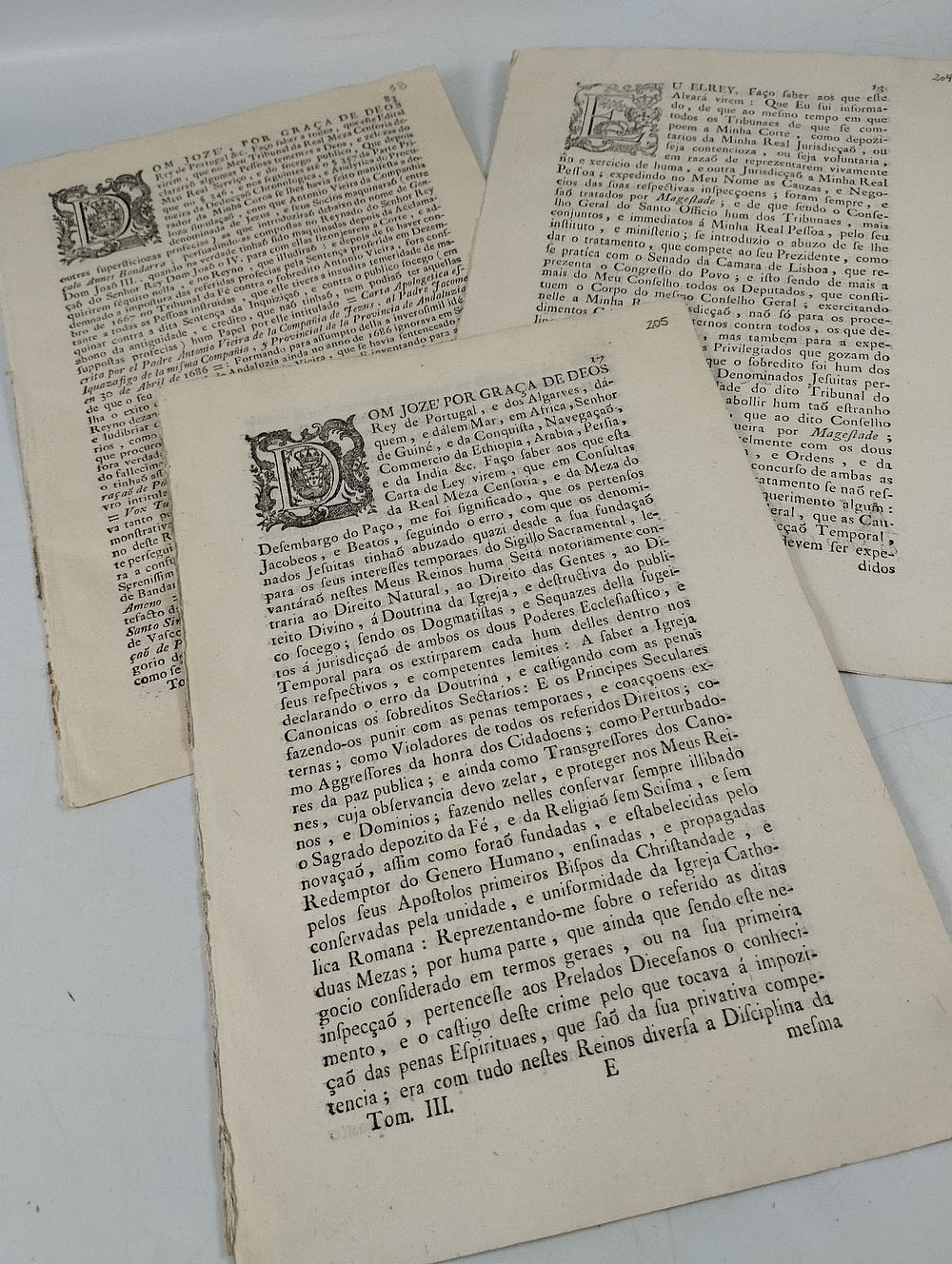
[D. JOSÉ I]. INQUISIÇÃO E SANTO OFÍCIO — Livros Condenados, Sigilismo e Jurisdição. 1768–1769. - [D. JOSÉ I] INQUISIÇÃO E SANTO OFÍCIO — Livros Condenados, Sigilismo e Jurisdição . 1768–1769. 3 diplomas: 1 Alvará / Edital, 1 Alvará, 1 Carta de Lei. A collection of three documents concerning the Holy Office of the Inquisition and the censorship of books during the reign of Joseph I. Pombaline regalism aimed to subordinate the Holy Office to state control, impose on the General Council of the tribunal a protocolary respect for royal majesty, and use inquisitorial censorship as an instrument of the Crown's cultural policy—particularly in the condemnation of Jesuit works. The collection documents this complex articulation between royal power and inquisitorial jurisdiction. June 24, 1768 (King José I) — Condemnation and seizure of Jesuit and prophetic books: Apologetic Letter by António Vieira, Restoration of Portugal Prodigious , Vox Turturis Portugalliae Gemens , Jardim Ameno and others; public burning carried out in Praça do Comércio; operation to clean up the Jesuit intellectual estate and prophetic texts. May 20, 1769 (King Joseph I) — Decree that the General Council of the Holy Office be spoken to, written to, and requested on behalf of His Majesty, all in the manner declared; imposition of the royal majesty's own protocol on the inquisitorial tribunal, affirming the sovereignty of the State over ecclesiastical jurisdiction. sd (D. José I) — Authorization with Royal Assent of the Bulls of Benedict XIV condemning Secrecy; attribution to the Holy Office of competence for corporal punishment and natural death on those guilty of the same error, as depository of the part of the Royal Jurisdiction necessary for the imposition of external penalties. This collection documents the ambivalence of Joseph I's policy towards the Inquisition: on the one hand, it subordinated the Holy Office to royal protocol and used it to burn Jesuit works; on the other hand, it authorized the Royal Assent to the Bulls of Benedict XIV and granted it competence for corporal punishments related to secrecy. It is a crucial document for the study of the relationship between the Pombaline state and the Holy Office. ⚑ Auto-translated via Google Translate